Ayurvedic Dosha based diet plans for Digestive Healing and Gut Health – Vata, Pitta and Kapha
Dosha Based Diet Plan: What to Eat for Vata, Pitta & Kapha for Better Gut Health (2025)
A modern Ayurvedic blueprint for stabilizing digestion, reducing bloating, acidity, and heaviness — by matching food to your unique dosha and digestive fire.
This guide explains how a dosha based diet plan restores digestion by aligning food with your constitution — Vata, Pitta, or Kapha — to stabilize Agni, reduce bloating and acidity, and rebuild natural gut strength.
Most people believe digestion begins with enzymes or stomach acid.
Ayurveda quietly smiles — and gently disagrees.
Digestion truly begins with your nature: your emotional patterns, appetite timing, response to temperature, tolerance to stress, meal rhythm, and internal metabolic climate. This blueprint is your dosha.
A true dosha based diet plan is not a restrictive rulebook — it is how you nourish your individual body terrain:
- Vata bodies — airy, sensitive, irregular digestion
- Pitta bodies — fiery, fast, heat-prone digestion
- Kapha bodies — heavy, slow, mucus-building digestion
Feed each terrain incorrectly and digestion protests through bloating, acidity, fatigue, and weight imbalance. Feed it intelligently and the same simple meal becomes medicine.
In 2025 digestive health faces modern pressure never addressed in classical lifestyle:
- Cold takeaway meals
- Late-night screen eating
- Emotional snacking under stress
- Excess caffeine
- Inconsistent meal timing
A dosha based diet succeeds because it restores predictability where modern life creates chaos.
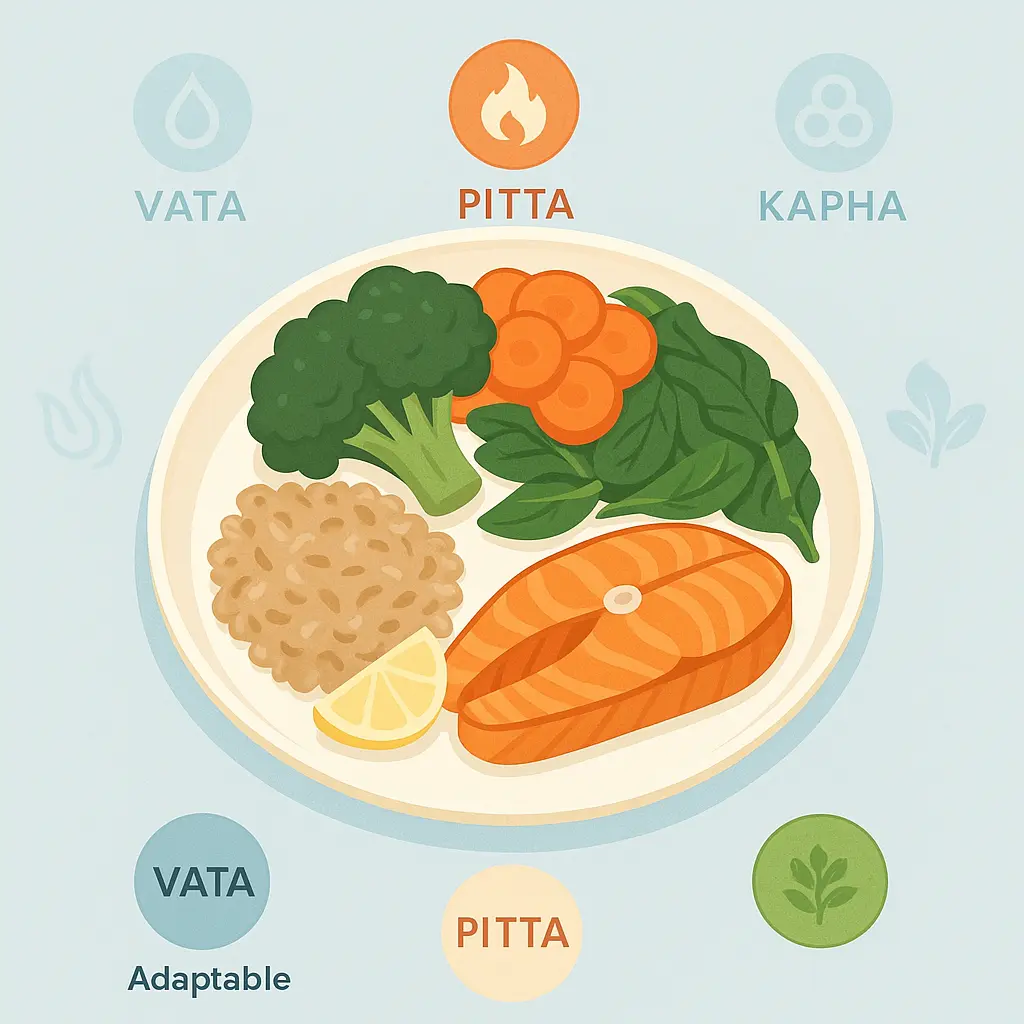
Visual overview showing digestion differences across Vata, Pitta & Kapha constitutions.
Understanding Doshas & Digestive Patterns (Vata, Pitta & Kapha Diet Basics)
A senior Ayurvedic physician once summarized constitutional digestion beautifully:
“Two people may eat the same food — yet their stomachs will tell two completely different stories.”
This is the living foundation of the dosha based diet plan. Your digestion responds not only to what you eat, but to who you are.
Your dosha determines:
- Your appetite rhythm
- Your tolerance to spice, oil, and cold foods
- The speed at which food is digested
- Your tendency toward bloating, acidity, or heaviness
- Your emotional relationship with meals
Think of the digestive system as a flame:
- Vata digestion flickers like a candle in the wind
- Pitta digestion burns like a steady gas stove
- Kapha digestion hums like a slow cooker
The art of the Ayurvedic Diet for Digestion is not to force the flames to act alike — but to feed each flame exactly what it needs to burn cleanly.
Vata Digestion — The Flickering Flame (Vata Pacifying Diet)
Vata digestion behaves like a candle placed on a windy balcony. Some days it shines bright, other days it flickers uncontrollably — constantly reacting to stress, travel, temperature, and irregular eating hours.
Common Vata digestive patterns:
- Irregular appetite
- Bloating even after light meals
- Excess gas or gurgling
- Dry stools or constipation cycles
- Sudden food cravings
- Cold hands and feet
- Digestive flare-ups during travel
This is not weak digestion, but sensitive digestion. Unpredictability worsens Vata — skipped meals, cold food, smoothies, caffeine, or night-time eating quickly destabilize the gut.
What Stabilizes Vata Digestion
- Warm, freshly cooked meals
- Soupy textures and stews
- Healthy fats like ghee
- Steady meal timings
- Digestive spices: ginger, cumin, fennel, ajwain
When warmth and routine return, bloating reduces and nourishment finally lands deep rather than passing through unabsorbed.
Pitta Digestion — The Intense Flame (Pitta Diet for Acidity & Heat)
Pitta digestion resembles a gas stove set slightly too high — extremely efficient, but prone to burning if overheated.
Common Pitta digestive traits:
- Hunger every 2–3 hours
- Acidity or reflux
- Loose or burning stools
- Sour belching
- Irritability if meals are delayed
- Sensitivity to chili, alcohol, and fried foods
Pitta often ignores early digestive discomfort in pursuit of work and productivity. Common triggers include:
- Coffee on an empty stomach
- Eating late at night
- Deadline stress
- Dehydration in air-conditioned offices
- Repeated spicy meals
What Cools Pitta Digestion
- Coconut water and soaked raisins
- Cooling vegetables like lauki and zucchini
- Barley or basmati rice
- Fennel, coriander, and mint teas
- Earlier meals with minimal fasting
Once digestive heat calms, energy stabilizes and emotional reactivity softens.
Kapha Digestion — The Low Flame (Kapha Diet for Heaviness)
Kapha digestion works like a slow cooker — steady yet easily overwhelmed by excessive quantity or heaviness.
Common Kapha digestive signs:
- Heaviness after meals
- Low morning appetite
- Mucus buildup
- Sleepiness after lunch
- Slow metabolism
- Weight-gain tendency
Kapha stagnates when meals are heavy, sweet, oily, or cold — especially when physical movement is minimal.
What Activates Kapha Digestion
- Light vegetable soups
- Millets instead of rice
- Bitter greens (methi, spinach)
- Dry ginger, black pepper, mustard seeds
- Smaller dinners and post-meal walking
Movement — both on the plate and in daily routine — is the medicine Kapha digestion needs.
How Doshas Express Agni (Digestive Fire)
Agni — digestive fire — governs metabolism, enzyme activity, nutrient absorption, and gut motility. Each dosha shapes Agni differently:
Agni — our digestive fire — represents metabolism, enzyme activity, nutrient absorption, and gut motility — functions now increasingly explored in modern gut motility research that parallels Ayurveda’s understanding of digestive rhythm.
| Agni Type | Dosha | Digestive Pattern |
|---|---|---|
| Vishama | Vata | Irregular, variable digestion |
| Tikshna | Pitta | Sharp, overheated digestion |
| Manda | Kapha | Slow, sluggish digestion |
A true dosha based diet stabilizes Agni first — symptoms improve naturally once fire burns cleanly.

Digestive fire behaves differently across Vata, Pitta & Kapha constitutions.
The Practical Dosha Based Diet Plan — Daily Eating by Constitution
Once you understand your digestion type, food selection becomes intuitive rather than restrictive. This section transforms theory into daily practice using the dosha based diet plan — realistic combinations that work for modern Indian routines.
Instead of extreme detoxes or rigid food lists, Ayurveda teaches that consistency and temperature matter more than complexity. Small, repeatable adjustments often bring greater digestive calm than drastic diet overhauls.
Vata Dosha Diet Plan — For Bloating & Irregular Digestion
A Vata digestive system thrives on nourishment that is warm, moist, and grounding. The goal is to protect vulnerable Vishama Agni (irregular digestive fire) from cold, dryness, and overstimulation.
Ideal Daily Routine for Vata Digestion
- Morning: Warm water with ginger + stewed apple or soaked dates
- Breakfast: Vegetable upma with ghee OR rice porridge with cardamom
- Lunch (largest meal): Khichdi with moong dal, cumin rice, pumpkin sabzi, and buttermilk (jeera chaas)
- Evening: Ginger or fennel tea with roasted peanuts (small quantity)
- Dinner: Vegetable soup or soft dal with rice
Best Foods for Vata Digestion
- Khichdi and vegetable stews
- Ghee (1–2 tsp daily)
- Sweet potato, carrots, pumpkin, beetroot
- Soft rice, little millet, barnyard millet
- Stewed fruits (apple, pear)
- Buttermilk with cumin
- Warm herbal waters (ginger, ajwain)
Vata-Stimulating Spices
- Ginger
- Cumin
- Ajwain
- Fennel
- Asafoetida (hing)
- Cinnamon
Foods Vata Should Limit
- Cold salads or smoothies
- Dry snacks and popcorn
- Carbonated drinks
- Skipping meals
- Raw cruciferous vegetables at dinner
Vata digestion heals not by restriction — but by rhythm. Predictable meals combined with soothing textures settle the nervous system and digestive tract together.
Pitta Dosha Diet Plan — For Acidity & Digestive Overheating
Pitta digestion benefits from cooling textures and hydration. Its fast Tikshna Agni needs soothing rather than stimulation.
Ideal Daily Routine for Pitta Digestion
- Morning: Coconut water or soaked raisins
- Breakfast: Coconut porridge or pear + soaked almonds
- Lunch: Moong dal, lauki sabzi, basmati rice, coriander chutney
- Evening: Mint tea or fennel infusion
- Dinner: Vegetable stew or barley soup
Best Foods for Pitta Digestion
- Bottle gourd (lauki)
- Coconut water and tender coconut
- Sweet fruits — papaya, mango (seasonal), pear
- Moong dal
- Basmati rice or barley
- Cucumber
- Pumpkin soup
Cooling Herbs & Spices
- Fennel
- Coriander
- Mint
- Cardamom
Foods Pitta Should Reduce
- Tomatoes and chilli
- Fermented products
- Garlic and onion excess
- Vinegar
- Alcohol
- Sour curd
Cooling food stabilizes digestive heat — bringing sustained energy rather than reactive hunger spikes.
Kapha Dosha Diet Plan — For Heaviness & Slow Digestion
Kapha digestion requires lightness and stimulation to awaken Manda Agni (slow digestive fire). Overeating and sweetness are the most common disruptors.
Ideal Daily Routine for Kapha Digestion
- Morning: Ginger-pepper tea and one fruit (apple or pear)
- Breakfast: Daliya with cinnamon or dry millet upma
- Lunch: Millet khichdi, spinach or methi sabzi, pepper dal
- Evening: Roasted chana or makhana
- Dinner: Clear vegetable soup or lemon-ginger water only
Best Foods for Kapha Digestion
- Millets — ragi, kodo, bajra, little millet
- Light vegetable soups
- Bitter greens — methi, karela, spinach
- Ginger tea
- Roasted legumes
- Warm lemon water
Kapha-Spiking Spices
- Black pepper
- Dry ginger
- Mustard seeds
- Cinnamon
- Clove
- Turmeric
Foods Kapha Should Minimise
- Sweets and desserts
- Excess dairy
- White rice at dinner
- Cold beverages
- Fried snacks
Movement amplifies Kapha digestion. Even a 10-minute walk after meals can reignite sluggish metabolic rhythms.
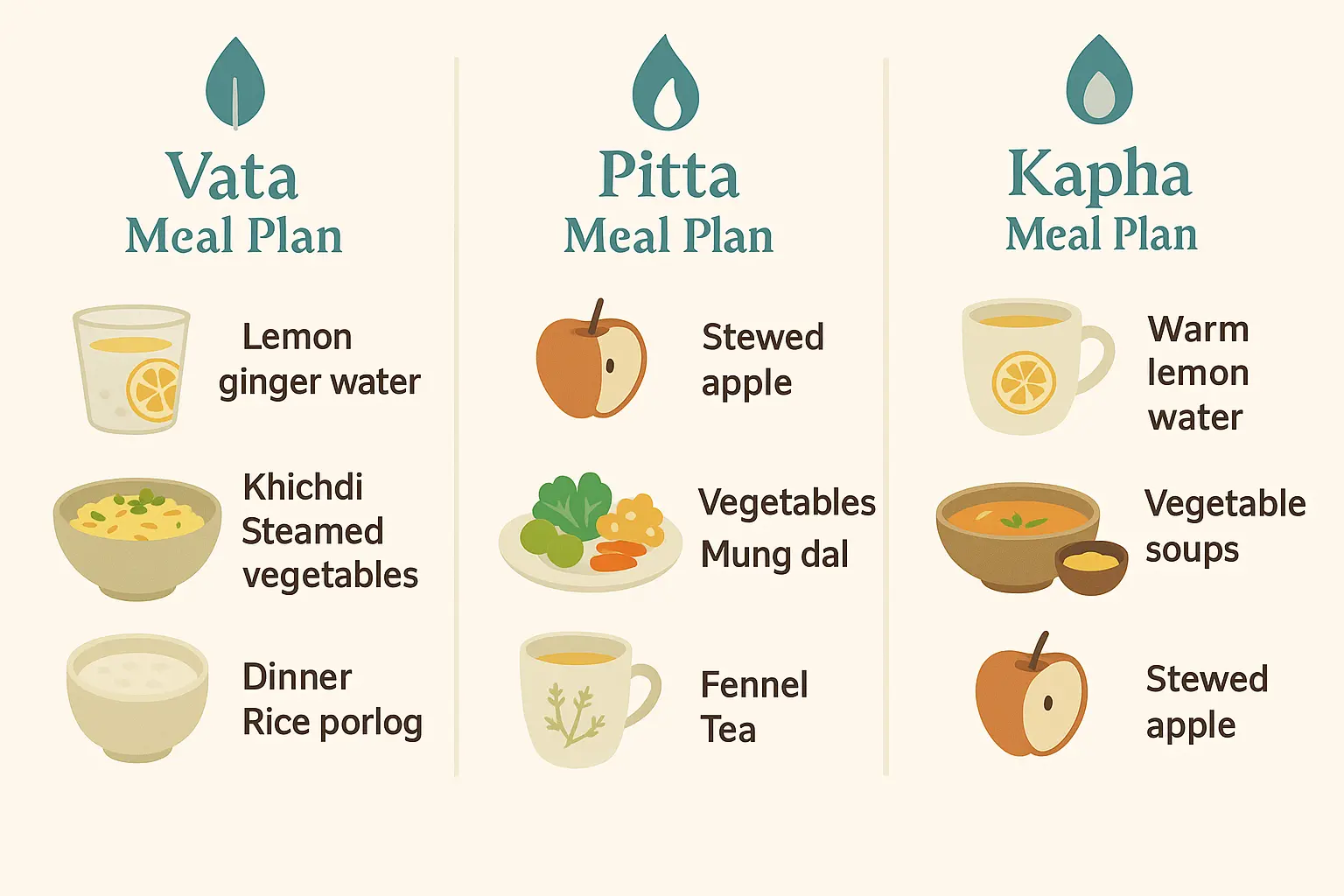
Daily meal rhythm using the dosha based diet plan for Vata, Pitta & Kapha digestion.
Foods That Balance All Three Doshas (Tridoshic Diet Guide)
While personalized nutrition sits at the heart of the dosha based diet plan, Ayurveda also recognizes foods that act as universal healers — supporting digestion gently across Vata, Pitta, and Kapha simultaneously. These are called Tridoshic foods.
They are especially useful:
- During travel or routine disruptions
- When digestion feels sensitive
- In seasonal transitions
- Post-illness recovery
- Detox or Panchakarma phases
- When your dominant dosha isn’t clearly identified
Top Tridoshic Foods for Gut Balance
- Moong dal
- Classic khichdi
- Cooked seasonal vegetables
- Basmati rice
- Small amounts of ghee
- Stewed fruits
- Cumin–Coriander–Fennel (CCF) tea
- Warm filtered water
These foods succeed because they sit at the midpoint — neither overly heating (Pitta-aggravating), nor heavy and cooling (Kapha-provoking), nor drying and destabilizing (Vata-disturbing).
Dosha Based Diet for Gut Issues
Ayurveda treats digestive symptoms as communication — each symptom reflects a specific doshic imbalance, not a random malfunction.
| Common Symptom | Dosha Imbalance | Food-Based Solution |
|---|---|---|
| Bloating & Gas | Vata imbalance | Warm ginger water, hing in dal, moong khichdi |
| Acidity & Reflux | Pitta aggravation | Fennel tea, coconut water, lauki sabzi |
| Heaviness & Mucus | Kapha stagnation | Pepper-ginger tea, millet soups, bitter greens |
Rather than eliminating entire food groups, a targeted dosha diet corrects the digestion pattern causing symptoms.
Seasonal Dosha Diet Adjustments (2025 Ayurvedic Guide)
Season influences digestion as strongly as food itself. Each dosha naturally rises during certain climates — requiring small dietary shifts to protect Agni.
Vata Season — Autumn & Winter
- Effects: Dryness, anxiety, bloating
- Eat: Soups, stews, ghee, root vegetables
- Avoid: Raw vegetables, crackers, smoothies
Pitta Season — Summer
- Effects: Heat, dehydration, acidity
- Eat: Coconut water, cucumber, barley soups
- Avoid: Chilies, alcohol, fermented pickles
Kapha Season — Late Winter & Spring
- Effects: Sluggish digestion, mucus, weight gain
- Eat: Millets, bitter greens, ginger tea
- Avoid: Heavy dairy, sweets, late dinners
The 60–30–10 Dosha Eating Framework
This system prevents paralysis from personalization and integrates Ayurveda into real life.
- 60% → Foods pacifying your primary dosha
- 30% → Foods balancing your secondary dosha
- 10% → Seasonal + stress-responsive foods
Application Examples
Vata–Pitta Constitution:
- 60% grounding stews and rice
- 30% cooling fruits or lauki
- 10% seasonal greens
Kapha–Vata Constitution:
- 60% light millet meals
- 30% Vata-grounding rasams and soups
- 10% warming spice adjustments
The Dosha Plate Method — Visual Eating System
For fast daily application — build your plate like a modern Ayurvedic thali.
Step-by-Step Plate Method
- ½ plate vegetables
- Vata → soft cooked vegetables
- Pitta → lauki, zucchini, cucumber
- Kapha → spinach, methi, broccoli
- ¼ plate grains
- Vata → rice, soft millets
- Pitta → barley or basmati rice
- Kapha → millets only
- ¼ plate proteins
- Moong dal
- Lentils
- Paneer (avoid at night for Kapha)
- Spice Layer
- Vata → ginger & cumin
- Pitta → fennel & coriander
- Kapha → black pepper & mustard seeds
- Ghee modulation
- Vata → recommended
- Pitta → small amounts
- Kapha → minimal
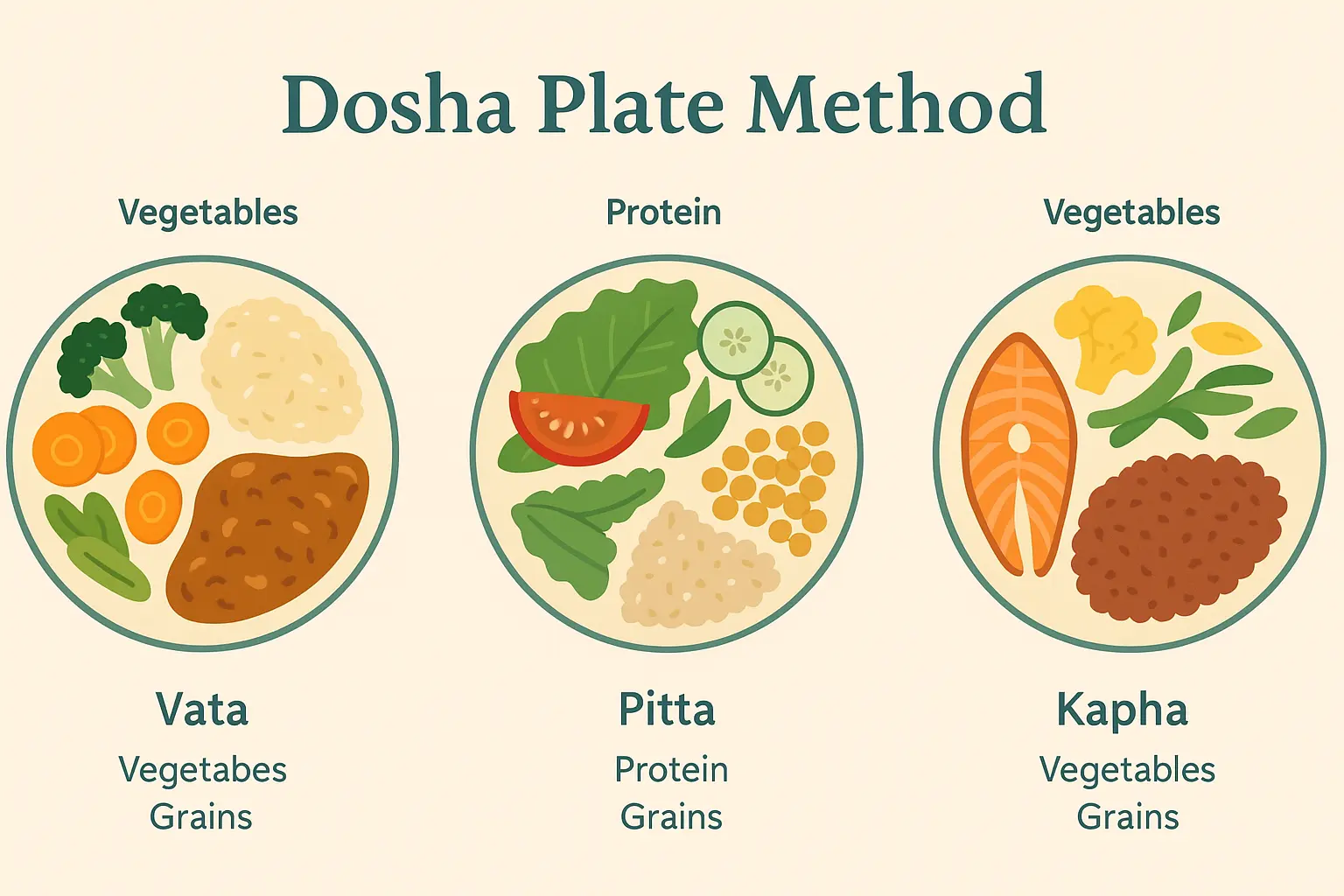
The Dosha Plate Method shows how to visually balance meals for Vata, Pitta & Kapha.
Continue Your Ayurvedic Nutrition Journey
If this Dosha Based Diet Plan helped you understand how Vata, Pitta, and Kapha shape digestion, cravings, and metabolism, you may enjoy exploring our deeper Ayurveda learning resources below — carefully designed to extend this knowledge into practical healing and professional mastery.
📘 Start With Our Pillar Guide
Ayurvedic Nutrition: A Holistic Guide to Eating for Wellness
This comprehensive pillar guide connects dosha theory with real dietary application — covering seasonal eating, digestive fire balance, food energetics, emotional nourishment, and daily nutrition rhythms.
Read Full Nutrition Guide →🧠 Related Deep-Dive Articles
-
Three Doshas in Ayurveda — Decode Your 3 Doshas for Optimal Health
A dedicated breakdown of how each dosha governs body structure, metabolism, temperament, emotional behavior, digestion, and lifestyle tendencies.
-
Unlock Wellness — Top Online Ayurvedic Dietician Course With Certification (2025)
For readers wishing to explore Ayurvedic nutrition professionally — this guide explains certifications, consultation skills, client protocols, and clinic-ready dietary frameworks.
🎓 Turn Theory Into Practice
If you feel ready to go beyond articles and study Ayurveda systematically — including detailed dosha assessment, therapeutic diet planning, gut healing protocols, and client case management — our certified programs are the most structured learning route forward.
Online Ayurveda Courses & Certification Programs
View Course Programs →One-Week Dosha Based Gut Reset (2025 Ayurvedic Plan)
A gut reset is not starvation or extreme detox — it is a gentle return to digestive rhythm. This dosha based diet reset strengthens Agni without shock, restriction, or herbal overload.
Daily Universal Rules
- Eat warm, freshly cooked meals only
- Drink warm water or spice teas (no cold beverages)
- Early dinner before 7:30–8 pm
- No snacking between meals
- Meals at consistent times
- Spices kept gentle
- 10-minute relaxed walk after lunch
7-Day Reset Flow
| Days | Digestive Focus | Diet Strategy |
|---|---|---|
| 1–2 | Stabilisation phase | Khichdi, moong dal soup, cooked vegetables, stewed fruit, CCF tea |
| 3–4 | Dosha targeting |
Vata → ghee + sweet potato Pitta → lauki + coconut water Kapha → ginger-pepper soups |
| 5–6 | Mindful digestion | 20 chews per bite, no screens while eating, gentle yoga |
| 7 | Mono-diet reset |
Khichdi day +
Ginger tea (Vata & Kapha) Fennel tea (Pitta) |
Real Case Studies — Digestive Healing Through Dosha Nutrition
Rhea (30) — Vata Constitution | Bangalore
Symptoms: Chronic bloating, constipation, anxiety Lifestyle triggers: Skipped meals, cold salads, long work hours
We shifted her diet to warm khichdi lunches, stewed apples for breakfast, ghee-rich dal meals, ginger-ajwain tea, and fixed meal timing.
Results: 80% reduction in bloating within 9 days Complete resolution of constipation in 3 weeks
“My stomach finally feels like it trusts me again.”
Arjun (35) — Pitta Constitution | Gurgaon
Symptoms: Acidity, hunger spikes, irritability Lifestyle triggers: Coffee fasting mornings, stress, late dinners
We replaced coffee with coconut water, followed lauki-moong lunches, coriander-fennel teas, and earlier dinners.
Results: 70% reduction in acidity in two weeks Stopped antacid dependence for first time in 5 years
Meera (42) — Kapha Constitution | Pune
Symptoms: Heaviness, mucus, slow mornings, emotional eating Lifestyle triggers: Heavy dinners, sedentary routine, dairy-rich foods
We introduced millet khichdi, clear soups, ginger-pepper teas, post-meal walks, and light dinners.
Results: Morning sluggishness reduced by week 2 Consistent digestive comfort by week 3
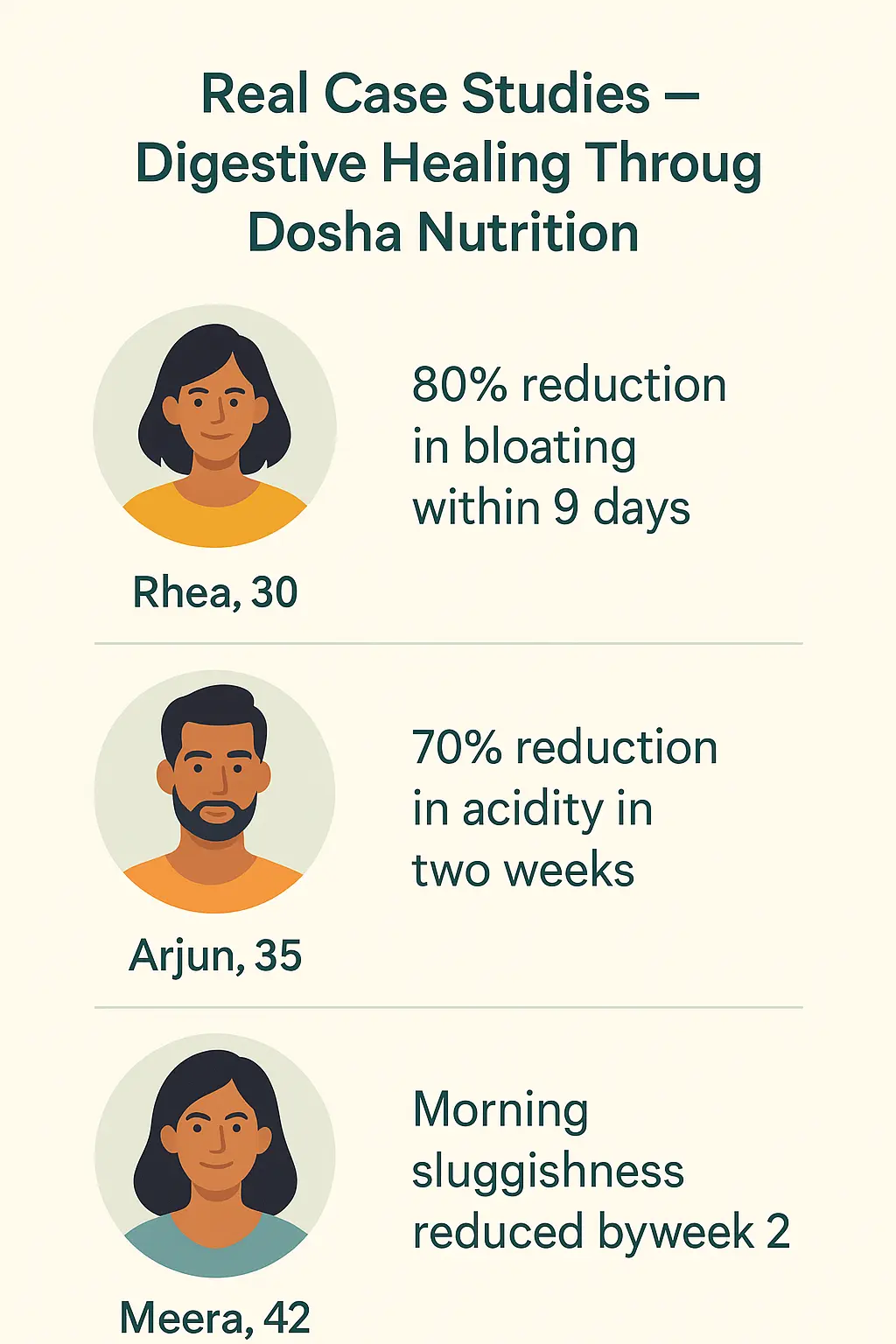
Real transformation stories showing digestion restored through personalized dosha nutrition.
FAQs — Dosha Based Diet & Digestive Healing
What is a dosha based diet?
It is a personalized Ayurvedic eating approach aligning food with your constitution (Vata, Pitta, or Kapha) to optimize digestion and overall wellness.
How do I determine my dosha?
Digestive patterns reveal it: Vata → bloating and gas Pitta → acidity and intense hunger Kapha → heaviness and sluggish digestion You may also take an Ayurvedic professional assessment.
Can I mix foods for multiple doshas?
Yes. The 60–30–10 dietary framework works perfectly: 60% food for your primary dosha, 30% for your secondary dosha, 10% seasonal or stress-based adjustments.
Is raw food healthy for all doshas?
No. Raw foods aggravate Vata and Kapha digestion and should be minimal even for Pitta types. Cooked food remains more gut-friendly overall.
How soon will digestion improve?
48–72 hours → bloating reduces 1 week → appetite stabilizes 2–3 weeks → energy consistency 3–4 weeks → deep digestive calm sets in
Is a dosha based diet safe long-term?
Yes. It is designed as a lifelong nutritional alignment system — not a short-term diet or detox plan.
Final Reflection — Eating in Harmony With Your Nature
Your body does not need discipline. It needs alignment.
A true dosha based diet feeds exactly what your constitution requires to restore digestion at its root.
- Warmth steadies Vata
- Cooling calms Pitta
- Lightness awakens Kapha
When meals align with dosha:
- Your gut quiets
- Your mind steadies
- Your energy becomes predictable
- Cravings soften
- Emotional eating fades
This is Ayurveda’s deepest promise: Not restriction — but rhythm.
Feed your nature correctly — and digestion becomes your strongest ally.

You may also like

What Is Agni- Complete Guide to Digestive Fire in Ayurveda