Which Course Is Best for Ayurveda?
Which Course Is Best for Ayurveda?
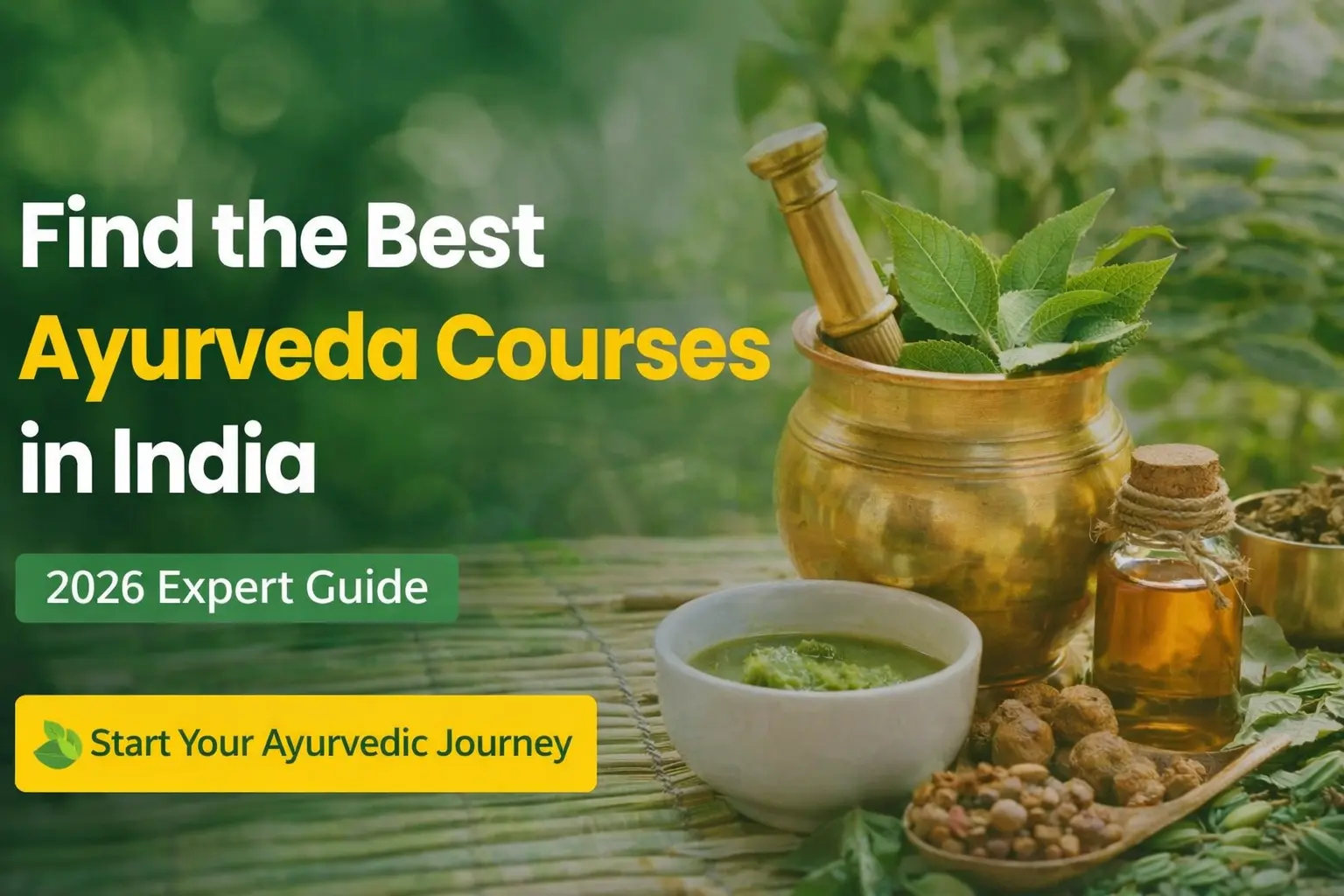
The best course for Ayurveda depends on your career objective — whether you intend to practice as a licensed Ayurvedic physician, work in wellness and Panchakarma therapy, or pursue education, research, or herbal entrepreneurship.
For clinical medical practice, the BAMS (Bachelor of Ayurvedic Medicine and Surgery) remains the only government-recognized and legally valid pathway in India. Wellness-focused professionals may choose diploma or certificate programs that do not require NEET.
For a verified overview of accredited programs, explore Ayurveda Courses in India by Vishuddhi Issha Yoga & Ayurveda , covering eligibility, duration, and professional scope.
Why Choosing the Right Course Matters
Ayurveda is not merely an academic qualification. It is a lifelong medical and philosophical discipline that integrates clinical science, psychology, ethics, and lifestyle regulation into a unified healing system.
The course you choose determines not only your professional eligibility, but also the depth of responsibility you are trained to carry — whether that responsibility involves medical diagnosis, therapeutic intervention, or wellness guidance.
Different Career Intentions Require Different Paths
- Clinical Medical Practice: Requires a government-recognized degree such as BAMS, which grants legal authority to diagnose, prescribe, and treat patients under the Ministry of AYUSH.
- Wellness & Therapy Practice: Diploma and certificate programs focus on Panchakarma, nutrition, lifestyle counseling, and body therapies — ideal for wellness centers, spas, retreats, and integrative health practices.
- Teaching & Research: Academic and institutional roles require MD / MS Ayurveda, enabling specialization, publication, and curriculum-based teaching.
- Entrepreneurship & Herbal Industry: Courses in Ayurvedic pharmacy, formulation, and nutrition support careers in herbal manufacturing, product development, and wellness entrepreneurship.
Ayurveda education is not about memorizing verses — it is about cultivating clarity (Sattva), vitality (Ojas), and disciplined intelligence (Agni).
Before enrolling, clearly define whether your intention is medical authority, therapeutic skill, or personal and professional transformation. The right course aligns intention with structured learning and long-term sustainability.
1. BAMS – Bachelor of Ayurvedic Medicine and Surgery
The BAMS degree is the foundational qualification for professional Ayurvedic practice in India. It is the only undergraduate program that grants legal authority to practice Ayurveda as a physician under the Ministry of AYUSH.
BAMS integrates classical Ayurvedic texts with modern medical sciences, ensuring graduates are clinically competent, ethically trained, and legally recognized healthcare professionals.
Course Snapshot
- Duration: 5.5 years (4.5 years academic study + 1 year compulsory internship)
- Eligibility: Completion of 10+2 with Physics, Chemistry, and Biology, along with NEET qualification
- Regulatory Authority: National Commission for Indian System of Medicine (NCISM)
Core Subjects Covered in BAMS
- Padartha Vigyan: Ayurvedic philosophy and foundational principles
- Rachana Sharir & Kriya Sharir: Anatomy and physiology from Ayurvedic and modern perspectives
- Charaka Samhita & Sushruta Samhita: Classical Ayurvedic medicine and surgery
- Dravyaguna Vigyan: Ayurvedic herbal pharmacology and materia medica
- Kayachikitsa: Internal medicine and disease management
- Panchakarma: Detoxification and rejuvenation therapies
- Shalya & Shalakya Tantra: Surgical disciplines, ENT, and ophthalmology
Top Colleges Offering BAMS in India
- Banaras Hindu University (BHU), Varanasi
- Gujarat Ayurved University, Jamnagar
- National Institute of Ayurveda (NIA), Jaipur
- Tilak Ayurved Mahavidyalaya, Pune
- Sri Sri College of Ayurvedic Science & Research, Bengaluru
Why BAMS Is the Best Ayurveda Course
- It is the only degree that permits independent Ayurvedic medical practice in India
- Graduates can establish clinics, hospitals, or integrative wellness centers
- Mandatory qualification for MD / MS Ayurveda and doctoral studies
- Recognized for government service, teaching positions, and research roles
BAMS is not merely an academic degree — it is a professional license, a philosophical foundation, and a lifelong medical responsibility.
2. MD / MS (Ayurveda) – Postgraduate Specialization
After completing BAMS, graduates who wish to advance their clinical authority, academic credentials, or research expertise may pursue MD (Ayurveda) or MS (Ayurveda) programs.
These postgraduate degrees represent the highest level of formal Ayurvedic education and are essential for careers in specialist clinical practice, teaching positions, and institutional research.
Program Overview
- Duration: 3 years of full-time postgraduate study
- Eligibility: BAMS degree with qualification in the All India AYUSH Post Graduate Entrance Test (AIAPGET)
- Outcome: Consultant-level Ayurvedic physician, academician, or research specialist
Popular MD / MS Ayurveda Specializations
| Specialization | Discipline Focus | Career Scope |
|---|---|---|
| Kayachikitsa (MD) | Internal Medicine | Consultant physician, hospital-based practice |
| Panchakarma (MD) | Detoxification and rejuvenation therapies | Wellness centers, medical spas, retreats |
| Dravyaguna Vigyan (MD) | Ayurvedic herbal pharmacology | Teaching, herbal research, pharmaceutical industry |
| Rasashastra & Bhaishajya Kalpana (MD) | Ayurvedic pharmaceutics and formulations | Medicine manufacturing, quality control, R&D |
| Shalya Tantra (MS) | Ayurvedic surgical disciplines | Surgical practice, teaching hospitals |
| Shalakya Tantra (MS) | ENT and ophthalmology | Specialty clinics, academic institutions |
Why Pursue MD / MS Ayurveda?
- Enables specialist-level clinical practice with higher diagnostic and therapeutic authority
- Mandatory qualification for teaching positions in government and private Ayurvedic colleges
- Opens pathways to research, PhD programs, and policy-level roles
- Significantly enhances professional credibility and long-term earning potential
MD / MS Ayurveda elevates a practitioner from general medical practice to specialist clinical and academic responsibility.
3. Diploma & Certificate Courses in Ayurveda (Non-NEET Options)
Not all Ayurveda careers require clinical medical licensing. For students, yoga teachers, wellness professionals, and entrepreneurs who do not wish to pursue NEET, diploma and certificate courses offer focused, practical, and accessible learning paths.
These programs emphasize hands-on skills, lifestyle application, and therapeutic competence rather than medical diagnosis or prescription.
Diploma in Panchakarma Therapy
- Duration: 6 to 12 months
- Curriculum Focus: Abhyanga, Shirodhara, Basti, Nasya, Swedana, and classical detoxification protocols
- Ideal For: Wellness therapists, spa professionals, retreat facilitators, and Panchakarma assistants
Diploma in Ayurvedic Pharmacy
- Duration: 1.5 to 2 years
- Curriculum Focus: Herbal identification, formulation principles, dosage forms, storage, and quality control
- Ideal For: Students interested in herbal manufacturing, pharmaceutical support roles, or Ayurveda-based product businesses
Certificate in Ayurvedic Nutrition & Lifestyle Management
- Duration: 6 to 9 months
- Curriculum Focus: Dosha-based diet planning, Dinacharya (daily routines), Ritucharya (seasonal regimens), and digestive health
- Ideal For: Yoga teachers, nutritionists, wellness coaches, and lifestyle consultants
Certificate in Ayurvedic Beauty & Wellness Therapy
- Duration: Approximately 6 months
- Curriculum Focus: Herbal skincare, rejuvenation therapies, oils, scrubs, and external treatments
- Ideal For: Beauty professionals, holistic spa therapists, and wellness entrepreneurs
Diploma and certificate programs do not replace medical degrees, but they create skilled professionals capable of delivering authentic Ayurvedic wellness services within their defined scope of practice.
4. Online & Hybrid Ayurveda Courses
With the growing global demand for holistic health education, Ayurveda is no longer limited to residential colleges or full-time academic institutions. Online and hybrid Ayurveda courses now allow students across India and abroad to access authentic learning without relocation.
These programs combine structured theoretical instruction, live interactive sessions, recorded modules, and—in some cases—optional in-person practical training.
Who Should Consider Online Ayurveda Learning?
- Working professionals seeking flexible study schedules
- International students unable to relocate to India
- Yoga teachers and wellness practitioners expanding their clinical understanding
- Entrepreneurs building Ayurveda-based wellness or education platforms
Reputed Institutions Offering Online Ayurveda Education
- Vishuddhi Issha Yoga & Ayurveda (India) — Online diplomas and certifications grounded in classical Ayurveda, yoga philosophy, and lineage-based instruction.
- Kerala Ayurveda Academy (India & USA) — Hybrid programs combining academic theory with clinical and wellness-oriented training.
- National Institute of Ayurveda (India) — Select academic modules, continuing education, and faculty development programs.
- California College of Ayurveda (USA) — Structured professional Ayurveda education designed for international practitioners.
- The Ayurvedic Institute (USA) — Classical Ayurveda education inspired by traditional Vaidya parampara.
Advantages of Online & Hybrid Ayurveda Courses
- No geographical constraints
- Self-paced learning supported by live mentorship
- Significantly lower cost compared to residential study
- Access to diverse teachers and global perspectives
While online programs are highly effective for theoretical understanding, lifestyle application, and wellness practice, they do not replace BAMS or MD/MS degrees required for licensed medical practice in India.
Online learning expands access to Ayurveda, but authentic guidance, discipline, and depth of study determine its true value.
5. Career Opportunities After Studying Ayurveda
Ayurveda offers a wide spectrum of career opportunities across healthcare, wellness tourism, education, research, and entrepreneurship. As global interest in preventive and holistic medicine grows, professionally trained Ayurveda practitioners are increasingly in demand in India and abroad.
| Career Path | Professional Role | Average Annual Income (INR) |
|---|---|---|
| Ayurvedic Doctor | BAMS / MD Ayurvedic Physician | ₹6 – 12 LPA |
| Panchakarma Therapist | Wellness & Spa Specialist | ₹2 – 5 LPA |
| Ayurvedic Nutritionist | Diet & Lifestyle Consultant | ₹3 – 8 LPA |
| Ayurvedic Pharmacist | Herbal Manufacturing & Quality Control | ₹3 – 6 LPA |
| Researcher | AYUSH Institutions & Herbal R&D | ₹5 – 10 LPA |
6. According to Ayurveda: Learning as Transformation
Ayurveda defines education not as the accumulation of information, but as a process of inner refinement. True learning cultivates clarity of mind (Sattva), vitality of the body (Ojas), and disciplined intelligence (Agni).
A genuine student of Ayurveda does not merely study classical texts, but gradually aligns lifestyle, perception, and professional conduct with the principles of balance and harmony.
The most valuable Ayurveda education transforms how one lives, thinks, and heals — not merely what one knows.
Frequently Asked Questions
Which course is best for Ayurveda?
Which short-term course is best in Ayurveda?
Which Ayurveda course is best after 12th?
Can I study Ayurveda without NEET?
Which Ayurveda course offers the highest salary potential?
Which Ayurveda course is best for yoga teachers?
Which is the best online Ayurveda course?
Where can I find authentic Ayurveda courses in India?
Suggested Reading & Learning Resources
To deepen your understanding of Ayurveda as both a medical science and a living tradition, explore the following curated resources. These readings expand on education pathways, regional learning environments, and modern study formats.
Ayurveda in India
An overview of Ayurveda’s historical roots, institutional structure, and its continued evolution as a recognized medical system in India.
Read moreAyurveda in Goa
Learn how nature-based environments, Panchakarma centers, and wellness retreats support immersive Ayurveda education.
Read moreBest Ayurveda Courses in India
Compare degree programs, diplomas, and online certifications to identify the most suitable academic and professional pathway.
Read moreOnline & Onsite Ayurveda Education
Understand the advantages and limitations of online, hybrid, and residential Ayurveda learning models.
Read moreBegin Your Authentic Ayurveda Journey
Choosing the right Ayurveda course is the foundation of a sustainable and ethical professional path. Authentic education requires qualified teachers, structured curriculum, and alignment with classical principles.
Explore verified, lineage-based, and globally respected programs offered by Vishuddhi Issha Yoga & Ayurveda, where traditional wisdom is integrated with modern learning frameworks.
Explore Ayurveda Courses in India
You may also like