Ayurveda for Skin Diseases: Why Chronic Skin Problems Don’t Start on the Skin
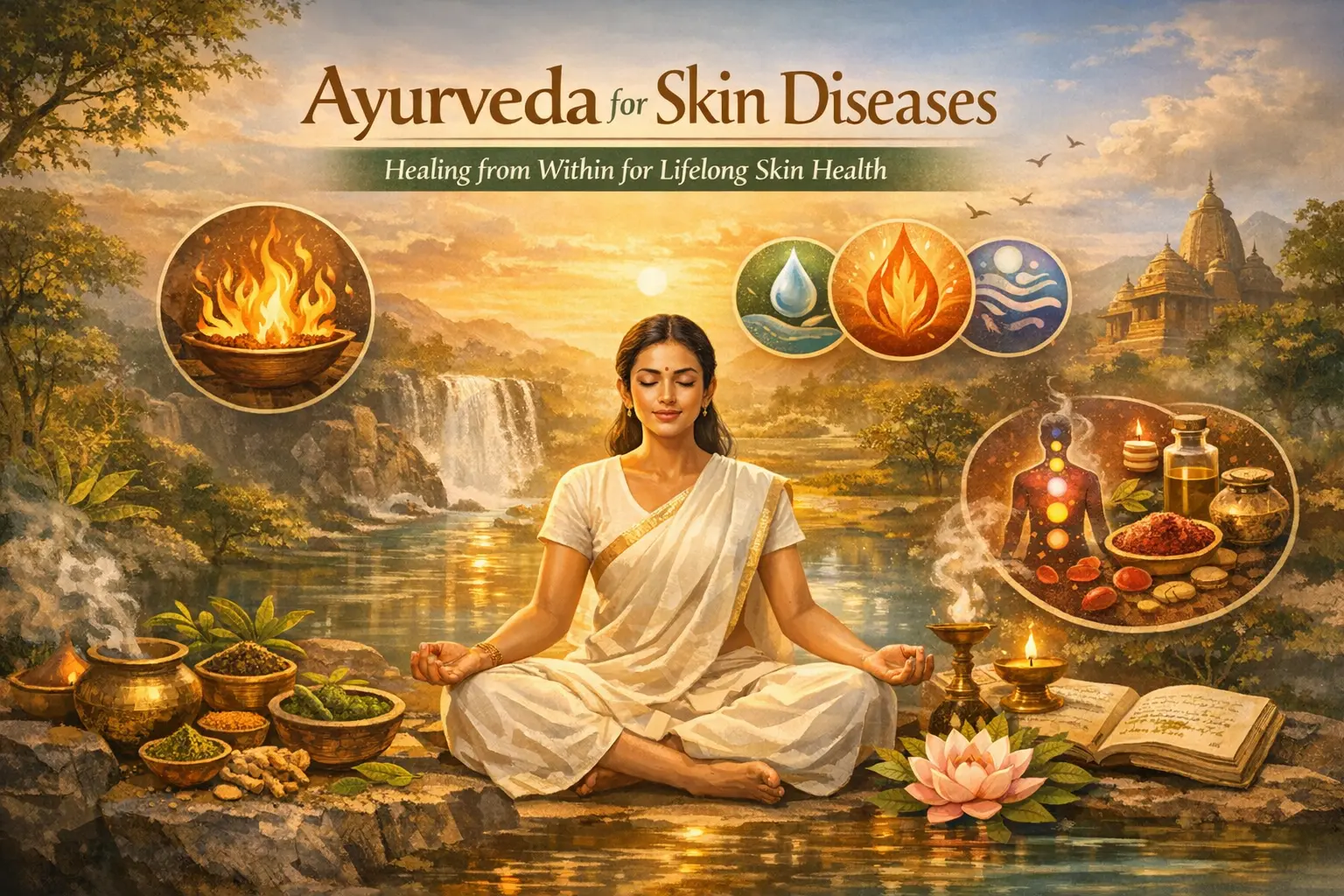
Ayurveda for Skin Diseases: The Complete Root-Cause Healing Science for Lifelong Skin Health
🌿 Why chronic skin problems don’t start on the skin — and how Ayurveda heals them from the root
Ayurveda for Skin Diseases is a root-cause medical system that heals chronic skin problems by correcting digestion (Agni), removing toxins (Ama), balancing Doshas, purifying blood (Rakta), and rebuilding immunity (Ojas) through personalized diet, herbs, lifestyle, and daily routines.
🌱 Introduction: Skin Is Not the Problem — It Is the Messenger
Skin diseases were once occasional and short-lived. Today, they have become chronic, recurring, and emotionally exhausting. Adult acne, childhood eczema, psoriasis in young professionals, persistent fungal infections, unexplained itching, pigmentation that refuses to fade — these are no longer exceptions. They are becoming the norm.
What is alarming is not just how common skin disorders have become, but how long they last. Many people spend years rotating through creams, medications, antibiotics, and restrictive skincare routines, only to see symptoms return the moment treatment stops. Relief feels temporary. Frustration feels permanent.
Ayurveda for Skin Diseases approaches this reality from a fundamentally different perspective. Instead of asking how to suppress symptoms, Ayurveda asks why the skin is expressing imbalance in the first place.
In classical Ayurvedic thought, the skin is not a cosmetic surface. It is a living organ that reflects digestion, metabolism, immunity, emotional health, and daily habits. When internal systems are overloaded or misaligned, the skin becomes the body’s chosen outlet.
🔍 Symptoms: What Chronic Skin Problems Are Really Telling You
Skin symptoms are often treated in isolation, but Ayurveda teaches that they are external signals of internal disturbance.
🩺 Common External Symptoms
These are the visible expressions most people recognize:
- 🔴 Redness, inflammation, and burning sensations
- 🔥 Persistent itching or irritation
- 🧩 Dryness, cracking, scaling, or thickened skin
- 💧 Oozing, weeping, or crust formation
- ⚖️ Excess oil production or clogged pores
- 🎯 Dark patches, uneven tone, or pigmentation
- 🕰️ Slow healing of wounds or scars
🧠 Internal Signals Often Overlooked
- 🌬️ Bloating, acidity, gas, or constipation
- 🍽️ Irregular appetite or food sensitivities
- 🔋 Fatigue, brain fog, or frequent infections
- 🌡️ Heat intolerance or excessive sweating
- 😟 Anxiety, irritability, suppressed anger, or chronic stress
Ayurveda explains that skin symptoms are usually late-stage expressions. The imbalance may begin quietly in digestion or metabolism months — sometimes years — before appearing on the skin.
Ayurveda explains skin diseases as manifestations of internal imbalance involving Doshas, digestion (Agni), blood tissue (Rakta Dhatu), and toxin accumulation (Ama). This foundational principle is described extensively in classical Ayurvedic texts and is upheld by India’s Ministry of AYUSH, which governs and standardizes Ayurvedic education and clinical practice (Ministry of AYUSH, Government of India).
🧬 Causes: Root Causes of Skin Diseases According to Ayurveda
Ayurveda does not attribute skin disease to a single cause. Instead, it recognizes a layered process involving digestion, toxins, Doshas, blood tissue, and the mind.
🔥 1. Disturbed Agni (Digestive and Metabolic Fire)
Agni governs how food is digested and transformed into usable nutrition. When Agni is weak, irregular, or excessive, digestion becomes incomplete. This leads to poor tissue nourishment and waste accumulation.
🧱 2. Ama Accumulation (Metabolic Toxins)
Incomplete digestion produces Ama — a heavy, sticky, inflammatory residue. Ama circulates through the body, clogs microchannels (Srotas), triggers immune reactions, and lodges in vulnerable tissues such as the skin.
⚖️ 3. Dosha Imbalance
Each Dosha contributes differently to skin pathology:
- 🔥 Pitta imbalance causes heat, redness, acne, rosacea, inflammation, and psoriasis
- 💧 Kapha imbalance leads to oozing eczema, fungal infections, cystic acne, and thickened skin
- 🌬️ Vata imbalance results in dryness, cracking, scaling, premature aging, and sensitivity
Most chronic conditions involve two or all three Doshas.
🩸 4. Rakta Dhatu Dushti (Blood Tissue Impurity)
Rakta Dhatu nourishes the skin and carries oxygen and nutrients. When blood becomes burdened with toxins, inflammation and chronic skin disease follow.
🧠 5. Emotional and Mental Stress
Ayurveda recognizes the skin–mind connection. Suppressed anger, grief, fear, or long-term stress disturb Doshas and weaken immunity. Many flare-ups occur during emotionally intense periods, even without dietary changes.
🪔 Ayurvedic View: Skin, Digestion, and the Inner Fire
Ayurveda compares digestion to a kitchen fire:
- 🔥 A weak fire leaves food uncooked, creating waste
- 🔥 An excessive fire burns food, damaging tissues
- 🔥 A balanced fire nourishes the body properly
The same principle applies to the skin. Weak Agni creates toxins that clog the skin. Excess Agni creates inflammatory heat. Balanced Agni supports clear, resilient skin.
This is why Ayurveda for Skin Diseases always begins with correcting digestion before focusing on external treatments.
🪜 The Step-by-Step Ayurvedic Skin Healing Protocol
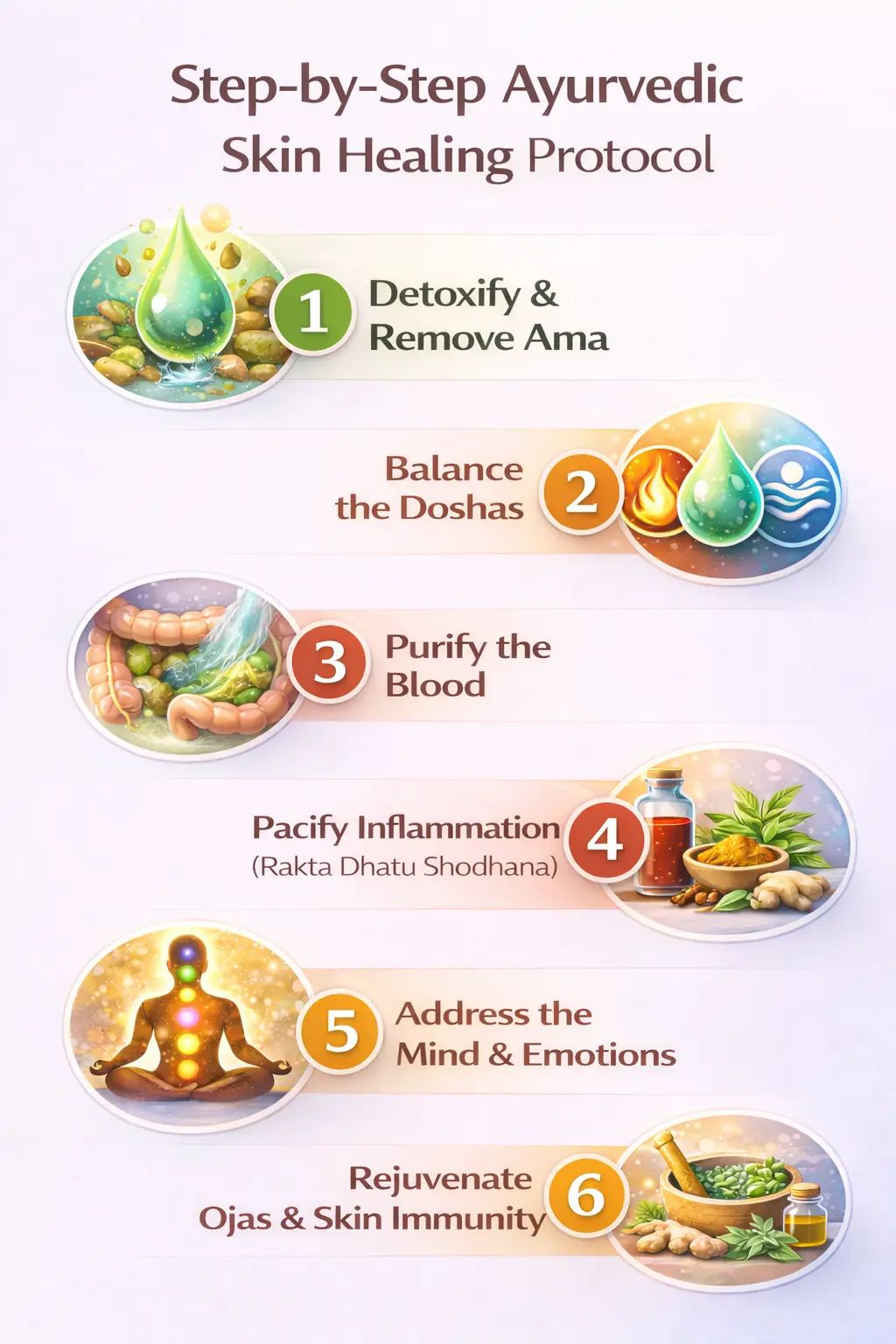
Ayurvedic treatment follows a logical internal sequence rather than cosmetic symptom control.
🥣 Step 1: Restore Digestion
The first step is restoring digestion. This involves eating warm, freshly cooked meals, maintaining regular meal timings, avoiding incompatible food combinations, and respecting hunger signals.
🧹 Step 2: Eliminate Ama
The second step is eliminating Ama. This may include gentle detoxification, blood-purifying herbs, seasonal cleansing, and supporting the liver and intestines.
⚖️ Step 3: Balance Doshas
The third step is balancing Doshas. Diet is adjusted according to the dominant Dosha involved. Herbal formulations are selected based on constitution and disease stage. Lifestyle habits are corrected to remove aggravating factors.
🛡️ Step 4: Rebuild Ojas
The fourth step is rebuilding Ojas, the essence of immunity and vitality. This requires proper sleep, emotional balance, stress regulation, and the use of Rasayana herbs when appropriate.
True healing occurs gradually, from the inside out. The skin improves as internal balance is restored.
⚖️ Dosha-Wise Framework for Skin Diseases
🔥 Pitta-Dominant Skin Disorders
Pitta-dominant skin disorders include acne, psoriasis, rosacea, inflammation, and pigmentation. These conditions are characterized by heat, redness, and burning.
Treatment focuses on cooling foods, bitter herbs, emotional calming, and reducing excess heat.
💧 Kapha-Dominant Skin Disorders
Kapha-dominant skin disorders include fungal infections, cystic acne, and oozing eczema. These conditions are heavy, moist, and sluggish.
Treatment focuses on lightening the diet, reducing sugar and dairy, increasing circulation, and stimulating digestion.
🌬️ Vata-Dominant Skin Disorders
Vata-dominant skin disorders include dry eczema, cracking, scaling, and premature aging. These conditions involve dryness, roughness, and sensitivity.
Treatment focuses on nourishment, oil therapies, grounding routines, and warmth.
Most chronic skin diseases involve more than one Dosha, which further highlights the need for personalized care.
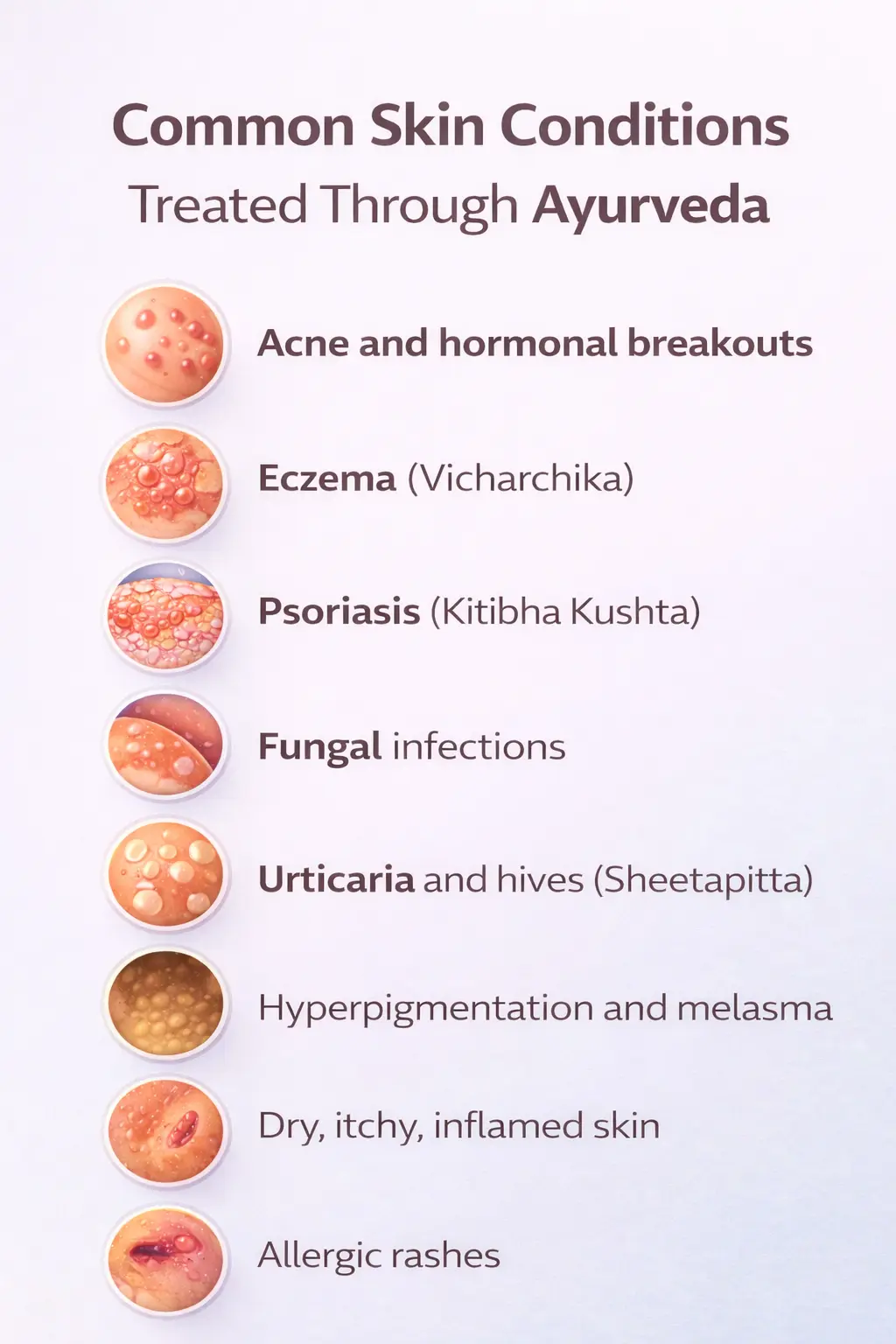
Common Skin Conditions Treated Through Ayurveda
Ayurveda addresses skin diseases by understanding why the skin is reacting, not just what it looks like. Each condition reflects a specific pattern of imbalance involving Doshas, digestion, blood quality, immunity, and mental stress. This is why two people with the same diagnosis may need completely different treatment approaches.
Below are the most common skin conditions effectively managed through Ayurveda:
🔴 Acne & Hormonal Breakouts
Adult acne, jawline breakouts, and cyclical flare-ups are usually linked to Pitta imbalance, often worsened by hormonal shifts, stress, and poor digestion. Ayurveda works on cooling internal heat, improving metabolic function, and supporting hormonal balance rather than aggressively drying the skin.
🟠 Eczema (Vicharchika)
Eczema is not just a skin issue—it reflects deeper Kapha–Pitta disturbance along with toxin accumulation (Ama). Chronic itching, oozing, or dryness points to immune hypersensitivity and weak digestion. Ayurvedic care focuses on calming inflammation, detoxifying gently, and restoring immune tolerance.
🔥 Psoriasis (Kitibha Kushta)
Classical Ayurvedic texts describe psoriasis as a form of Kushta, a systemic disorder involving Pitta, Vata, and Rakta Dhatu. Flare-ups are often linked to emotional stress, long-term digestive imbalance, and suppressed inflammation. Ayurveda aims for gradual, long-term stability rather than short-term suppression.
🍃 Fungal Infections
Recurrent fungal infections indicate excess Kapha and internal dampness. Sugar cravings, sluggish digestion, and low immunity often coexist. Ayurvedic treatment reduces internal moisture, strengthens Agni, and improves resistance so infections don’t keep returning.
❄️ Urticaria & Hives (Sheetapitta)
Sudden itching, redness, and wheals are signs of acute Pitta aggravation combined with toxin overload. Ayurveda addresses allergic tendencies by calming heat, stabilizing immune responses, and identifying hidden dietary or emotional triggers.
🌞 Hyperpigmentation & Melasma
Pigmentation disorders are often tied to chronic Pitta imbalance, liver overload, and hormonal stress. Ayurveda views uneven skin tone as an internal heat issue, not a cosmetic flaw, and works to correct metabolism and blood health from within.
🌬️ Dry, Itchy, Inflamed Skin
Excessive dryness, cracking, and sensitivity point to Vata imbalance, especially during winter or periods of irregular routine. Ayurveda restores moisture through nourishment, oil therapy, and nervous system regulation rather than harsh exfoliation.
⚠️ Allergic Rashes
Frequent rashes signal immune confusion rather than simple allergies. Ayurveda focuses on improving immune intelligence, reducing hypersensitivity, and strengthening the gut–skin connection.
🩹 Poor Wound Healing
Slow healing reflects weak Ojas, impaired circulation, or poor tissue nourishment. Ayurvedic care enhances regeneration by improving digestion, blood flow, and immune strength.
Why Diagnosis Matters More Than Labels
In Ayurveda, the same skin condition can have different causes in different people. This is why personalised assessment—of Doshas, digestion, lifestyle, and emotional health—is essential. True skin healing happens when the internal environment becomes balanced enough that the skin no longer needs to signal distress.
🌱 Key Ayurvedic Herbs Used for Skin Diseases
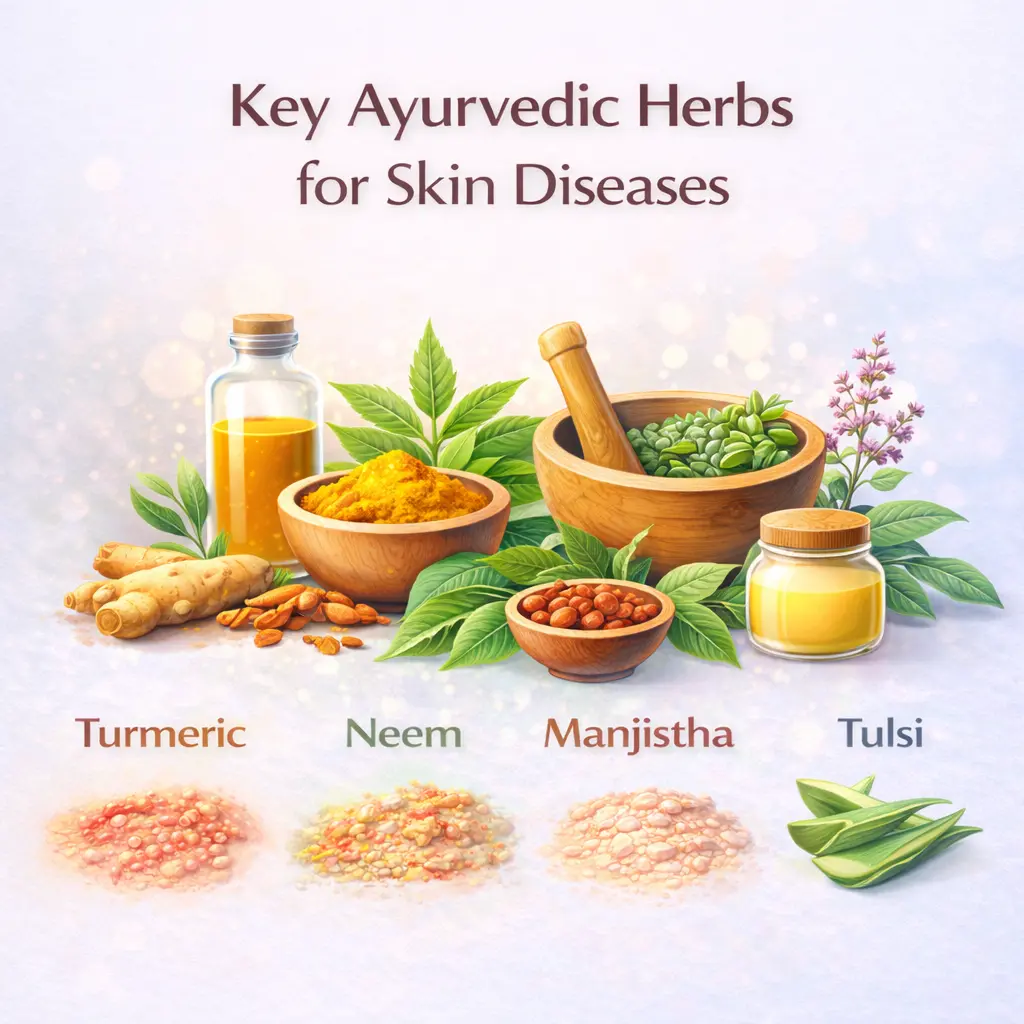
Ayurveda rarely uses herbs in isolation. Formulations are designed to address digestion, blood, and immunity simultaneously.
Commonly used herbs include:
- 🌿 Neem – blood purification and antimicrobial support
- 🌺 Manjistha – improves circulation and complexion
- 🍃 Guduchi – immune modulation and inflammation control
- 🌕 Turmeric – anti-inflammatory and antioxidant action
- ❄️ Sariva – cooling and anti-allergic support
- 🌳 Khadir – classical herb for Kushta conditions
Herbs must always be selected according to Dosha, digestion, and disease stage.
🍲 Diet (Ahara): Feeding the Skin from Within
Food directly shapes blood quality and inflammation.
🥬 Foods That Support Skin Healing
- 🥬 Bitter greens and vegetables
- 🌾 Moong dal and light proteins
- 🥕 Warm, seasonal vegetables
- 🧈 Ghee in moderation
🚫 Foods That Aggravate Skin Disorders
- 🍭 Excess sugar and refined carbohydrates
- 🧀 Dairy combined with fruits
- 🍟 Deep-fried and processed foods
- 🍷 Alcohol and excessive caffeine
Your skin quite literally eats what you eat.
🧘 Lifestyle (Vihara): Daily Habits That Heal the Skin
Lifestyle choices either calm or continuously aggravate Doshas. Even the best diet and herbs will fail if daily habits remain misaligned with natural rhythms.
- 🌅 Wake up early and sleep on time to stabilize hormonal cycles
- 💆 Practice daily oil massage (Abhyanga) to nourish skin and nervous system
- 🚶 Engage in gentle exercise, walking, or yoga to support circulation
- 📵 Reduce digital overload, especially in the evening hours
Consistency matters more than intensity. Small daily corrections create long-term skin stability.
⏰ Daily Routine (Dinacharya) for Skin Health
Ayurveda places strong emphasis on Dinacharya — a daily routine that aligns the body with circadian rhythms and supports digestion, immunity, and skin repair.
- 🪥 Tongue scraping and warm water on waking to remove toxins
- 🚿 Oil massage before bathing to improve circulation and dryness
- 🍽️ Regular meal timings to stabilize Agni
- 🌙 Digital detox and calming activities before sleep
These practices may appear simple, but when followed consistently, they reduce flare-ups and support deeper healing.
📘 Case Study: Chronic Eczema Reversed Through Ayurvedic Care
A 32-year-old professional presented with a ten-year history of eczema affecting the hands and arms. The condition worsened during stress and winter months. Previous treatment included steroid creams, which provided temporary relief but caused thinning of the skin.
An Ayurvedic assessment revealed weak digestion, high Ama, Kapha–Vata imbalance, and suppressed emotional stress. Treatment focused on correcting digestion, removing dairy and sugar, introducing internal herbs, oil massage, and establishing a consistent daily routine.
Within four months, the patient experienced nearly 70 percent improvement, reduced itching, improved sleep, and fewer flare-ups. The skin healed as internal balance was restored.
⚠️ Common Mistakes to Avoid
- ❌ Self-prescribing herbs without proper diagnosis
- ❌ Over-cleansing or over-exfoliating the skin
- ❌ Ignoring digestion while focusing only on topical products
- ❌ Expecting instant results and abandoning treatment too early
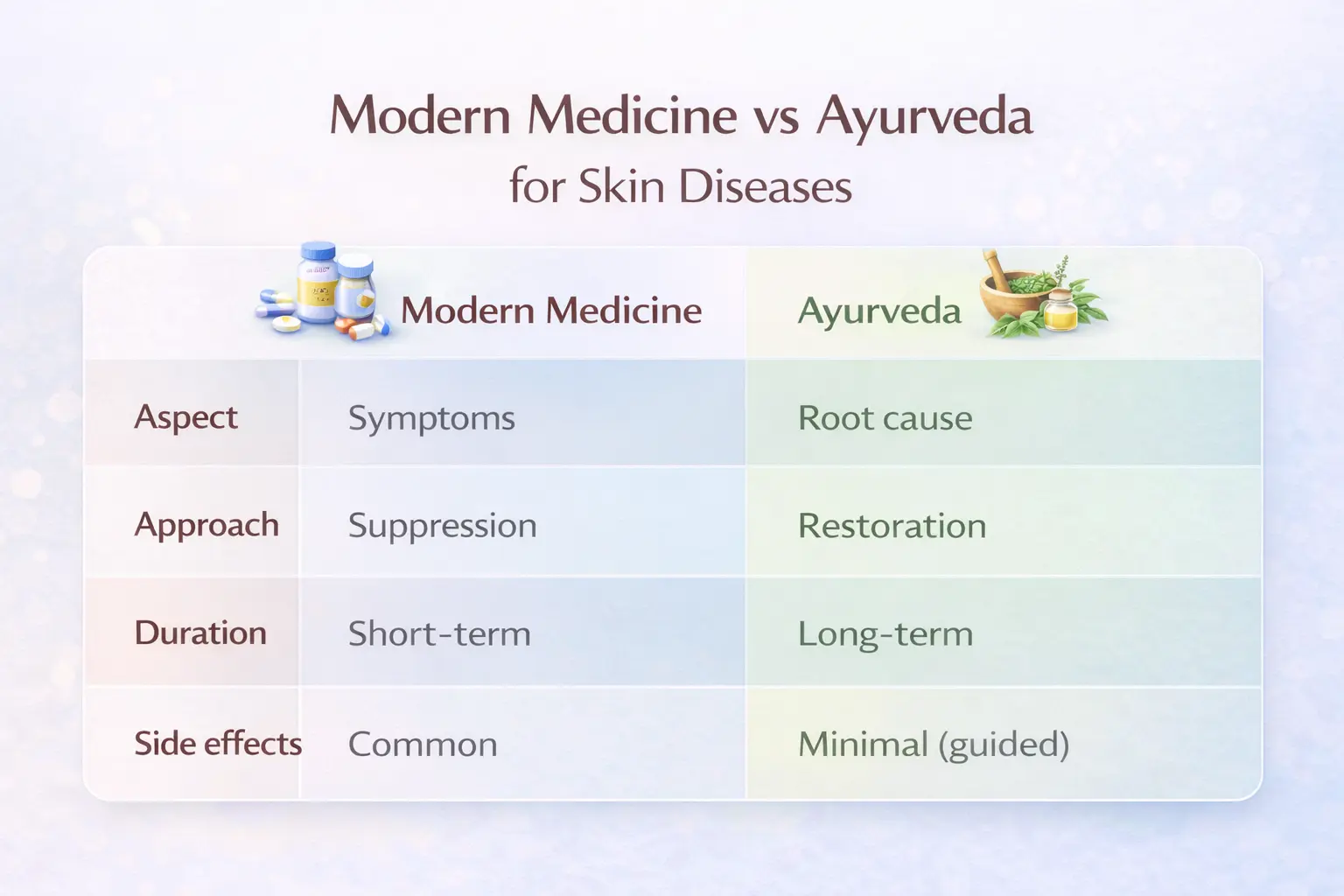
Ayurveda heals deeply, not quickly. Patience and consistency are essential.
❓ Frequently Asked Questions (FAQs)
Ayurvedic treatment usually takes three to six months, depending on the chronicity of the condition, digestive strength, and individual constitution.
Yes. Ayurveda supports autoimmune skin conditions by modulating immunity, reducing inflammation, correcting digestion, and addressing emotional stress.
No. Many skin conditions improve significantly without Panchakarma. Treatment is individualized based on strength, age, and disease stage.
Yes. When guided properly, Ayurveda and modern medicine can complement each other, especially during acute flare-ups.
Yes. Ayurveda is safe for children when age-appropriate herbs, diet, and routines are used under proper guidance.
🌿 Ready to Heal From the Root?
To deepen your understanding, explore our Online Ayurveda Courses and build a strong foundation in classical Ayurvedic healing.
For personalized guidance, book Holistic Health Consultations and receive support tailored to your body, mind, and lifestyle.
You may also explore our comprehensive pillar guide on Ayurveda for Health Issues .
🧘 Final Reflection
Skin diseases are not cosmetic flaws. They are messages from within. When digestion is corrected, toxins are cleared, emotions are processed, and routines align with nature, the skin heals naturally.
That is the enduring wisdom of Ayurveda for Skin Diseases — rooted in balance, not suppression.