
🌿 Ayurveda for Health Issues: A Complete Guide to Natural Healing & Holistic Wellbeing

Ayurveda for Health Issues: A Complete Guide to Natural Healing
Contents
What Is Ayurveda?
Ayurveda is India’s timeless natural health science — a system that understands the body as an intelligent ecosystem requiring balance, nourishment, and awareness. Instead of treating symptoms, Ayurveda focuses on the root cause: digestion, lifestyle, emotional patterns, and energetic constitution.
Modern research now supports many Ayurvedic principles, from circadian eating to herbal anti-inflammatory benefits. In a world filled with stress, poor diet, and burnout, Ayurveda offers clarity — simple routines, personalized foods, and herbal support that restore harmony from within.
Understanding Your Dosha
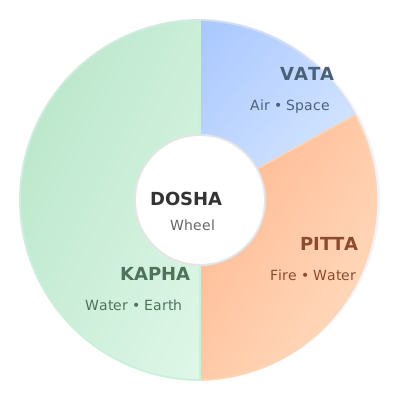
Ayurveda teaches that every person has a unique mind–body blueprint called a dosha. These doshas—Vata, Pitta, and Kapha—govern everything from digestion and metabolism to mood, sleep, and energy levels. When these energies remain in balance, you experience clarity, vitality, and emotional steadiness. When disturbed, the earliest signs of imbalance appear long before disease.
Your dosha explains why some people gain energy from movement while others need calm, why one person digests fast while another feels heavy after small meals, and why stress affects each person differently. Understanding your dosha is the foundation of personalized healing.

Vata — The Energy of Movement
Vata controls breath, circulation, nerve flow, creativity, and adaptability. When balanced, it brings enthusiasm, clarity, and lightness. When imbalanced, it causes dryness, anxiety, constipation, irregular appetite, and sleep disturbance.
- Balanced: creative, energetic, inspired
- Imbalanced: anxiety, dryness, irregular digestion, worrying
Pitta — The Energy of Transformation
Pitta manages digestion, metabolism, heat, intellect, and ambition. When balanced, it brings confidence, courage, discipline, and strong digestion. When excessive, it leads to acidity, anger, irritability, inflammation, and heat-related issues.
- Balanced: focused, intelligent, motivated
- Imbalanced: acidity, irritability, inflammatory skin issues
Kapha — The Energy of Stability
Kapha governs immunity, lubrication, structure, emotional steadiness, and endurance. When balanced, it gives compassion, stability, and lasting strength. When disturbed, it creates heaviness, sluggish digestion, weight gain, lethargy, and emotional dullness.
- Balanced: steady, patient, emotionally grounded
- Imbalanced: heaviness, congestion, slow metabolism, sadness
Most modern health issues begin as subtle dosha disturbances caused by irregular meals, overstimulation, late nights, emotional pressure, and poor digestion. When you balance your dosha early, you prevent 80% of long-term disorders.
How Imbalance Begins
One of the most extraordinary things about Ayurveda is its ability to detect illness before illness appears. In modern healthcare we often ask, “Do you have symptoms?” In Ayurveda we ask, “Do you feel aligned?” Alignment is a more sensitive diagnostic tool than symptoms. If you observe carefully, the body always whispers before it cries. Those whispers are what Ayurveda teaches you to hear.
Imbalance begins in very subtle ways. The earliest murmurings — the “pre-symptoms” (purvarupa) — include:
- You start waking up tired even after a full night’s sleep.
- You feel hungry at the wrong times and not hungry at the right times.
- You lose interest in things that once made you feel alive.
- Your digestion feels unpredictable.
- Your mind becomes noisier though your day is the same.
- You sense a drop in inner clarity, motivation, or confidence.
- You feel disconnected from your own body.
Ayurveda calls these early murmurings “purvarupa” — they are not signs of disease; they are signs of disturbance. A patient often says, “I’m not sick, but I don’t feel like myself anymore.” This is exactly the point where Ayurveda is most powerful. When listened to early, these whispers rarely escalate into louder, harder-to-treat problems.
Why Modern Life Creates Imbalance
Even though this wisdom comes from ancient India, Ayurveda feels tailor-made for our era. Modern living disrupts exactly the three things Ayurveda protects most:
1. Timing (Kala)
We eat, sleep, work, and rest out of sync. People eat because the clock says so, not because the body does. They sleep when screens allow, wake with alarms instead of internal rhythm, and work without breathing space. Ayurveda views this as a direct assault on vitality.
2. Sensory Overload (Indriya Vega)
Too much information and too little assimilation creates mental Ama — undigested impressions. Scrolling, notifications, and constant noise produce anxious thoughts, shallow breathing, emotional fatigue and restlessness.
3. Constant Speed (Ati-Chesta)
Modern life rewards speed but nature rewards rhythm. Movement without pause burns out the system: many people experience a mix of exhaustion and overactivity — a classic Vata–Pitta pattern. Ayurveda teaches that speed without grounding leads to depletion without disease.
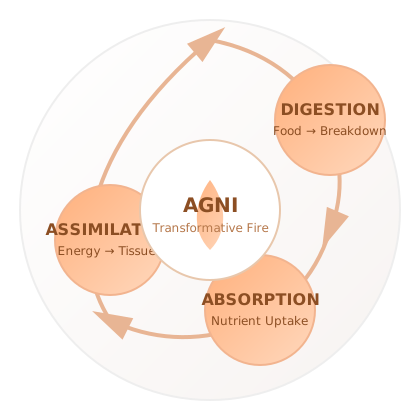
These three forces — wrong timing, overstimulation, and relentless speed — slowly erode Agni (digestive fire) and build Ama (metabolic residue). The sooner rhythm is restored, the easier it is to rebuild clarity, digestion and vitality.
The Ayurvedic Model of Healing
Ayurvedic healing is not about adding remedies — it’s about removing the reasons balance was lost. It starts with the most overlooked question: are you sleeping at the right times, eating according to real hunger, breathing fully, resting deeply? Many people discover their suffering comes from the direction their life has taken, not from a single cause. Everything else in this guide — Agni, Ama, Ojas, and the specific health issues below — builds on getting this first layer right.
Patterns Not Symptoms
If five people present with the same complaint — say, dry skin — Ayurveda will give different explanations. It treats not the symptom, but the person: their dosha pattern, mind state, lifestyle, digestion and energy flow. Two people with dry skin may have distinct causes — one a Vata pattern from travel and irregular meals; another Pitta heat evaporating moisture. Same symptom. Different paths to balance.
Healing by Cooperation
The modern approach often feels like a battle against disease. Ayurveda sees the body as inherently intelligent: you create the right conditions and healing happens. When you align habits with nature, healing becomes a cooperation between you and your biology.
The Three Pillars: Agni, Ama, and Ojas
Three concepts sit underneath almost everything in Ayurveda — understand these, and the rest of this guide (and every health-specific guide it links to below) makes a lot more sense.
Agni is your digestive fire — not just of food, but of every experience you take in. Strong Agni feels like lightness, clarity, and steady energy after eating. Weak Agni produces Ama.
Ama is the sticky residue of anything incompletely digested — food, emotions, or experience. It shows up as a coated tongue, heaviness, brain fog, or sluggish elimination, and Ayurveda treats it as the root of most imbalance because it blocks the body’s natural channels.
Ojas is the finest product of good digestion — the reserve of resilience, immunity, and emotional steadiness that strong Agni and low Ama build over time. It isn’t something you supplement directly; it’s cultivated through alignment.
Nearly every issue covered below — digestion, immunity, skin, hair, weight, stress — comes back to the state of these three.
Emotions & Ayurvedic Health
Ayurveda sees emotional digestion as important as physical digestion. When emotions are processed, expressed and resolved, the mind remains light. When emotions are suppressed or overstimulated, Ama forms in the mental channels (manovaha srotas).
Vata emotional imbalance
Shows up as anxiety, restlessness, worry, overwhelm, fear of the future, scattered thoughts.
Pitta emotional imbalance
Shows up as irritability, frustration, judgment, perfectionism, burnout, controlling tendencies.
Kapha emotional imbalance
Shows up as sadness, lethargy, emotional heaviness, attachment, resistance to change.
Ayurveda never separates mind from body. Every emotional state is tied to digestion, sleep, habits and dosha patterns.
How Seasons Affect Your Health
Each season amplifies a specific dosha, which is why symptoms fluctuate during the year. When you understand these seasonal shifts, prevention becomes effortless.
Vata Season (Autumn & Early Winter)
- Dry skin, cracking joints
- Anxiety, restlessness
- Constipation or bloating
- Irregular appetite & sleep
Pitta Season (Late Spring & Summer)
- Heat, inflammation, acidity
- Anger, irritability
- Rashes or breakouts
- Loose stools or excess thirst
Kapha Season (Late Winter & Early Spring)
- Congestion, heaviness, allergies
- Slow digestion, lethargy
- Water retention
- Low motivation or emotional heaviness
When seasonal habits are aligned with your constitution, the body feels supported, not stressed.
Common Health Issues Ayurveda Improves
Each of these has its own full guide — this is the short version of what Ayurveda says about each.
Digestion. Constipation, bloating, acidity, and sluggish digestion are almost always Agni-related, and each dosha shows the imbalance differently. Read the full digestion guide →
Immunity. True immunity is built through strong Agni and steady Ojas, not consumed through supplements — herbs support the process but don’t replace it. Read the full immunity guide →
Skin. Skin issues rarely start on the skin — most breakouts, dryness, and inflammation trace back to digestion, liver heat, and stress. Read the full skin guide →
Hair. Hair fall is a systemic signal, not a standalone problem — usually tracing to weak Agni, high Pitta, or stress-driven hormonal shifts. Read the full hair guide →
Weight. Ayurveda works with Agni and rhythm rather than calories — both weight gain and difficulty gaining are read as different kinds of digestive imbalance. Read the full weight guide →
Stress & Anxiety. Mental and emotional patterns are read through the same dosha lens as physical ones — Vata-type anxiety, Pitta-type irritability, and Kapha-type heaviness each call for different tools. Read the full stress guide →

Daily Ayurvedic Routines (Dinacharya)

Ayurveda treats your daily rhythm as a reset system, not a rulebook — a way of working with your biology instead of against it.
A simple starting point: wake into your body before your phone, take warm water before anything else, and get light movement in before the day’s demands take over. The same logic applies in reverse at night — dim the sensory world early, eat dinner earlier rather than lighter, and give the day a clear ending before sleep.
Get the full morning-to-night routine, plus seasonal adjustments →
Ayurvedic Herbs at a Glance
A quick-reference starting point — dosage and full combinations live in each linked health guide above.
| Herb | Best For |
|---|---|
| Triphala | Gentle digestive regulation |
| Cumin (Jeera) | Everyday digestive support |
| Ginger | Circulation, sluggish digestion |
| Ashwagandha | Stress-linked immunity, sleep |
| Giloy (Guduchi) | Recovery, seasonal resilience |
| Neem | Heat-based skin issues |
| Bhringraj | Hair thinning from exhaustion |
| Guggulu | Metabolic stagnation |
| Brahmi | Mental clarity without overstimulation |
| Jatamansi | Anxiety-linked insomnia |
None of these are shortcuts on their own — Ayurveda pairs herbs with the digestion and routine work covered above.
When to Seek an Ayurvedic Practitioner
Not all health concerns require a practitioner. Many patterns only need routine, rhythm, and basic lifestyle correction. But certain cases benefit from a trained eye — someone who can interpret patterns beyond symptoms.
🧘 When Self-Care Is Enough
Home-level Ayurveda is usually appropriate when:
- Stress is episodic, not constant.
- Digestion fluctuates only during schedule chaos.
- Skin issues appear occasionally.
- Sleep is disturbed once in a while.
- Energy returns easily after rest.
These are rhythm issues — not deep-seated imbalances.
👩⚕️ When You Need a Practitioner
Seek expert guidance if you notice:
- Digestion remains unpredictable for months.
- Skin issues repeat seasonally or cyclically.
- Anxiety feels patterned, not situational.
- Weight fluctuates without clear causes.
- Your energy feels “stuck,” not tired.
- You feel “off” but can’t understand why.
Ayurvedic practitioners read patterns — not just symptoms.
📝 What a Consultation Typically Includes
- Digestive mapping — understanding your Agni curve.
- Emotional climate assessment.
- Routine analysis (timing matters more than content).
- Herbal suitability evaluation.
- Food rhythm understanding.
- Dosha-based guidance without stereotype assumptions.
⚠️ Safety & Responsible Guidance
Ayurveda supports wellbeing but does not replace medical diagnosis or emergency care. Think of Ayurveda as the architect of your lifestyle, and modern medicine as the structural engineer. Both matter, and both support each other.
How to Learn Ayurveda for Personal Health
Ayurveda is not learned by memorizing doshas — it is learned by observing yourself differently. Here is a natural learning path for anyone wanting to understand Ayurveda in a practical, grounded and life-applicable way.
👶 Ayurveda Foundation Basic Course
Made for beginners who want to understand:
- Why digestion influences emotions
- How doshas behave in real daily life
- How to read subtle body signals
- How routine shapes your entire health
Enroll in the Ayurveda Foundation Basic Course →
🥗 Ayurveda Dietetics and Nutrition Course
A deeper study focused on:
- Seasonal eating and digestive timing
- Understanding spice logic
- Food combinations that protect Agni
- How to create meals that support clarity
- Daily troubleshooting for bloating, heaviness or acidity
Explore the Ayurveda Dietetics & Nutrition Course →
🌿 Advanced Ayurveda Lifestyle Coach Program (AACCC)
Designed for those who feel called to guide others in lifestyle-based healing. Includes:
- Client dosha pattern evaluation
- Habit design rooted in Ayurveda
- Emotional balancing through breathwork
- Ayurvedic sleep & stress frameworks
Join the Advanced Ayurveda Lifestyle Coach Program →
🎓 Advanced Ayurveda Course
A comprehensive pathway for serious students who want to deepen their understanding of classical Ayurveda while integrating modern wellness science.
A Note on Structured Healing
While understanding these principles is the first step, lasting correction of deep-seated imbalances often requires a structured, phased approach guided by expert assessment.
At Vishuddhi, we apply this Ayurvedic wisdom through personalized 90-day healing protocols, which are carefully prescribed within our Holistic Health Consultation framework after a thorough evaluation of your unique constitution (Prakriti) and current imbalances (Vikriti).
The Gut-Hormone-Stress Reset
Balancing digestion, hormones, and nervous system
Common Health Issues Addressed:
- PCOS & Hormonal Imbalance
- Thyroid Disorders
- Anxiety & Chronic Stress
- IBS & Digestive Issues
- Chronic Fatigue
Restore Agni, balance hormones (Pitta/Vata), and build Ojas and resilience.
Structural Integrity Restoration
Healing joints, muscles, and inflammatory conditions
Common Health Issues Addressed:
- Chronic Back & Joint Pain
- Arthritis & Inflammation
- Sciatica & Nerve Pain
- Auto-inflammatory Conditions
- Muscle Stiffness & Tension
Reduce Ama (inflammatory toxins), nourish tissues, and restore stable movement (calm Vata, strengthen Kapha).
Metabolic & Detox Reset
Rebooting metabolism and systemic detoxification
Common Health Issues Addressed:
- Weight Resistance & Obesity
- Type 2 Diabetes
- Hypertension & Cholesterol
- Skin Conditions (Psoriasis, Eczema)
- Toxin Accumulation & Sluggish Metabolism
Rekindle metabolic fire (Agni), clear channels (Srotas), and support gentle, effective detoxification.
Important: These protocols are not one-size-fits-all programs. They are personalized plans developed from a detailed initial consultation, ensuring your healing journey addresses your root causes with precision and care.
Ayurveda Frequently Asked Questions
These questions reflect what most modern learners, beginners and wellness seekers ask when they first explore Ayurveda. The answers are kept clear, direct and warm — just as Ayurveda intends.
Ayurveda strengthens the terrain of the body — digestion, sleep, emotional balance and metabolic rhythm. When the terrain improves, symptoms often reduce naturally. It focuses on alignment, not suppression.
- Small lifestyle changes → a few days
- Moderate imbalances → a few weeks
- Deep-rooted patterns → steady improvement across months
Ayurveda works at the root, so results deepen gradually.
Yes. Ayurveda becomes unsafe only when people attempt extreme detoxes or strong herbs without guidance. Beginners should start with warm meals, mindful eating and consistent sleep rhythms.
Not required. Begin with universal principles like digestion, routine, and emotional steadiness. Dosha understanding refines the journey later, but it is not essential for starting.
Absolutely. Stress elevates Vata; weakened digestion reduces Agni. Ayurveda stabilizes both through routine, warm meals, breathwork and emotional clarity.
Natural Health Through Dosha-Based Living
Ayurveda is not about becoming perfect — it is about becoming aware. Most imbalances do not come from the food we eat, but from the way we live. When we move out of rhythm with our inner climate, the body begins to whisper through digestion, sleep, energy and emotions.
When you begin to live with awareness, everything shifts. Small, consistent Ayurvedic habits create long-term transformation:
- Listen to true hunger instead of emotional appetite
- Sleep when your body asks, not when your phone allows
- Move with intention — even 10 minutes changes chemistry
- Adjust routines with the seasons, not rigid calendars
- Let emotions complete their cycle instead of storing them
- Build small daily rituals to anchor your mind and metabolism
When these rhythms align, health stops feeling like a struggle. It starts feeling like a relationship — one where your body speaks clearly, and you finally understand what it needs.
Ayurveda does not promise a life without challenges. It promises a body and mind that know how to recover. And that is real health — adaptable, resilient, and deeply personal.
Taking the Next Step in Your Healing Journey
Understanding your dosha, tending to your Agni, and cultivating Ojas are the pillars of lifelong health. This knowledge empowers you to make daily choices that support balance rather than create imbalance.
For many, the most profound and lasting shift comes from guided, personalized application. If you recognize persistent patterns of imbalance—whether digestive, hormonal, structural, or metabolic—a structured approach may be your key.
A Clear Path Forward
- Begin with clarity. Our Holistic Health Consultation provides a comprehensive assessment of your constitution and imbalances.
- Receive a tailored plan. If indicated, this leads to a personalized 90-day holistic healing protocol: Personalised Ayurveda Treatments —such as our Gut-Hormone-Stress Reset, Structural Integrity Restoration, or Metabolic & Detox Reset—designed to address your root causes.
True healing is a cooperative process. We provide the map, the expertise, and the support; your body does the intelligent work of restoration. When you are ready to move from understanding to transformation, we are here to guide you.