Ayurvedic Treatment for Digestion and Gut Health: Step-by-Step Guide

🌿 Ayurvedic Treatment for Digestion: 7 Proven Ways to Heal Your Gut Naturally
Ayurvedic treatment for digestion focuses on strengthening Agni (digestive fire), removing Ama (toxins), and balancing Doshas through herbs, diet, and daily routines. By aligning food, lifestyle, and seasons with natural rhythms, Ayurveda restores gut health at the root level and supports long-term digestive balance.
🔹 Introduction: Why Digestive Health Is the Root of All Wellness
Ayurvedic treatment for digestion is a holistic approach that focuses on strengthening Agni (digestive fire), eliminating Ama (toxins), and balancing the Doshas—Vata, Pitta, and Kapha. In Ayurveda, digestion is considered the central process that governs metabolism, immunity, energy levels, and overall health.
In Ayurveda, digestion is not a single bodily function — it is the central intelligence of health. Ancient Ayurvedic wisdom clearly states:
“Rogāḥ sarve api mandāgnau”
All diseases begin with weak digestion.
When digestion is strong, food is properly transformed into energy, tissues are nourished, immunity remains stable, and the mind stays clear. When digestion weakens, even the healthiest food becomes a burden.
Modern life constantly challenges digestive health:
- irregular eating times
- processed and cold foods
- chronic stress and screen exposure
- late nights and disturbed sleep
These habits slowly weaken Agni, the digestive fire. As Agni weakens, digestion becomes incomplete, leading to toxin formation (Ama), nutrient malabsorption, bloating, acidity, constipation, fatigue, and eventually chronic disease.
Ayurvedic treatment for digestion does not chase symptoms. Instead, it restores digestive intelligence, allowing the body to heal itself naturally and sustainably.

🔥 Understanding Digestion in Ayurveda
What Is Agni and Why It Matters
Agni is the metabolic fire responsible for:
- breaking down food
- absorbing nutrients
- converting food into energy
- maintaining immunity (Ojas)
- supporting mental clarity
In simple terms, Agni decides what becomes nourishment and what becomes waste.
Ayurveda describes four functional states of Agni:
1. Samagni (Balanced Fire)
Digestion is smooth, appetite is steady, elimination is regular, and energy is stable.
2. Mandagni (Weak Fire)
Leads to slow digestion, heaviness, mucus, lethargy, and weight gain.
3. Tikshnagni (Sharp Fire)
Causes excessive hunger, acidity, heartburn, inflammation, and irritability.
4. Vishamagni (Irregular Fire)
Alternates between extremes — sometimes strong, sometimes weak — causing gas, bloating, and irregular bowel movements.
How Ama (Toxins) Disrupt Gut Health
When Agni is weak or irregular, food is only partially digested. This produces Ama — a sticky, toxic residue that clogs bodily channels (Srotas).
Common signs of Ama include:
- coated tongue
- bloating and gas
- fatigue after meals
- dull appetite
- constipation or sticky stools
- brain fog
From a modern perspective, Ama closely resembles metabolic waste, endotoxins, and gut dysbiosis. Ayurveda removes Ama gently using:
- light fasting (Langhana)
- warm water and herbal teas
- easily digestible foods
- digestive spices
Removing Ama is the first non-negotiable step in healing digestion.
The Role of Doshas in Digestion
Each person digests food differently based on their dominant Dosha.
Vata digestion (Air + Ether):
- irregular appetite
- gas, bloating, constipation
- worsened by cold, dry foods
Pitta digestion (Fire + Water):
- sharp hunger
- acidity, heartburn, loose stools
- worsened by spicy, oily foods
Kapha digestion (Earth + Water):
- slow metabolism
- heaviness, lethargy, mucus
- worsened by overeating and sweets
Ayurvedic treatment for digestion always adapts to Dosha-specific needs, rather than using one-size-fits-all remedies.
🌿 Common Digestive Disorders Ayurveda Can Help

| Condition | Dominant Dosha | Key Ayurvedic Support | Lifestyle Focus |
|---|---|---|---|
| Acidity & Heartburn | Pitta | Amla, Licorice | Cooling foods, early dinners |
| Constipation | Vata | Triphala, Castor oil | Warm fluids, routine |
| Bloating & Gas | Vata / Kapha | Cumin, Hing | Smaller meals |
| IBS | Tridoshic | Buttermilk, CCF Tea | Stress regulation |
Acidity & Heartburn
Dominant Dosha: Pitta
Key Ayurvedic Support: Amla, Licorice
Lifestyle Focus: Cooling foods, early dinners
Constipation
Dominant Dosha: Vata
Key Ayurvedic Support: Triphala, Castor oil
Lifestyle Focus: Warm fluids, routine
Bloating & Gas
Dominant Dosha: Vata / Kapha
Key Ayurvedic Support: Cumin, Hing
Lifestyle Focus: Smaller meals
IBS
Dominant Dosha: Tridoshic
Key Ayurvedic Support: Buttermilk, CCF Tea
Lifestyle Focus: Stress regulation
🧠 Ayurvedic View: Root Causes of Poor Digestion
Ayurveda teaches that digestion is influenced by behavior, emotions, and timing, not food alone.
Common root causes include:
- eating late at night
- skipping meals or overeating
- consuming cold or refrigerated food
- eating while stressed or distracted
- incompatible food combinations
- irregular sleep cycles
Emotional states also impact digestion:
- anxiety aggravates Vata
- anger inflames Pitta
- lethargy increases Kapha
Healing digestion requires correcting daily rhythm, not just diet.
☀️ Step-by-Step Ayurvedic Protocol for Better Digestion
Step 1: Reset the System (Langhana)
Light fasting or mono-diets like Kitchari give digestive organs rest. This allows Agni to rekindle naturally without strain. Langhana is strategic rest, not starvation.
Step 2: Strengthen Agni with Herbs & Spices 🔥
Key digestive stimulants include:
- Trikatu (ginger, black pepper, long pepper)
- Hingvastak churna
- CCF tea (cumin, coriander, fennel)
These herbs gently awaken digestion without irritating the gut lining.
Step 3: Correct Dosha Imbalance
- Vata: warm, moist, grounding foods with ghee
- Pitta: cooling herbs, sweet fruits, coconut water
- Kapha: light, dry meals with warming spices
Personalization is essential for lasting results.
Step 4: Maintain Balance with Dinacharya 🕰️
Daily routine stabilizes digestion more powerfully than medicine.
Key principles:
- wake early
- eat main meal at midday
- avoid late dinners
- sleep before 10 pm
When routine is consistent, digestion becomes self-regulating.
🌿 Best Ayurvedic Herbs for Digestion
Ayurveda relies heavily on Dravyaguna Vijnana (the science of herbs) to restore digestion gently and sustainably. These herbs do not force digestion; they educate Agni to function correctly.
🌱 Triphala: The Gentle Gut Cleanser
Triphala is one of Ayurveda’s most respected formulations, composed of three fruits:
- Amla (rejuvenating, cooling)
- Haritaki (regulating, Vata-balancing)
- Bibhitaki (detoxifying, Kapha-reducing)
Together, they:
- cleanse the colon without dependency
- improve nutrient absorption
- remove Ama from the gut lining
How to use:
½ teaspoon Triphala powder with warm water before bedtime.
Triphala is especially valuable in chronic constipation, IBS, sluggish digestion, and toxin buildup.
🍋 Amla (Indian Gooseberry): Cooling & Rejuvenating
Amla is one of the richest natural sources of Vitamin C and is deeply respected in Ayurveda for its Rasayana (rejuvenative) properties.
Digestive benefits:
- balances excess Pitta
- reduces acidity and inflammation
- strengthens Agni without overheating
How to use:
Fresh Amla juice in the morning or powder mixed with honey.
🌶️ Ginger & Cumin: Igniting Digestive Fire
Ginger (Adraka) is called Vishvabheshaja — the universal medicine.
Benefits:
- stimulates digestive enzymes
- reduces nausea and bloating
- prevents Ama formation
Cumin (Jeera):
- improves absorption
- reduces gas
- supports liver function
Pro tip:
Boil ginger + cumin in water to make a digestive tea or chew roasted cumin after meals.
🌼 Licorice & Fennel: Soothing and Balancing
These herbs calm irritation in the digestive tract and are especially useful in acidity and gastritis.
Licorice (Yashtimadhu):
- anti-inflammatory
- protects gut lining
Fennel (Saunf):
- reduces bloating
- relieves cramps
Use:
Fennel tea post-meal or Licorice powder with ghee under guidance.
🌿 Five Additional Ayurvedic Herbs (Clinically Validated)
Ayurveda uses hundreds of digestive herbs, but the following five are especially effective and well-researched:
| Herb | Ayurvedic Name | Digestive Action | Modern Validation |
|---|---|---|---|
| Ajwain (Carom Seeds) | Yavani | Reduces gas, cramps | Anti-spasmodic (J. Ethnopharmacol.) |
| Hing (Asafoetida) | Hingu | Relieves bloating | Reduces flatulence (PubMed) |
| Kutki | Katuki | Liver detox, bile flow | Improves digestion (Phytotherapy Res.) |
| Bael (Wood Apple) | Bilva | Regulates stool | IBS support (J. Ayurveda Integr. Med.) |
| Pippali (Long Pepper) | Piper longum | Enhances metabolism | Improves bioavailability |
Ajwain (Carom Seeds)
Ayurvedic Name: Yavani
Digestive Action: Reduces gas, cramps
Modern Validation: Anti-spasmodic (J. Ethnopharmacol.)
Hing (Asafoetida)
Ayurvedic Name: Hingu
Digestive Action: Relieves bloating
Modern Validation: Reduces flatulence (PubMed)
Kutki
Ayurvedic Name: Katuki
Digestive Action: Liver detox, bile flow
Modern Validation: Improves digestion (Phytotherapy Res.)
Bael (Wood Apple)
Ayurvedic Name: Bilva
Digestive Action: Regulates stool
Modern Validation: IBS support (J. Ayurveda Integr. Med.)
Pippali (Long Pepper)
Ayurvedic Name: Piper longum
Digestive Action: Enhances metabolism
Modern Validation: Improves bioavailability
These herbs form the backbone of classical formulations like Hingvastak Churna, Chitrakadi Vati, and Agnitundi Rasa, widely used in Ayurvedic treatment for digestion.
🍲 Ayurvedic Diet Plan for Strong Digestion
Ayurveda teaches that food is medicine only when digestion is strong. The same food can heal or harm depending on timing, quantity, and Dosha.
| Dosha | Favor These Foods | Avoid These Foods |
|---|---|---|
| Vata | Warm soups, stews, ghee | Cold, dry, raw foods |
| Pitta | Sweet fruits, cucumber, milk | Spicy, oily, sour foods |
| Kapha | Lentils, barley, greens | Dairy, sweets, fried food |
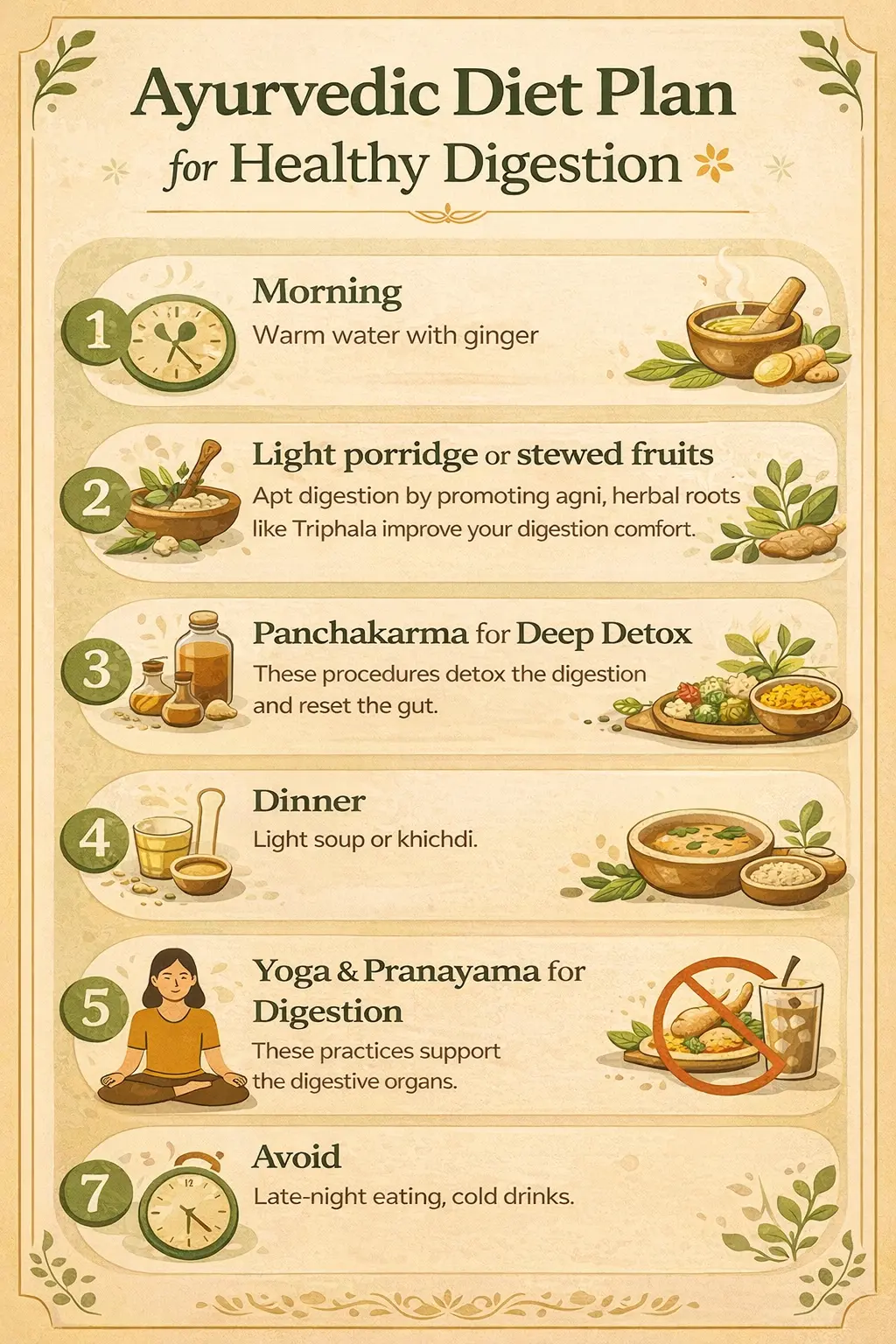
General Ayurvedic Eating Guidelines ☀️
- Eat freshly cooked meals
- Avoid reheated leftovers
- Largest meal should be at midday
- Drink warm water, not cold
- Stop eating when 75% full
Eating is not just nutritional — it is energetic communication with Agni.
🧘 Lifestyle Habits to Improve Digestion Naturally
Yoga Asanas for Digestion
Gentle yoga stimulates intestinal movement and relaxes the nervous system.

Key postures:
- Pavanmuktasana: releases trapped gas
- Vajrasana: improves post-meal digestion
- Trikonasana: tones abdominal organs
Practicing these daily improves peristalsis and circulation.
🌬️ Pranayama Techniques
Breathing regulates digestion through the gut–brain axis.
- Kapalabhati: stimulates digestive organs
- Anulom Vilom: balances nervous system
- Bhramari: reduces stress-induced digestive disorders
Just 10–15 minutes daily can significantly improve gut function.
🧠 Meditation and Mindful Eating
Stress is one of the biggest disruptors of digestion.

Mindful eating practices:
- eat without screens
- chew thoroughly
- eat in silence or gratitude
- avoid eating when emotionally disturbed
Calm mind = calm digestion.
🕰️ Ayurvedic Daily Routine (Dinacharya) for Gut Health
Consistency is more powerful than medicine in Ayurveda.
| Time | Practice | Digestive Benefit |
|---|---|---|
| 6:00 am | Wake + warm water | Stimulates bowel movement |
| 7:00 am | Yoga & Pranayama | Activates Agni |
| 8:00 am | Light breakfast | Prevents Ama |
| 12:30 pm | Main meal | Peak digestion |
| 7:00 pm | Light dinner | Reduces toxin buildup |
| 9:30 pm | Sleep | Restores Ojas |
When digestion follows a rhythm, the body heals effortlessly.
⚠️ Common Mistakes to Avoid During Ayurvedic Treatment
Even the best Ayurvedic remedies fail if daily habits sabotage digestion. These are the most common mistakes seen in clinical practice:
-
Drinking cold water with meals
Cold liquids extinguish Agni instantly, slowing enzyme activity and causing bloating. -
Overeating or skipping meals
Both disturb digestive rhythm — overeating overloads Agni, skipping weakens it. -
Incompatible food combinations (Viruddha Ahara)
Examples include milk with sour fruits, fish with dairy, or fruit with heavy meals. -
Eating without hunger
Digestion depends on readiness, not the clock alone. -
Ignoring emotional stress
Anxiety, anger, and mental overload directly disturb gut function.
Ayurveda emphasizes discipline over dependence — correction of habits is non-negotiable.
☀️ Advanced Ayurvedic Daily Regimen Framework
Dinacharya (Daily Routine) + Ritucharya (Seasonal Alignment)
Ayurveda recognizes that digestion follows circadian and seasonal rhythms. When lifestyle aligns with these rhythms, digestion becomes self-regulating.
Modern chronobiology now confirms what Ayurveda taught thousands of years ago.
🌅 Morning Routine (Pratahkaala Dinacharya)
Time: 6:00 am – 10:00 am
| Practice | Ayurvedic Term | Purpose | Digestive Benefit |
|---|---|---|---|
| Wake before sunrise | Brahma Muhurta | Aligns Vata rhythm | Promotes bowel movement |
| Drink warm water | Ushapana | Flushes Ama | Activates peristalsis |
| Tongue scraping | Jihva Nirlekhana | Removes toxins | Improves appetite |
| Oil pulling | Gandusha | Cleans oral cavity | Enhances taste perception |
| Yoga & breathing | Asana & Pranayama | Activates Agni | Improves metabolism |
| Light breakfast | Pratah Bhojana | Easy digestion | Prevents Ama |
Wake before sunrise (Brahma Muhurta): Aligns Vata rhythm — Promotes bowel movement
Drink warm water (Ushapana): Flushes Ama — Activates peristalsis
Tongue scraping (Jihva Nirlekhana): Removes toxins — Improves appetite
Oil pulling (Gandusha): Cleans oral cavity — Enhances taste perception
Yoga & breathing: Activates Agni — Improves metabolism
Light breakfast (Pratah Bhojana): Easy digestion — Prevents Ama
Morning discipline determines digestive stability for the entire day.
🌞 Midday Routine (Madhyahna)
Time: 10:00 am – 2:00 pm
- Digestive fire (Pitta) is strongest
- Ideal time for the largest meal of the day
- Eat calmly and chew thoroughly
- Rest briefly on the left side after meals to support absorption
This single habit dramatically improves digestion and energy levels.
🌇 Evening Routine (Sayamkala)
Time: 6:00 pm – 9:30 pm
- Light, warm dinner before 7:30 pm
- Avoid raw salads and cold foods
- 100 slow steps after dinner (Shatapavali)
- Sleep before 10:00 pm to allow nighttime metabolic repair
Late nights are one of the biggest destroyers of digestive health.
🌤️ Ritucharya: Seasonal Adjustments for Gut Health
| Season | Dosha Affected | Digestive Focus | Supporting Foods |
|---|---|---|---|
| Summer (Grishma) | Pitta | Cooling & hydration | Coconut, cucumber, buttermilk |
| Monsoon (Varsha) | Vata | Warm, light digestion | Moong dal soup, ghee |
| Winter (Hemanta) | Kapha | Strong digestion allowed | Soups, sesame, spices |
| Spring (Vasanta) | Kapha | Detox & lightness | Barley, greens |
Summer (Grishma): Pitta — Cooling & hydration — Coconut, cucumber, buttermilk
Monsoon (Varsha): Vata — Warm, light digestion — Moong dal soup, ghee
Winter (Hemanta): Kapha — Strong digestion allowed — Soups, sesame, spices
Spring (Vasanta): Kapha — Detox & lightness — Barley, greens
Seasonal digestion awareness prevents long-term gut imbalance.
🔬 Modern Science Integration: Ayurveda & Gut Microbiome
The convergence of Ayurveda and modern science is no longer theoretical — it is measurable.
-
Agni ≈ Metabolic & Enzymatic Activity
Modern physiology equates Agni with enzyme secretion, mitochondrial efficiency, and metabolic heat. -
Ama ≈ Endotoxins & Gut Dysbiosis
Undigested food residue mirrors bacterial endotoxins and leaky gut syndromes. -
Triphala as a Prebiotic
A 2017 study (Journal of Ayurveda and Integrative Medicine) showed Triphala promotes beneficial gut bacteria such as Lactobacillus and Bifidobacterium. -
Yoga & Gut–Brain Axis
A 2021 Frontiers in Psychiatry study confirmed yoga reduces IBS symptoms by regulating the vagus nerve. -
Chrononutrition & Dinacharya
Modern chronobiology validates eating with solar rhythm — the same principle Ayurveda emphasized through Dinacharya.
Ayurveda is no longer “alternative” — it is systems medicine.
🌿 Case Study 2: From Chronic Acidity to Balanced Agni
Patient: Rahul, 41, Pune
Condition: Chronic acidity, irritability, irregular appetite
Ayurvedic Diagnosis
Pitta aggravation with mild Ama accumulation.
Treatment Protocol
- Herbs: Amla, Licorice, Shatavari, medicated ghee
- Diet: Sweet fruits, warm milk, no late dinners
- Lifestyle: Cooling Pranayama, evening meditation, early sleep
Outcome
- Burning sensation reduced within 3 weeks
- Appetite normalized by 8 weeks
- No relapse after 6 months
This case highlights Ayurveda’s ability to correct root imbalance, not suppress symptoms.
❓ Enhanced FAQs: Ayurvedic Treatment for Digestion
Is Ayurvedic treatment effective for digestion problems?
Which Ayurvedic medicine is best for digestion?
How long does Ayurvedic treatment take to improve digestion?
Can Ayurveda permanently cure IBS or GERD?
What is Agni in Ayurveda and why is it important for digestion?
Is Triphala safe for daily use for digestion?
What foods should be avoided during Ayurvedic digestion treatment?
Does stress affect digestion according to Ayurveda?
Is Panchakarma necessary for digestive healing?
Can Ayurvedic treatment for digestion be combined with modern medicine?
🌟 Conclusion: Reignite Your Agni, Reclaim Your Energy
Digestion is not just about food — it is about how life is processed.
When Agni burns steady, the body becomes light, the mind clear, and immunity strong.
Ayurvedic treatment for digestion restores this balance through:
- disciplined routine
- intelligent food choices
- time-tested herbs
- seasonal awareness
When digestion heals, everything heals.
🌿 Learn Ayurveda
Transform your understanding of health through authentic Ayurvedic wisdom — from digestion and Doshas to disease prevention and holistic wellbeing.
🌿 Ayurveda for Health Issues
Ayurveda for Health Issues: A Complete Guide to Holistic Wellbeing
Understand digestion, Doshas, diet therapy, and disease prevention.
🎓 Certificate Course in Ayurvedic Medicine (AACCC)
Advanced training in Ayurvedic diagnosis, herbs, and lifestyle medicine.
View Certification →🩺 Holistic Health Consultations
Personalized digestive healing plans with certified Ayurvedic practitioners.
Book Consultation →
👉 Explore authoritative resources:
Ministry of AYUSH – Government of India (Ayurveda, Yoga & Holistic Health)
Ayurveda Innovation for Global Health