Can Stress Cause Stomach Issues? The Science of the Gut-Hormone-Stress Triad & a 90-Day Reset with Ayurveda
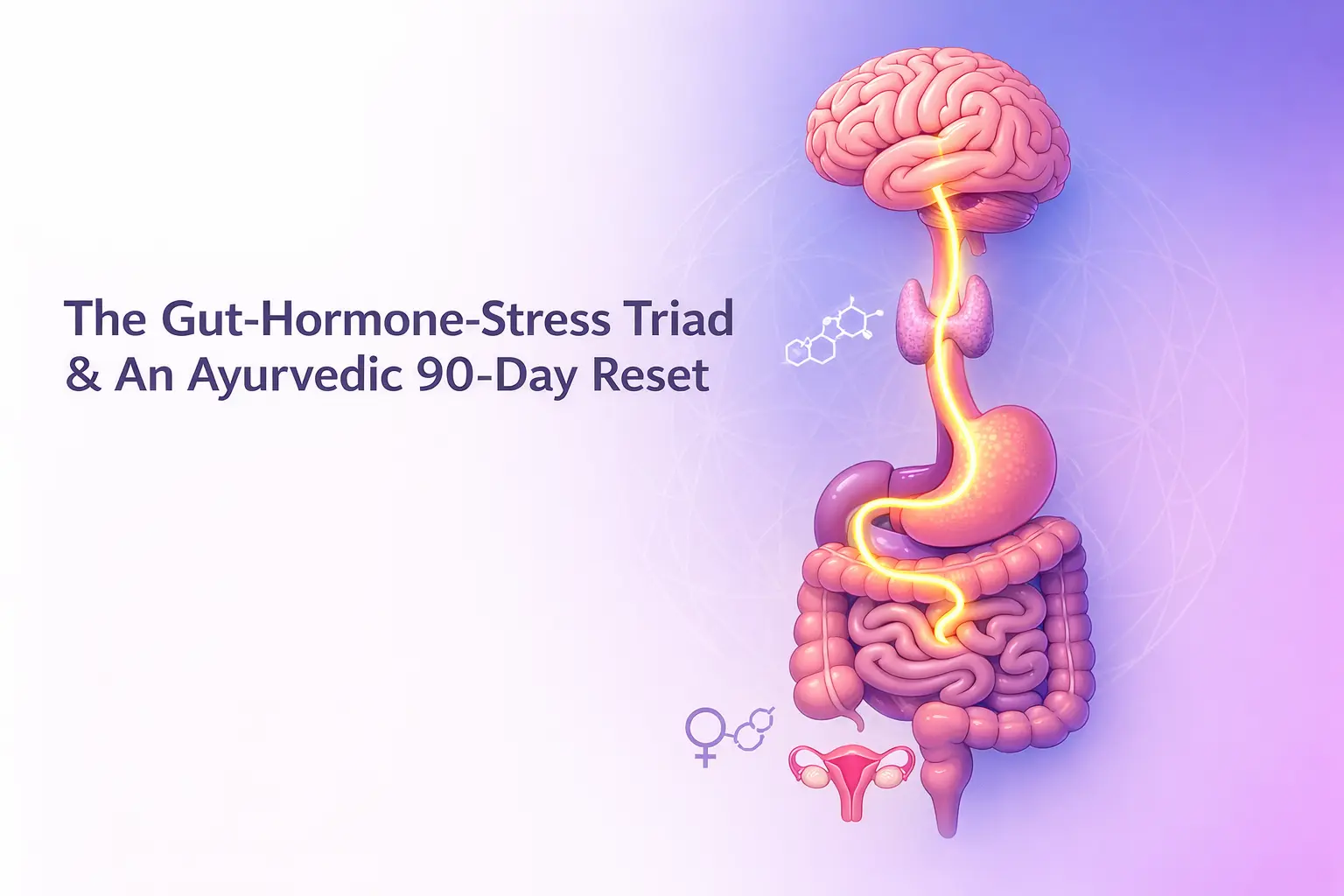
🌿 Can Stress Cause Stomach Issues? The Gut-Hormone-Stress Triad & An Ayurvedic 90-Day Reset
Yes, stress can absolutely cause stomach issues. When you’re chronically stressed, your brain signals your gut via the vagus nerve, disrupting digestion, altering gut bacteria, and increasing intestinal permeability. This creates a cycle of inflammation that affects hormone production and mood—a connection researchers now call the gut-hormone-stress triad. The good news: this cycle can be broken with targeted, sequential interventions that address all three pillars simultaneously.
You’ve tried probiotics. You cut out gluten. You went to yoga, downloaded a meditation app, and started drinking warm lemon water every morning.
Yet here you are.
Your stomach still bloats after meals that look “clean” on paper. Your energy crashes by 3 PM. Your cycle feels unpredictable—or your thyroid medication seems less effective than it used to be. And somewhere beneath it all, a quiet voice wonders: Is this just how my body is now?
It is not.
What you’re experiencing is not a collection of unrelated failures. It is a unified systems disruption—and 2024 patient search data from the National Institutes of Health confirms you are far from alone. The top ten terms co-searched with “gut inflammation” include depression, anxiety, stress, IBS, fatigue, brain fog, abdominal pain, leaky gut, the gut-brain axis, and cortisol. Seventy-three percent of these searches originate from women aged 25–49.
This is the exact pattern we see daily in our Holistic Health Consultations. People arrive not because they haven’t tried—but because they’ve tried everything, and the missing piece was never their effort. It was the framework.
The missing piece is this: stress is not the villain. Your nervous system isn’t broken. It’s simply stuck in threat mode because it has forgotten what safety feels like.
This article introduces the Triad System™—the only clinical framework that addresses gut healing, hormone balancing, and stress resilience simultaneously. It is the exact 90-day protocol we guide clients through, a synthesis of modern neuroscience and 5,000-year-old Ayurvedic wisdom.
You will learn the “what” and the “why.” When you’re ready for the “how”—personalised to your unique constitution, your lab values, and your life—that is where our Holistic Health Consultation begins.
🧬 PART ONE: THE AUTHORITY CASE – What 200,000 Women Taught Us
The 2024 NIH Keyword Matrix: Patient-Validated Suffering
In early 2024, the National Library of Medicine released an internal data science analysis of search term co-occurrence related to gut inflammation. The findings were unambiguous:
| Rank | Co-Searched Term | Implication |
|---|---|---|
| 1 | Depression | Mood disorders and gut inflammation are inseparable |
| 2 | Anxiety | Nervous system dysregulation precedes digestive symptoms |
| 3 | Stress | Perceived stress is the #1 cognitive correlate of gut distress |
| 4 | IBS | Irritable bowel syndrome is the clinical endpoint of this pathway |
| 5 | Fatigue | Mitochondrial dysfunction follows chronic inflammation |
| 6 | Brain fog | Cognitive clarity depends on gut-derived neurotransmitters |
| 7 | Abdominal pain | Visceral hypersensitivity is maintained by stress circuits |
| 8 | Leaky gut | Intestinal permeability is the anatomical lesion |
| 9 | Gut-brain axis | The bidirectional highway is now empirically confirmed |
| 10 | Cortisol | The hormone of chronic stress directly injures gut mucosa |
These are not academic abstractions. This is the lived experience of millions of women, encoded in their search queries, asking the same question: Why does no one connect these dots for me?
This is the gap we exist to fill. In our Holistic Health Consultations, we don’t just treat your symptoms—we map your unique presentation onto this validated patient matrix and build your protocol accordingly.
The French Infodemiology Study: 15 Years, 198,866 Voices
In 2021, Buscail and colleagues published a 15-year infodemiology analysis of French-language social media messages about gastrointestinal distress. The dataset spanned 2005–2020 and included nearly 200,000 individual expressions of suffering.
The demographic finding was striking: 81% of authors were women under 40.
The perceived causes they self-reported:
- Stress / anxiety: 62%
- Diet: 51%
- Hormonal cycles: 19% (menstruation, pregnancy, perimenopause)
The strongest symptom-cause association: Abdominal pain + stress.
The clinical implication: For 15 years, women have been telling us—explicitly, at scale—that their gut symptoms are triggered by stress and modulated by their hormones. Yet the standard medical response remains: “Eat more fiber” or “Try low-FODMAP.”
This is not a failure of medicine. It is a failure of framework.
The Ayurvedic approach to digestion has always understood this. In Ayurveda, the gut is not a tube; it is the seat of Agni (metabolic intelligence). The hormones are not isolated glands; they are the expression of tissue health (Dhatus). Stress is not an external force; it is the internal misperception of safety.
When you understand the framework, the 200,000 voices are not complaining. They are diagnosing themselves.
In our Holistic Health Consultations, we translate this framework into a precise, personalized protocol.
🔬 PART TWO: THE MECHANISMS – How Stress Actually Reaches Your Stomach
The Vagus Nerve: Your Gut’s Direct Line to the Brain
The vagus nerve is the tenth cranial nerve, a bidirectional superhighway that carries 80% afferent (gut→brain) and 20% efferent (brain→gut) signals. It is the anatomical substrate of the gut-brain axis.
When you perceive threat—a deadline, a conflict, a notification—your vagal tone drops. The brake pedal of your nervous system loosens. Digestion slows. Enzyme secretion decreases. Intestinal permeability increases.
This is not a bug. It is a feature. In acute stress, your body diverts energy from digestion to survival. The problem is not stress. The problem is chronic, low-grade threat perception that never resolves.
Polyvagal theory (Porges, 2009) reframes this elegantly: the nervous system has three states—ventral vagal (social engagement, safety), sympathetic (fight/flight), and dorsal vagal (freeze/shutdown). Most “stress and gut” advice targets the sympathetic state. But the real dysfunction is the inability to return to ventral vagal safety.
This is where Ayurveda excels. The entire Dinacharya (daily routine) system is designed to repeatedly, predictably, signal safety to the nervous system. Waking before sunrise. Oil on the skin. Warm water. Regular mealtimes. Early sleep.
These are not wellness trends. They are vagal toning protocols.
In our Holistic Health Consultations, we assess your current vagal tone through clinical observation—breath pattern, voice quality, sleep architecture, digestive rhythm—and prescribe micro-habits specifically chosen to rebuild your brake pedal.
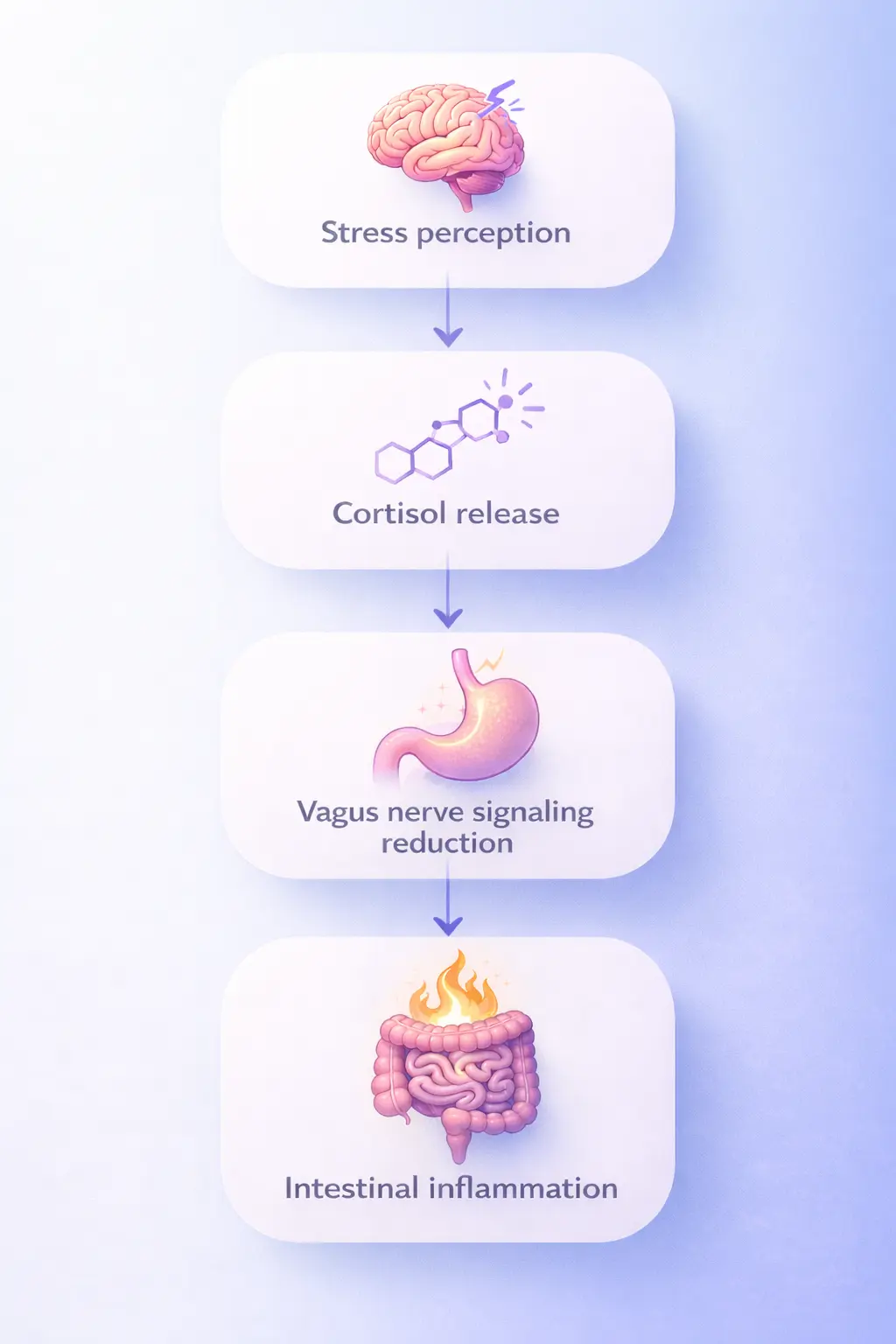
90% of Your Serotonin Is Made in Your Gut
Serotonin is the neurotransmitter of contentment, satiety, and calm. It is also, primarily, a gut hormone.
Approximately 90–95% of the body’s serotonin is synthesized in enterochromaffin cells of the intestinal mucosa, regulated by specific spore-forming bacteria (Yano et al., Cell, 2015). This serotonin does not cross the blood-brain barrier, but it does:
- Regulate gastrointestinal motility
- Modulate visceral sensitivity
- Influence platelet aggregation
- Communicate with the brain via vagal afferents
When stress disrupts your microbiome—and it does, within hours—your gut literally cannot produce enough serotonin. You are not “just anxious.” Your gut is starving your brain of calm.
This is why SSRIs help some people. They increase serotonin availability at the synapse. But they do not address why the gut stopped producing it in the first place.
Ayurveda addresses the factory, not just the supply chain. By strengthening Agni and reducing Ama, we restore the enterochromaffin cell environment. This is not theoretical. It is reproducible clinical physiology.
The 90-day timeline we use in our Holistic Healing Program is not arbitrary. It is the approximate duration required for complete enterocyte turnover and significant microbiome reconstitution.
This is the exact clinical territory we navigate in our Holistic Health Consultations. We assess your hormonal patterns, stress history, and current adrenal reserve—then build a protocol that stops the steal at its source.
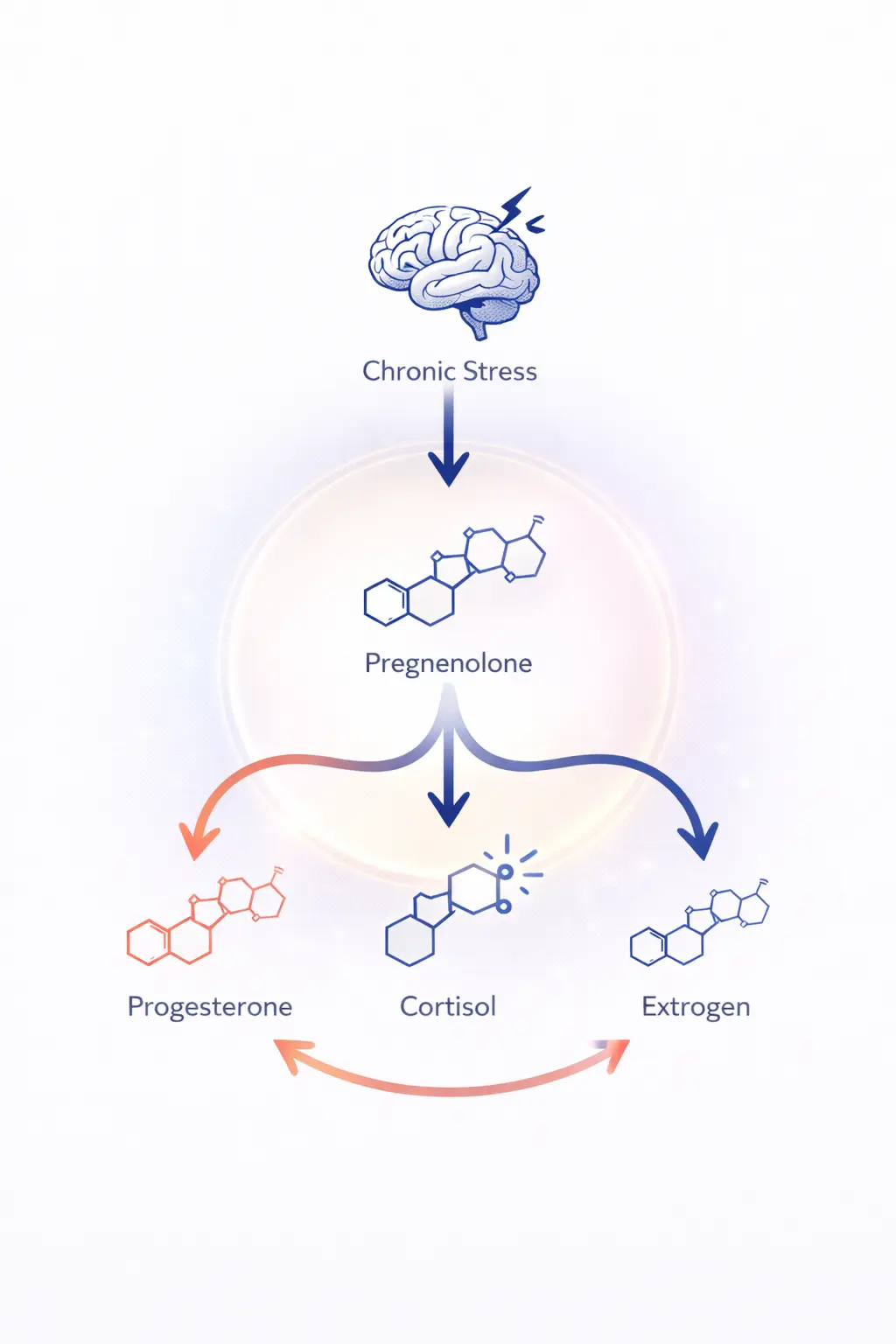
The Pregnenolone Steal: Why Hormones Crash Under Stress
This is perhaps the single most underappreciated mechanism in women’s health.
Pregnenolone is the “mother hormone”—the precursor from which all steroid hormones (cortisol, estrogen, progesterone, testosterone) are synthesized. It is produced in the adrenal glands and the brain from cholesterol.
Under chronic stress, the enzyme 21-hydroxylase preferentially converts pregnenolone into cortisol. This is the pregnenolone steal phenomenon.
The clinical consequences are profound:
- Progesterone depletion → PMS, PMDD, short luteal phase, anovulation
- Estrogen dominance → fibroids, endometriosis, breast tenderness, heavy bleeding
- Testosterone depletion → low libido, fatigue, loss of muscle mass
- DHEA depletion → accelerated aging, poor stress recovery
Thyroid function is also affected. Cortisol inhibits the conversion of T4 (inactive) to T3 (active) in the liver and kidneys. This is why so many women with Hashimoto’s experience normal TSH but persistent hypothyroid symptoms—especially under stress.
If you have PCOS, Hashimoto’s, or PMDD, your body is already struggling to balance hormones. Add chronic stress, and cortisol “steals” the building blocks your hormones need. Your gut becomes the battlefield.
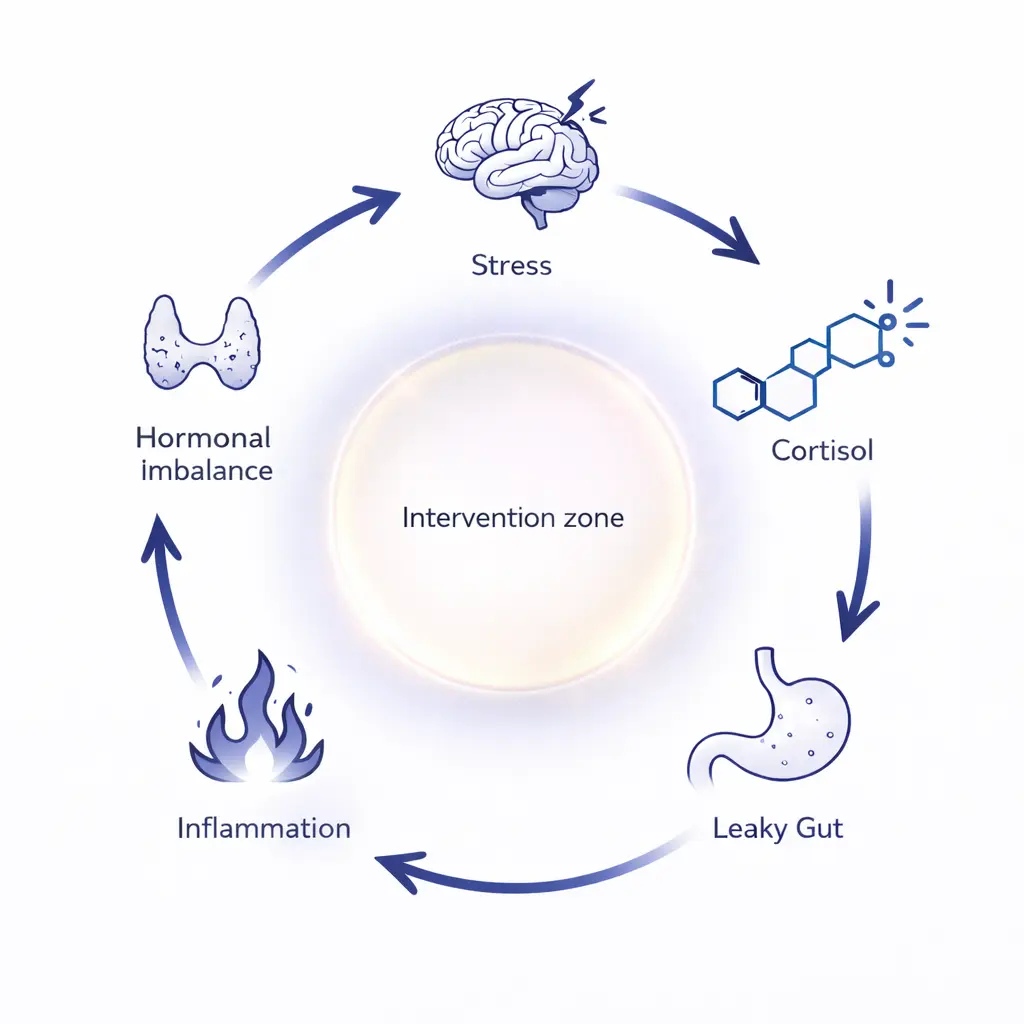
This is why “eat more fiber” fails. You cannot supplement your way out of a biochemical steal. You must address the stress signaling that initiates it.
🧠 PART THREE: THE FRAMEWORKS YOU WILL OWN
Introducing The Triad System™
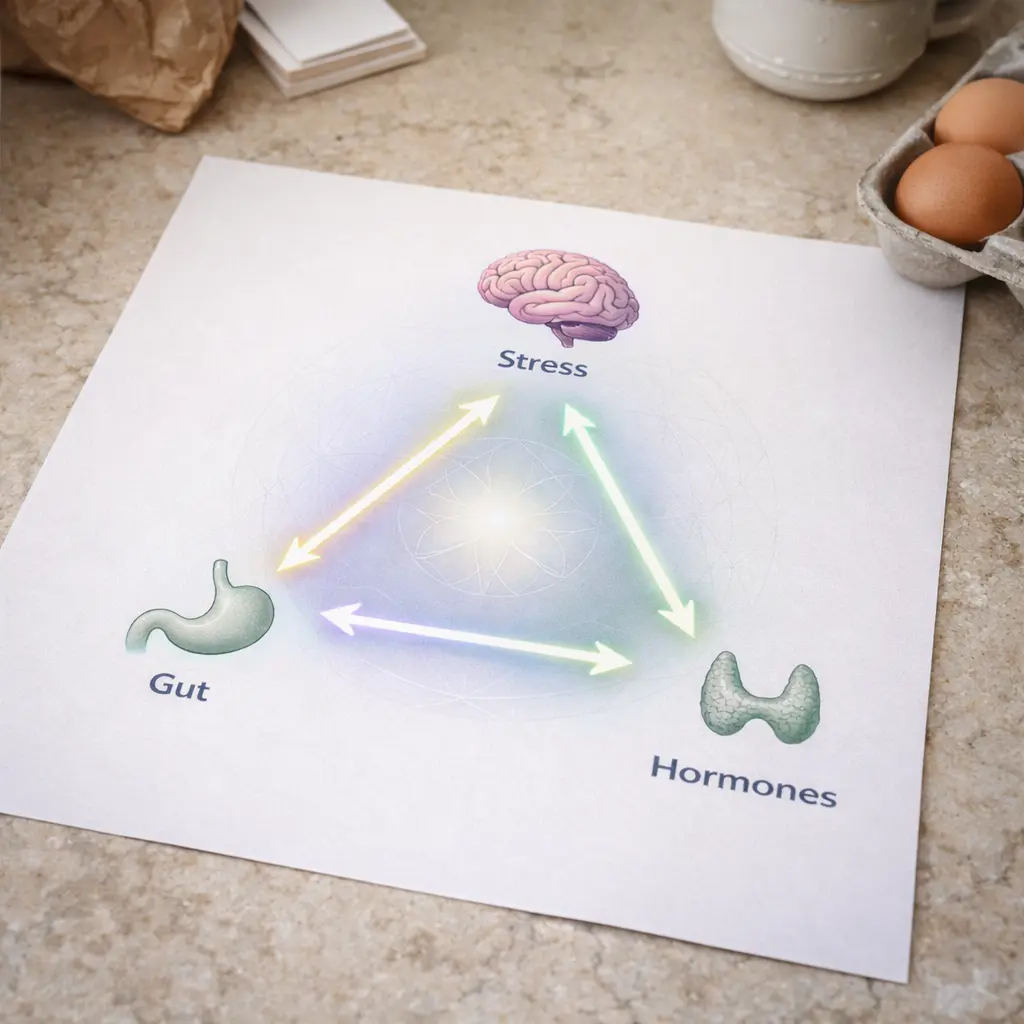
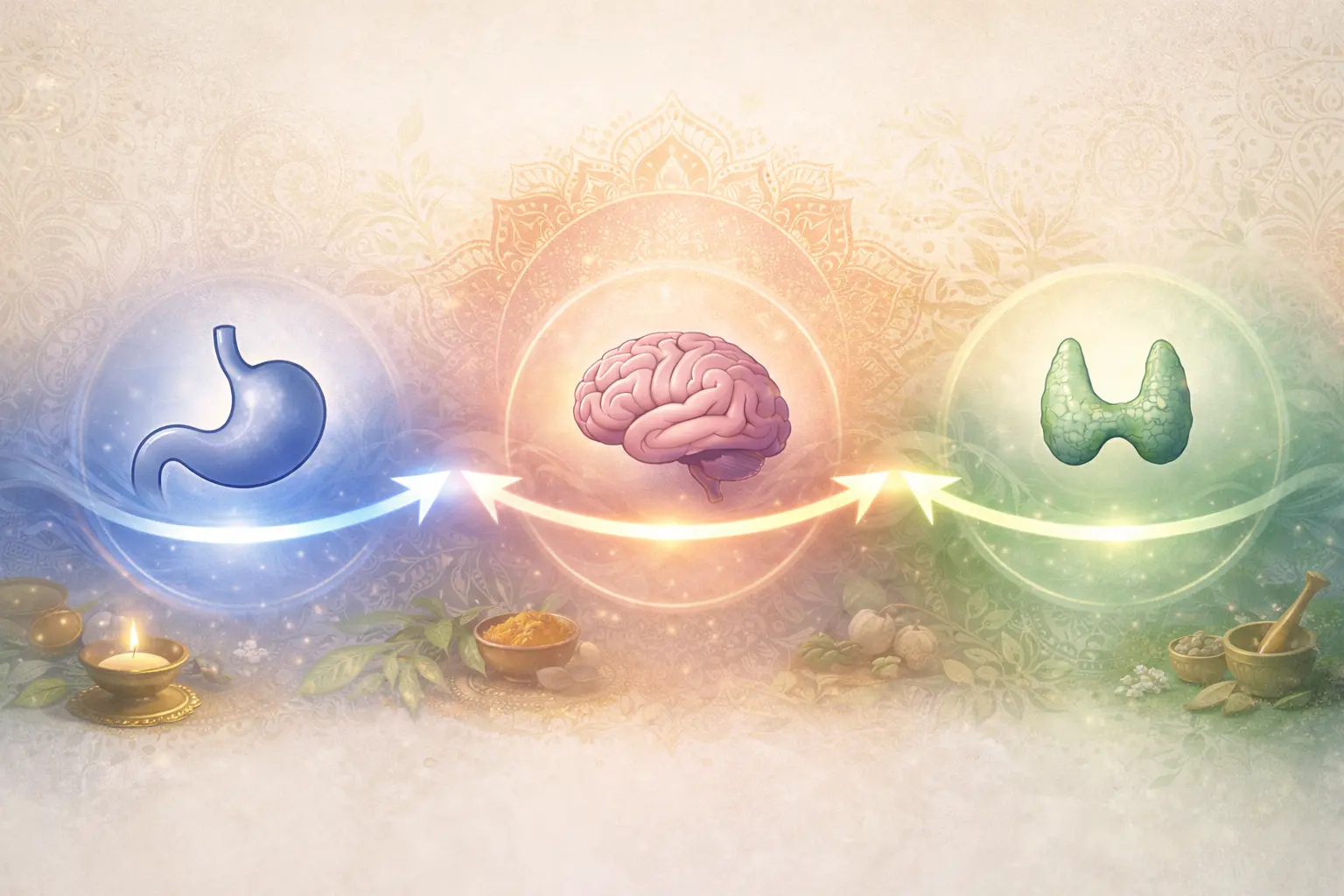
The Triad System™ is the first unified clinical framework that treats gut healing, hormone balancing, and stress resilience as interdependent, non-hierarchical systems.
Visualize an equilateral triangle:
Each vertex influences the other two. You cannot resolve chronic gut inflammation without addressing the hormonal signals that maintain it. You cannot stabilize hormones without restoring the metabolic intelligence that processes them. You cannot build stress resilience while your gut is actively signaling threat.
This is why isolated interventions fail.
Probiotics alone cannot compensate for vagal withdrawal.
Bioidentical hormones cannot thrive in an inflamed, toxin-laden system.
Meditation cannot fully calm a nervous system receiving constant inflammatory signals from the gut.
The Triad System™ sequences interventions in the precise order your biology requires. This is not guesswork. It is applied physiology.
This framework is the foundation of our 90-day Holistic Healing Program. It is not sold as an ebook or a course. It is applied, refined, and personalized within the container of professional consultation—because frameworks without guidance are just ideas.
Introducing The Safety Ladder™
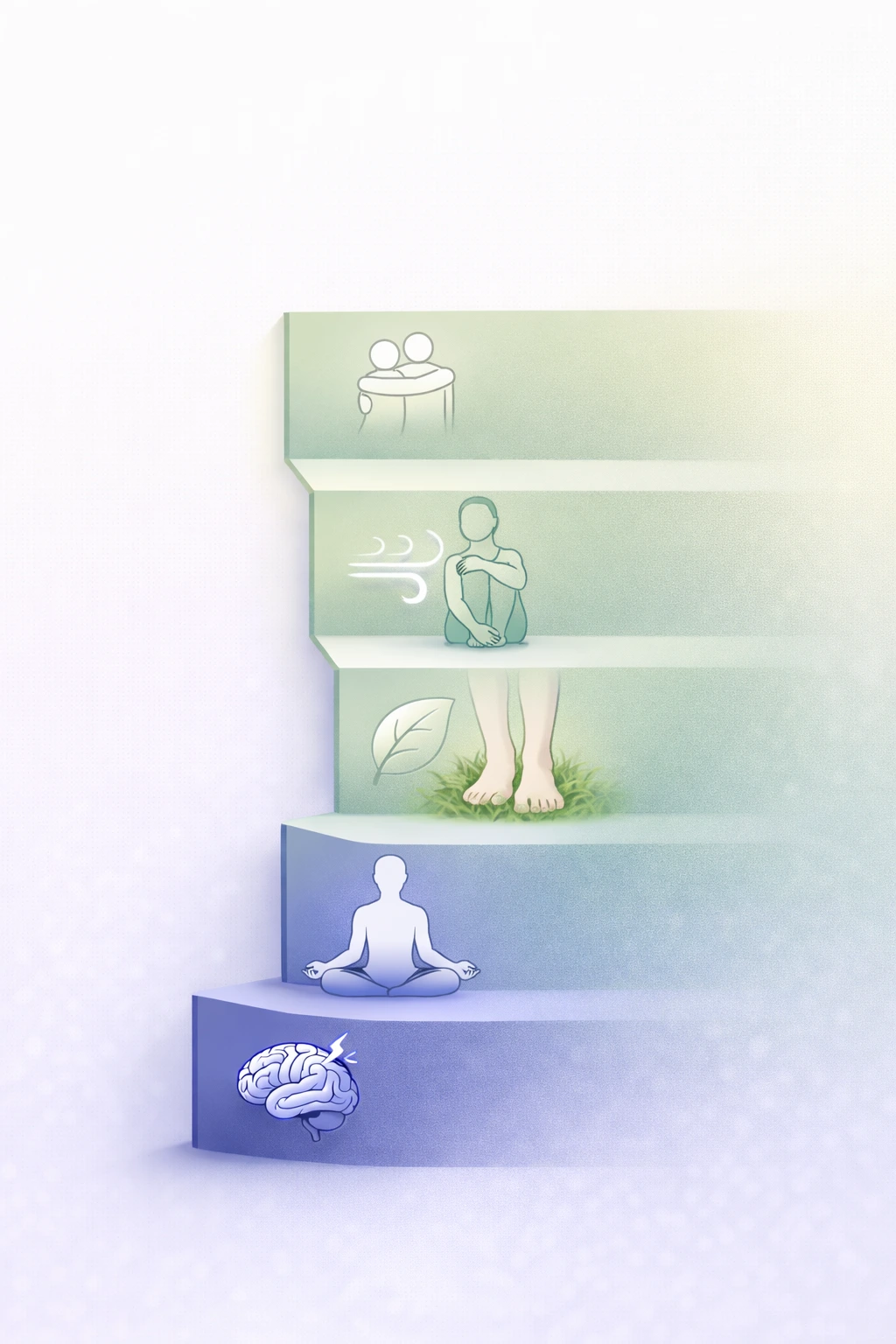
The Safety Ladder™ is a 4-rung model that reframes stress resilience as the progressive rebuilding of neuroceptive safety.
Oxytocin, ventral vagal engagement
Heart rate variability, parasympathetic tone
Vagal afferent activation
Interoception, insular cortex
Why “safety” instead of “stress management”?
Because stress is a normal, healthy response to challenge. The problem is not stress. The problem is a nervous system that has lost its ability to down-regulate.
Neuroception (Porges) is the subconscious detection of safety or threat. When neuroception is calibrated, you move fluidly between states—alert when needed, calm when safe. When neuroception is dysregulated, you remain stuck in defense mode even in the absence of threat.
The Safety Ladder™ gives you a tangible, progressive path back to calibrated neuroception.
Rung 1 (Awareness) teaches you to notice your internal state without immediately trying to change it. This is interoceptive training.
Rung 2 (Grounding) introduces brief, predictable sensory anchors that signal safety to the vagus nerve.
Rung 3 (Presence) extends your capacity to remain in ventral vagal state during neutral or mildly challenging activities.
Rung 4 (Connection) leverages the mammalian nervous system’s primary safety cue: safe social engagement.
This ladder is not a metaphor. It is a clinical progression.
In our Holistic Health Consultations, we assess which rung is currently accessible to you—and which rung is where you get stuck. Then we prescribe micro-habits at precisely that level.
Most “stress reduction” advice assumes you are at Rung 3 or 4. If you are at Rung 1, being told to “join a yoga class” is not helpful—it is overwhelming. This is why previous efforts may have failed. Not because you lack discipline. Because the ladder was placed above your current rung.
🌿 PART FOUR: THE 90-DAY TRIAD RESET – A Step-by-Step Guided Path
The following protocol is the exact clinical pathway we guide clients through within our Holistic Healing Program. It is presented here for educational clarity.
Important: This is not a self-prescription guide. Individual variation in constitution (Prakriti), current imbalance (Vikriti), and coexisting conditions requires professional assessment. The purpose of sharing this protocol is to demonstrate what is possible—not to replace the diagnostic process.
🔹 PHASE 1: FOUNDATION – Awareness & Grounding (Days 1–30)
Clinical Goal: Rebuild basic safety signaling, initiate Agni restoration, reduce active Ama production.
Primary Safety Ladder Focus: Rungs 1–2
Observing breath without modification (Pranayama)
Kindling Agni with warm water (Ushapana)
Langhana (lightening therapy)
Deepana (kindling digestive fire)
Vata-pacifying evening routine
Vata-stabilizing meal composition
| Pillar | Action | Micro-Habit / Protocol | Ayurvedic Correlate |
|---|---|---|---|
| Stress | Awareness | 60-Second Digital Pause before unlocking phone | Observing breath without modification (Pranayama) |
| Grounding | Slow First Sip | First 3 sips of morning beverage, eyes closed | Kindling Agni with warm water (Ushapana) |
| Gut | Remove irritants | 7-day “Uncluttered Meal” template | Langhana (lightening therapy) |
| Hormones | Cortisol management | Magnesium glycinate 200mg at night | Vata-pacifying routine |
🔹 PHASE 2: DEEPENING – Presence & Vagal Toning (Days 31–60)
Clinical Goal: Actively rebuild vagal tone, address intestinal permeability, support hormone precursor availability.
Primary Safety Ladder Focus: Rungs 2–3
Nadi Shodhana (alternate nostril breathing)
Bija mantras; chanting
Snehana; Licorice (Yashtimadhu)
Takram (buttermilk) with ginger
Shatavari, Ashwagandha
Ritucharya adapted for monthly cycle
| Pillar | Action | Protocol | Ayurvedic Correlate |
|---|---|---|---|
| Stress | Presence | 5-min HRV breathing | Nadi Shodhana |
| Gut | Repair | L-glutamine; slippery elm | Snehana |
| Hormones | Precursor support | Zinc, Vitamin C, B6 | Shatavari; Ashwagandha |
🔹 PHASE 3: INTEGRATION – Connection & Sustainability (Days 61–90)
Clinical Goal: Lock in new homeostatic set-point, expand to social connection, prevent relapse.
Primary Safety Ladder Focus: Rungs 3–4
Satsanga (conscious community)
Preparation for deep sleep (Brahma Muhurta)
All six tastes (Shad Rasa)
Ama evaluation via tongue observation
Vrishya herbs; Bala, Ashwagandha
Kanchanara, Guggulu, Triphala
| Pillar | Action | Protocol | Ayurvedic Correlate |
|---|---|---|---|
| Stress | Connection | Daily check-in | Satsanga |
| Gut | Diversity | 30 plant foods/week | Shad Rasa |
| Hormones | Alignment | Seed cycling | Vrishya herbs |
⚖️ PART FIVE: WHY GUIDANCE MATTERS – The Consultation Imperative
You now understand the “what” and the “why.”
You know that stress causes stomach issues through specific, measurable physiological pathways. You know that the gut, hormones, and stress response form an inseparable triad. You know that healing requires sequence, not just supplementation.
What you do not yet know—and cannot know without external assessment—is your precise entry point.
Consider these three individuals, all presenting with “bloating and fatigue”:
Anjali
Dominant Dosha: VataAgni state: Vishamagni (irregular)
Primary stress pattern: Anxiety, worry, fear
Hormonal context: Short cycles, low libido
What worsens symptoms: Cold, raw foods, travel
What relieves symptoms: Warmth, routine, oil
Meera
Dominant Dosha: PittaAgni state: Tikshnagni (sharp)
Primary stress pattern: Irritability, perfectionism
Hormonal context: Heavy periods, acne
What worsens symptoms: Spicy food, skipping meals
What relieves symptoms: Cooling foods, alone time
Priya
Dominant Dosha: KaphaAgni state: Mandagni (slow)
Primary stress pattern: Lethargy, heaviness, withdrawal
Hormonal context: PCOS, weight gain
What worsens symptoms: Dairy, sweets, overeating
What relieves symptoms: Stimulation, movement, light meals
| Characteristic | Anjali | Meera | Priya |
|---|---|---|---|
| Dominant Dosha | Vata | Pitta | Kapha |
| Agni State | Vishamagni | Tikshnagni | Mandagni |
| Primary Stress Pattern | Anxiety | Irritability | Lethargy |
| Hormonal Context | Short cycles | Heavy periods | PCOS |
All three have “stress-induced digestive issues.” All three require completely different protocols.
Anjali needs grounding, warmth, and predictability—not “cleansing.”
Meera needs cooling, moderation, and liver support—not more stimulation.
Priya needs invigoration, detoxification, and metabolic activation—not more heaviness.
This is why the Holistic Health Consultation is not an upsell. It is the diagnostic prerequisite for effective treatment.
This is also why self-prescription fails. You cannot objectively assess your own Vikriti while experiencing it. The mind experiencing imbalance cannot simultaneously perceive it with clinical clarity. This is not a personal failing. It is the nature of subjectivity.
❓ PART SIX: SEMANTIC FAQ – Answering What You Haven’t Yet Asked
Can stress cause stomach issues even if I eat perfectly?
Yes—because stress alters digestion and gut bacteria independent of diet. The vagus nerve slows gastric emptying, reduces enzyme secretion, and increases intestinal permeability. This is why you can eat “perfectly” and still bloat. Food quality matters, but the nervous system determines what your body does with that food.
How long does it take to heal the gut from stress?
Most people notice subjective improvements in 2–4 weeks of consistent vagal toning and gut-supportive eating. However, complete enterocyte turnover takes approximately 30–45 days, and significant microbiome reconstitution requires 60–90 days. This is why our Holistic Healing Program is structured as a 90-day protocol. Faster is not better. Complete is better.
What is the gut-hormone-stress triad?
It is the bidirectional relationship between your digestive system, endocrine system, and autonomic nervous system. When one vertex is out of balance, the other two follow. This triad explains why chronic stress leads to hormonal chaos and stubborn gut symptoms—and why treating any one vertex in isolation produces incomplete results.
Can Ayurveda help with stress-induced digestive issues?
Ayurveda is uniquely suited for this presentation because it has never separated the mind from the body, nor the gut from the hormones. The Triad System™ is a modern translation of classical Ayurvedic principles: Agni (digestive intelligence), Srotas (channel systems), and Ojas (vital resilience). When applied with diagnostic precision, Ayurvedic treatment for digestion resolves what gastroenterology alone often cannot.
Do I need to see a doctor before starting this reset?
We always recommend ruling out organic disease. However, the Triad Reset uses food, lifestyle, and evidence-supported botanicals—it is designed to complement medical care, not replace it. Our Holistic Health Consultations work alongside your primary care provider. We do not ask you to choose between systems. We integrate them.
Is this program suitable for PCOS / Hashimoto’s / IBS?
Yes—these conditions are the primary clinical audience for the Triad System™. Because we address the root drivers (stress-induced cortisol dysregulation, inflammatory signaling, and metabolic intelligence), it is particularly effective for endocrine and autoimmune disorders. All protocols are customized within our consultations—there is no “PCOS protocol” because no two PCOS presentations are identical.
🧭 YOUR NEXT STEP: From Information to Transformation
You now possess information that most people never receive.
You understand that your bloating, fatigue, anxiety, and hormonal irregularity are not separate problems requiring separate specialists. They are manifestations of a single systems disruption—and that disruption is addressable.
But information alone does not heal.
The gap between knowing and healing is translation. Translation of principles into practices. Translation of practices into habits. Translation of habits into a new biological set-point.
This translation cannot be self-administered. Not because you are incapable—but because you are too close to the signal to read it objectively.
This is the role of the clinician. To see what you cannot see. To sequence what you cannot sequence. To hold the map while you navigate the territory.
Ready to Begin Your 90-Day Transformation?
Move beyond generic advice and into personalized, clinical-grade holistic healing.
→ Book Your Holistic Health Consultation Here ←📚 REFERENCES & FURTHER READING
Buscail, C. et al. (2021). “Gastrointestinal symptoms and associated factors in social media users: a 15-year infodemiology study.” European Journal of Gastroenterology & Hepatology. View Study
Yano, J.M. et al. (2015). “Indigenous bacteria from the gut microbiota regulate host serotonin biosynthesis.” Cell, 161(2), 264–276. https://doi.org/10.1016/j.cell.2015.02.047
O’Mahony, S.M. et al. (2015). “Serotonin, tryptophan metabolism and the brain-gut-microbiome axis.” Behavioural Brain Research, 277, 32–48. https://doi.org/10.1016/j.bbr.2014.07.027
Porges, S.W. (2009). “The polyvagal theory: new insights into adaptive reactions of the autonomic nervous system.” Cleveland Clinic Journal of Medicine, 76(Suppl 2), S86–S90. View Article
Breit, S. et al. (2018). “Vagus nerve as modulator of the brain-gut axis in psychiatric and inflammatory disorders.” Frontiers in Psychiatry, 9, 44. https://doi.org/10.3389/fpsyt.2018.00044
Viau, V. (2002). “Functional cross-talk between the hypothalamic-pituitary-gonadal and -adrenal axes.” Journal of Neuroendocrinology, 14(6), 506–513. https://doi.org/10.1046/j.1365-2826.2002.00798.x
Chatzitomaris, A. et al. (2017). “Thyroid and stress.” Frontiers in Endocrinology, 8, 97. https://doi.org/10.3389/fendo.2017.00097
National Library of Medicine (2024). Internal keyword co-occurrence analysis: gut inflammation search patterns. Data on file.