Can You Practice Ayurveda After an Online Course: Legal & Global Guide
Can You Practice Ayurveda After an Online Course?
Legal clarity, global practice boundaries, and what online Ayurveda education truly allows in India and abroad.
In India, you cannot legally practice Ayurveda after an online course unless you hold a recognized qualification like BAMS from an NCISM-approved institution. Globally, Ayurveda practice is often unregulated — online graduates may teach or coach wellness, but cannot diagnose, prescribe, or treat medical conditions.
Snapshot:
🌿 What Does “Practicing Ayurveda” Legally Mean?
To “practice Ayurveda” means more than teaching herbs or giving lifestyle tips. It includes diagnosing diseases, prescribing treatments, or administering therapies — areas strictly regulated in India under the National Commission for Indian System of Medicine (NCISM) and Central Council of Indian Medicine (CCIM) Acts.
In India, only registered practitioners with a recognized BAMS degree (Bachelor of Ayurvedic Medicine and Surgery) or higher can treat patients or prescribe formulations. Online Ayurveda courses, even from prestigious academies, do not confer this authority.
👉 For foundational learning instead, check our Complete Guide to Online Ayurveda Course — it explains how online study can deepen knowledge without breaching legal lines.
⚖️ Can I Practice Ayurveda After an Online Course in India?
Short answer: No — you can’t practice clinical Ayurveda after an online course unless you are a qualified BAMS practitioner registered under a State Board of Indian Medicine.
Why?
The Indian Medicine Central Council Act (1970) and NCISM Act (2020) define “practice” as offering consultation, diagnosis, or treatment using Ayurvedic principles or drugs. Without registration, these actions violate Section 17(2) of the Act — which can lead to legal penalties or prosecution.
BAMS / MD (Ayurveda)
Recognized By:
NCISM-approved university
Practice Rights in India:
Full clinical practice rights
Certificate / Diploma (Online or Offline)
Recognized By:
Private institutions
Practice Rights in India:
No legal practice rights
Short Online Course / Workshop
Recognized By:
Private / NGO
Practice Rights in India:
Education & self-practice only
| Level of Learning | Recognized By | Practice Rights in India |
|---|---|---|
| BAMS / MD (Ayurveda) | NCISM-approved university | Full clinical practice rights |
| Certificate / Diploma (Online or Offline) | Private institutions | No legal practice rights |
| Short Online Course / Workshop | Private / NGO | Education & self-practice only |
💡 Case Example:
A student from Pune completed an “Advanced Ayurveda Certificate” online and began offering herbal consultations.
A complaint was filed under the Maharashtra Medical Practitioners Act, and the individual was fined for impersonating a registered Vaidya.
🌍 Can I Practice Ayurveda Internationally After an Online Course?
Outside India, the rules vary dramatically. Ayurveda isn’t regulated as a medical system in most Western countries.
United States
There’s no federal licensing for Ayurveda. Practitioners often work as:
- Ayurvedic Health Counselors
- Wellness Coaches
- Holistic Lifestyle Educators
They focus on diet, daily routines, yoga, meditation, and herbal education, but cannot diagnose or treat diseases.
The National Ayurvedic Medical Association (NAMA) provides voluntary certification tiers (Health Counselor, Practitioner, Doctor) — yet these are not government licenses.
Europe
Countries like Germany and the U.K. treat Ayurveda under complementary or alternative therapy laws. Practitioners must avoid claiming to “treat or cure” medical conditions unless they also hold medical licenses.
💬 Example:
A graduate of an online Ayurveda program in London may open a wellness studio, teach dosha balancing routines, or lead detox workshops, but cannot prescribe internal medicines or treat chronic illness.
If your goal is to practice abroad, consider advanced certifications and partnerships through Best Online Ayurveda Schools that align with NAMA or WHO-T&CM frameworks.
🧘♀️ Is an Online Ayurveda Course Enough to Practice?
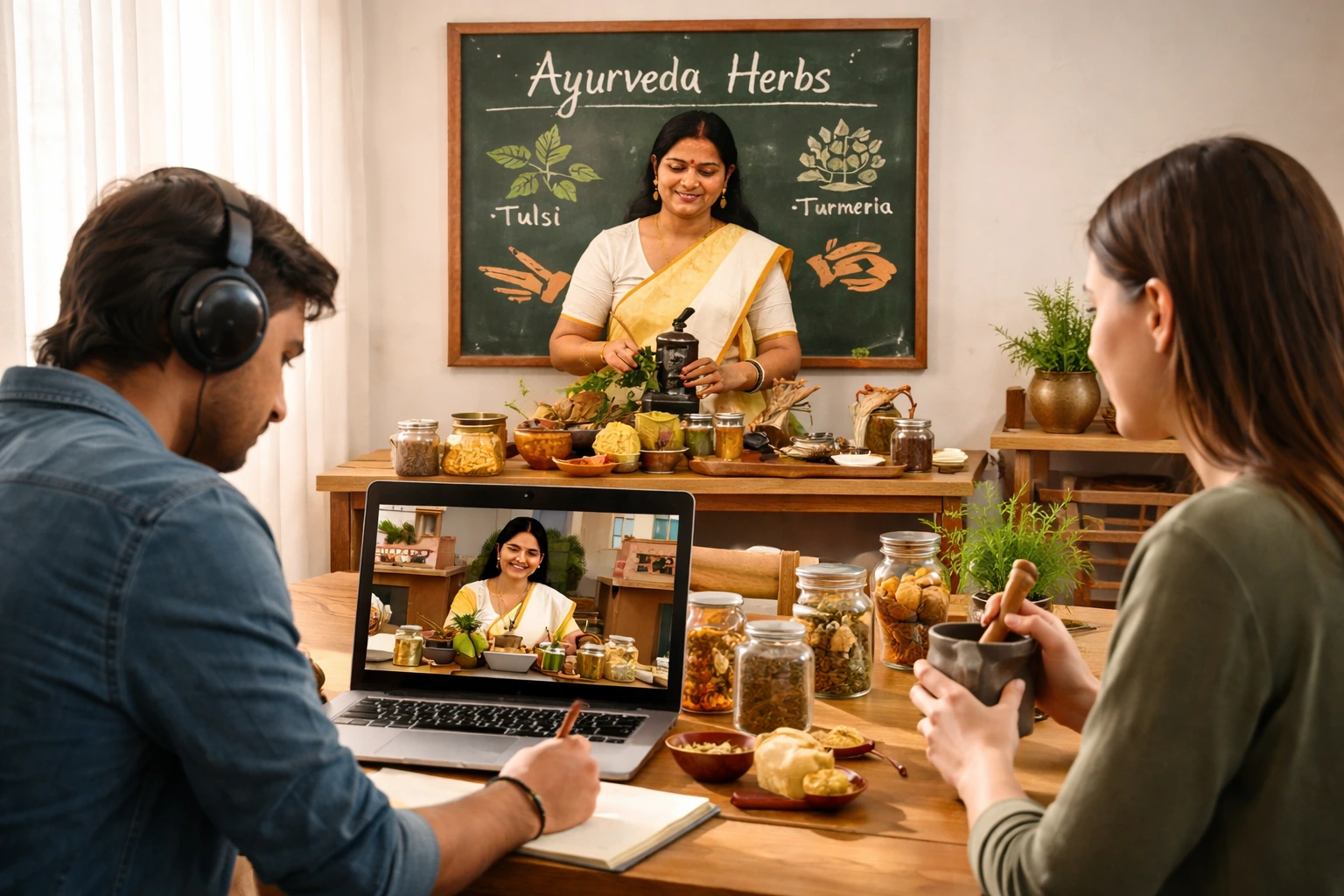
Online Ayurveda courses provide theory, philosophy, and applied knowledge, but they do not replace clinical apprenticeship or licensed training. However, they’re invaluable for personal wellness, yoga teaching, and integrative coaching.
Wellness education
Examples
Teaching Ayurveda principles in yoga studios or retreats
Lifestyle consultation
Examples
Dosha-based diet and stress-management guidance
Herbal awareness
Examples
General discussions about herbs (no medical prescribing)
Digital education
Examples
Writing blogs, hosting webinars, or teaching online
| Area You Can Practice Legally | Examples |
|---|---|
| Wellness education | Teaching Ayurveda principles in yoga studios or retreats |
| Lifestyle consultation | Dosha-based diet and stress-management guidance |
| Herbal awareness | General discussions about herbs (no medical prescribing) |
| Digital education | Writing blogs, hosting webinars, or teaching online |
👉 Explore structured learning pathways in Ayurveda Training Online .
📚 How Ayurveda Practice Is Regulated in India (NCISM Explained)
The NCISM oversees Ayurvedic medical education and licensing. Key rules to remember:
- Only NCISM-recognized institutions can award degrees like BAMS or MD.
- State Boards of Indian Medicine issue practitioner registration numbers.
- Unauthorized practice (diagnosis, treatment, prescription) by unregistered individuals is a punishable offense.
- According to NCISM regulations, online programs are not valid substitutes for BAMS or postgraduate degrees.
For clarity on certification recognition, read:
➡️
Is Online Ayurveda Certification Recognized?
🌐 Global Standards & WHO Guidance
The World Health Organization (Traditional, Complementary and Integrative Medicine) (WHO-T&CM) strategy (2025–2034) encourages nations to standardize traditional medicine education, but does not issue individual licenses.
In many regions, practitioners can register as holistic health providers but must disclose their non-medical status.
If you plan to work globally, ensure your training is from a recognized school with transparent ethics, similar to NAMA’s competency standards in the U.S.
💼 What Are the Limits of Online Ayurveda Practice?
Even with international exposure, boundaries remain clear:
You CAN:
- Teach Ayurvedic philosophy and preventive health concepts.
- Conduct wellness workshops.
- Integrate Ayurveda with yoga, meditation, or nutrition guidance.
- Recommend general lifestyle routines (dinacharya, ritucharya).
You CANNOT:
- Diagnose diseases (roga pariksha) or prescribe herbs as medicine.
- Offer therapies like panchakarma without certified training.
- Use medical titles (Dr., Vaidya) unless legally registered.
🪔 Case Study: How Students Use Online Ayurveda Training Responsibly
A U.S.-based yoga instructor completed a 200-hour online Ayurveda certification. Instead of offering medical consultations, she:
- Added Ayurvedic meal guidance to her yoga retreats.
- Created workshops on dosha balancing for busy professionals.
- Partnered with a licensed BAMS practitioner for deeper case consultations.
This approach respects both Ayurvedic tradition and modern regulations — blending education with wellness, not medical treatment.
🧭 How to Choose a Credible Online Ayurveda Program
NCISM / NAMA alignment
Why It Matters
Ensures curriculum legitimacy
Faculty with clinical experience
Why It Matters
Indicates depth of knowledge
Live mentorship or practicum
Why It Matters
Adds experiential understanding
Transparent scope disclosure
Why It Matters
Clarifies what you can legally do
Global certification recognition
Why It Matters
Enhances cross-border credibility
| Checklist | Why It Matters |
|---|---|
| NCISM / NAMA alignment | Ensures curriculum legitimacy |
| Faculty with clinical experience | Indicates depth of knowledge |
| Live mentorship or practicum | Adds experiential understanding |
| Transparent scope disclosure | Clarifies what you can legally do |
| Global certification recognition | Enhances cross-border credibility |
If you’re pursuing advanced depth, explore Advanced Ayurveda Training: Taking Your Knowledge to the Next Level .
🌱 Key Takeaway
You can learn, teach, and live Ayurveda after an online course — but you cannot legally practice medicine unless licensed. Online Ayurveda education is an empowering path to holistic knowledge and ethical wellness entrepreneurship, not medical substitution.
Build an Ethical, Globally Credible Ayurveda Path
Explore structured online Ayurveda learning that respects legal boundaries while deepening authentic traditional knowledge.
Explore the Complete Guide🧠 FAQs
1. Can I call myself an Ayurvedic Doctor after completing an online course?
No. Only graduates of BAMS or higher degrees recognized by NCISM can use the title “Doctor” or “Vaidya.”
2. Are online Ayurveda certificates valid in India?
They’re valid for learning and self-development, not for clinical practice. NCISM does not recognize purely online degrees for licensing.
3. Can I teach Ayurveda internationally after online certification?
Yes — you can teach general wellness, yoga integration, or Ayurvedic principles, but not medical practice.
4. What’s the safest way to offer Ayurveda consultations abroad?
Work under wellness coaching guidelines. Avoid medical claims and collaborate with licensed health professionals.
5. Do I need government approval to open an Ayurveda wellness center?
For educational or wellness services, usually no. But for clinical treatments (panchakarma, diagnosis), licensing is mandatory.
🔗 External Sources & Authoritative References
Government of India regulatory authority governing Ayurvedic education and practitioner licensing.
https://ncismindia.org/
World Health Organization framework guiding global integration and regulation of traditional medicine systems.
WHO Traditional Medicine Strategy 2025–2034
Leading U.S.-based professional body offering voluntary Ayurvedic education standards and certifications.
https://www.ayurvedanama.org/
- NCISM — National Commission for Indian System of Medicine: https://ncismindia.org/
- WHO Traditional Medicine Strategy 2025–2034: https://www.who.int/publications/i/item/9789240101880
- NAMA — National Ayurvedic Medical Association (U.S.): https://www.ayurvedanama.org/
Sources accessed February 7, 2026. External links are provided for reference and regulatory context only.