Complete Guide to Online Ayurveda Course: Study Ayurveda Online at Your Own Pace

Online Ayurveda Courses: Complete Guide to Learning, Certification, Career Paths & Choosing the Right Course
Executive Summary
This comprehensive guide explains everything you need to know about online Ayurveda courses, including how online Ayurveda education works, how to choose a high-quality programme, what subjects are typically covered, accreditation considerations, career opportunities and practical learning outcomes. It also explores the different types of Ayurveda courses available, compares online and traditional learning, and shares insights that help beginners, yoga teachers, wellness professionals and lifelong learners make informed educational decisions.
Whether your goal is improving personal wellbeing, integrating Ayurveda into an existing wellness practice or pursuing advanced professional education, this guide provides an evidence-informed overview of the learning pathways, educational standards and essential factors to consider before enrolling in an online Ayurveda course.
Table of Contents
Jump directly to any section of this comprehensive guide.

Introduction to Online Ayurveda Courses
Online Ayurveda courses make traditional Ayurvedic education accessible to anyone, anywhere in the world. Whether your goal is improving personal wellbeing, understanding Ayurvedic nutrition, supporting your yoga practice or building professional knowledge, modern online programmes allow you to learn through structured lessons, practical application and expert guidance without interrupting your daily life.
Quick Answer
An online Ayurveda course is a structured educational programme that teaches the principles of Ayurveda through live classes, recorded lessons, practical demonstrations, assignments and guided study materials. Depending on the curriculum, students may explore Ayurvedic philosophy, Tridosha theory, nutrition, herbal medicine, lifestyle practices, yoga integration and holistic wellbeing while learning from anywhere in the world.
What Is an Online Ayurveda Course?
Online Ayurveda courses translate traditional Ayurvedic education into a flexible digital learning experience. Rather than replacing authentic teaching, they use modern technology to make classical knowledge more accessible through live sessions, recorded lectures, practical demonstrations, reading materials, quizzes and guided assignments. Many programmes encourage students to apply Ayurvedic principles immediately within their own daily routines, helping transform theoretical knowledge into practical understanding.
Who Are These Courses Designed For?
Online Ayurveda education serves a wide range of learners, including beginners exploring natural health, yoga teachers, wellness practitioners, nutrition professionals, healthcare enthusiasts and individuals seeking a deeper understanding of preventive lifestyle practices. Some programmes focus on personal wellbeing, while others provide structured education for advanced study and continuing professional development.
What You’ll Learn in This Guide
This guide explains how online Ayurveda education works, the different types of courses available, what students typically study, how to evaluate programme quality, accreditation considerations, career opportunities, expected learning outcomes and frequently asked questions. It has been designed to help you make informed decisions before choosing an online Ayurveda course.
Editorial Perspective
Online Ayurveda education has opened the doors of traditional learning to people who may never have had the opportunity to study within a residential setting. Many learners begin with a simple desire to improve their own health but gradually develop a deeper appreciation of Ayurvedic philosophy, nutrition and lifestyle medicine. When supported by experienced teachers, practical learning and consistent self-application, online education can become a meaningful pathway into lifelong Ayurvedic study.
Learn Anywhere
Study from home without relocating or interrupting your professional life.
Apply Immediately
Use Ayurvedic principles in your daily routine while you learn.
Build Long-Term Knowledge
Progress from foundational concepts to advanced learning through structured education.
Understanding the Scope of Online Ayurveda Education
Online Ayurveda education provides structured learning in classical philosophy, nutrition, lifestyle medicine and holistic wellness. However, like any educational format, it also has limitations that prospective students should understand before choosing a programme.
What Online Ayurveda Education Does Well
High-quality online programmes are particularly effective for building theoretical knowledge and developing a strong understanding of Ayurvedic principles.
- Classical Ayurvedic philosophy and foundational concepts
- Dosha theory, Agni and lifestyle education
- Ayurvedic nutrition and preventive health
- Herbal medicine fundamentals
- Self-paced learning with recorded resources
- Learning from experienced faculty regardless of location
Where Practical Training Remains Essential
Certain aspects of Ayurveda require direct supervision, practical experience and in-person mentorship that cannot be fully replicated through online learning alone.
- Panchakarma therapies and practical procedures
- Marma therapy and hands-on assessment
- Clinical observation and supervised case discussions
- Traditional apprenticeship and mentoring
- Practical herbal preparation and compounding
- Patient interaction and professional clinical training
Accreditation & Recognition
Before enrolling, verify whether the programme clearly explains its educational objectives, accreditation status and intended scope of practice. Recognition requirements vary between countries, and many short online courses are designed for continuing education or personal learning rather than clinical qualification.
Choosing a High-Quality Programme
Evaluate faculty experience, curriculum depth, practical learning opportunities, student support, assessment methods and transparency. Reputable institutions clearly explain what students will learn, what certification is awarded and how practical components are delivered.
Editorial Perspective
Online Ayurveda education should be viewed as a powerful educational pathway rather than a complete replacement for supervised practical training. For subjects centred on philosophy, nutrition, lifestyle medicine and holistic wellness, online learning can be highly effective. For practical clinical skills, combining online education with workshops, residential training or supervised mentorship often provides the most comprehensive learning experience.
Benefits of Learning Ayurveda Online
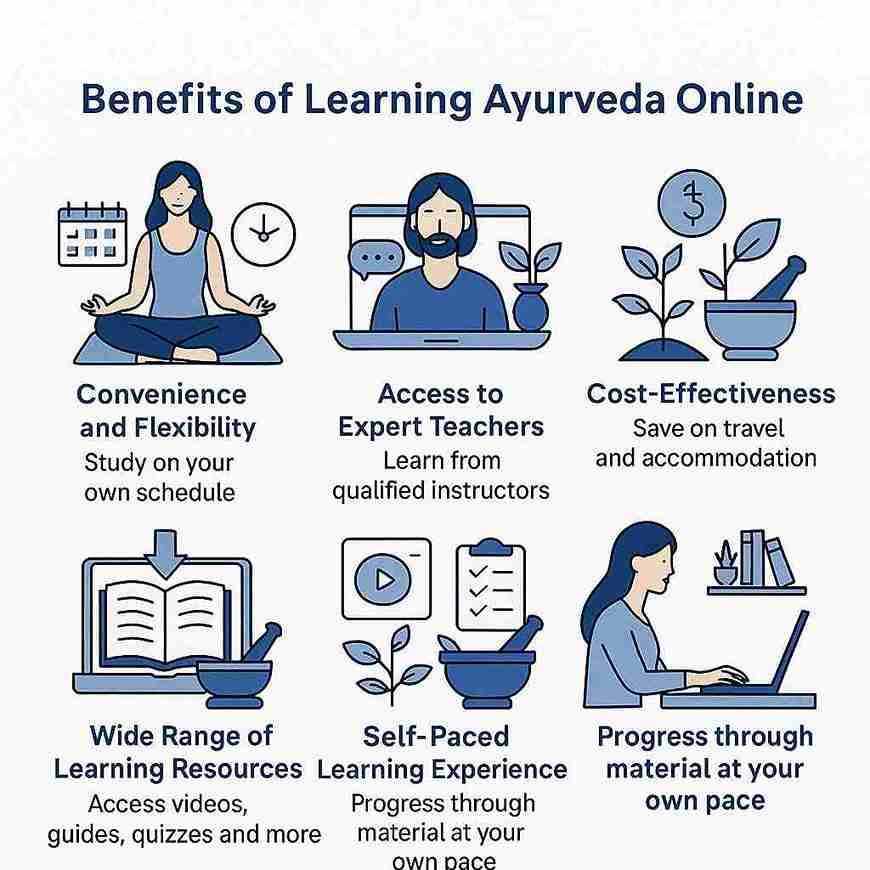
Online Ayurveda education combines the wisdom of a traditional healing system with the flexibility of modern learning. Whether your goal is personal wellbeing, professional development or lifelong learning, studying online allows you to build knowledge gradually while applying Ayurvedic principles in everyday life.
Quick Answer
Online Ayurveda courses provide flexible, structured learning that fits around work and family commitments while giving students access to experienced teachers, practical learning resources and the opportunity to apply Ayurvedic principles immediately in daily life. For many learners, this creates a more sustainable and accessible learning experience than classroom-only education.
Learn Without Putting Life on Hold
One of the greatest advantages of online Ayurveda education is flexibility. Instead of rearranging your career, family responsibilities or daily routine around fixed classroom schedules, you can build a consistent learning habit that fits naturally into your existing lifestyle. This makes long-term learning far more achievable for many students.
Key Advantages
- Study from anywhere with an internet connection.
- Balance learning with work, family and personal commitments.
- Suitable for international learners across different time zones.
- Create a study schedule that fits your own pace and availability.
Learn from Experienced Ayurveda Teachers
Online learning removes geographical barriers and gives students access to experienced Ayurveda educators they might never have the opportunity to study with locally. Many programmes combine live teaching, recorded lessons and ongoing guidance to create a more engaging learning experience.
Key Advantages
- Learn from experienced Ayurveda educators regardless of location.
- Participate in live discussions and interactive learning sessions.
- Revisit recorded classes whenever you need additional revision.
- Benefit from structured guidance throughout your learning journey.
Apply Ayurveda in Everyday Life
Unlike many academic subjects, Ayurveda can be practised alongside everyday life. Students often begin applying newly learned principles immediately—whether by improving digestion, refining daily routines, experimenting with seasonal foods or observing lifestyle patterns. This continuous cycle of learning, application and reflection helps transform knowledge into lasting habits.
Key Advantages
- Apply lessons immediately through daily routines and lifestyle practices.
- Observe personal changes in digestion, sleep, energy and overall wellbeing.
- Develop practical understanding through consistent self-observation.
- Build healthier habits that naturally reinforce classroom learning.
Comprehensive Learning Resources
Quality online Ayurveda programmes extend far beyond live classes. Students typically receive access to recorded lectures, downloadable study materials, demonstrations, quizzes, reading resources and learning communities that support revision long after each lesson has finished.
Key Advantages
- Recorded classes available for revision whenever needed.
- Downloadable notes, presentations and reference materials.
- Visual demonstrations that reinforce practical understanding.
- Continuous access to learning resources throughout the programme.
Greater Educational Value
Studying online often removes many of the additional costs associated with classroom-based education. Without the need for frequent travel or temporary relocation, students can invest more of their time and resources into learning itself while still benefiting from structured teaching and ongoing academic support.
Key Advantages
- Reduce travel and accommodation expenses.
- Access structured education from your preferred location.
- Make better use of study time without daily commuting.
- Focus your investment on education rather than logistics.
Learn at a Pace That Supports Long-Term Understanding
Every student absorbs knowledge differently. Online learning allows you to revisit complex concepts, repeat demonstrations and spend additional time on subjects that require deeper understanding before moving on. This encourages confidence, stronger retention and more meaningful long-term learning.
Key Advantages
- Review lessons and demonstrations as often as required.
- Progress according to your own learning pace.
- Strengthen understanding before advancing to new topics.
- Reduce pressure while building lasting knowledge.
Types of Online Ayurveda Courses: Finding the Right Learning Path
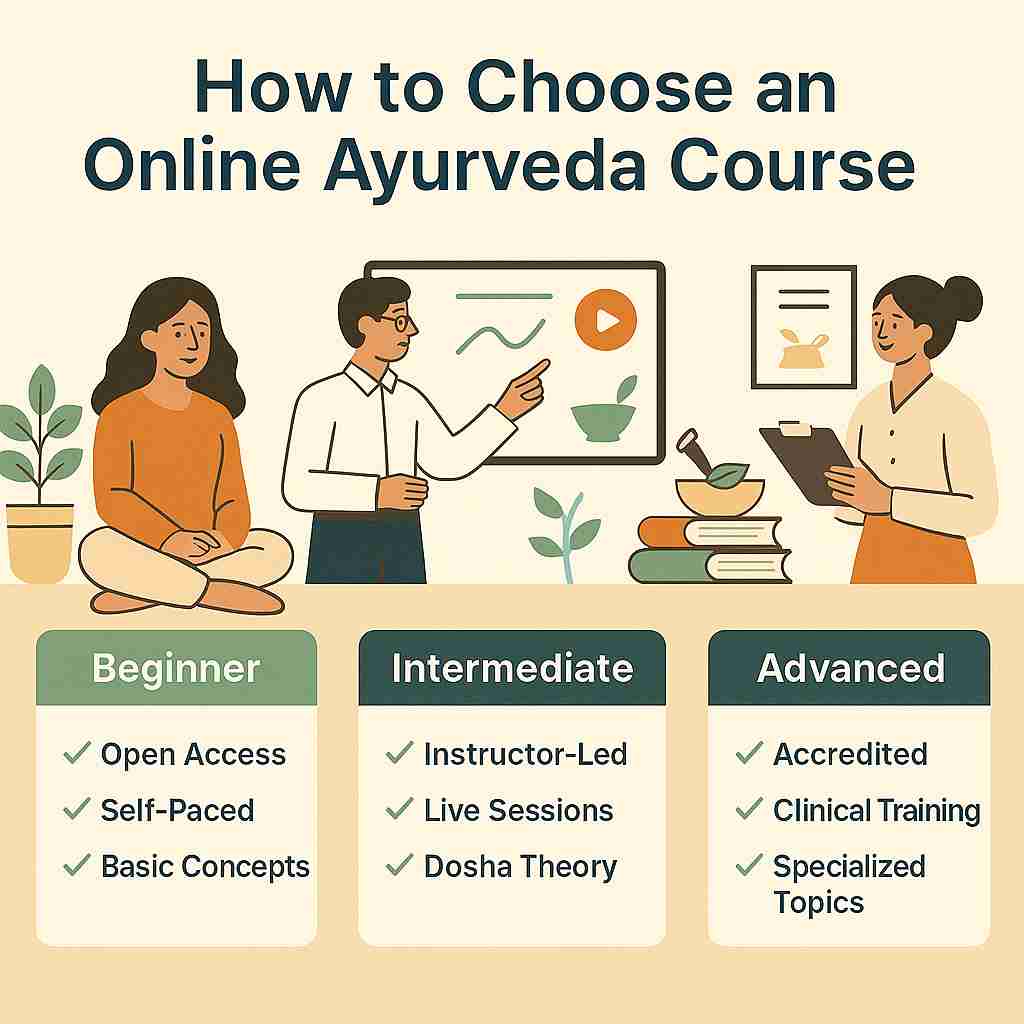
Online Ayurveda education is available in a variety of specialised learning pathways rather than a single standard curriculum. While some courses focus on personal wellbeing and healthy living, others explore nutrition, herbal medicine, lifestyle coaching or advanced professional education. Understanding these different pathways helps you choose a learning experience that matches your interests, current knowledge and long-term goals.
Ayurveda Foundations & Personal Wellbeing
Foundation programmes introduce the core principles of Ayurveda in a practical, beginner-friendly way. Rather than focusing on complex terminology, these courses teach everyday habits that support healthier living through food, routine and self-awareness.
Typical Topics
- Introduction to Ayurveda
- Tridosha (Vata, Pitta & Kapha)
- Dinacharya (daily routines)
- Basic Ayurvedic nutrition
- Simple lifestyle practices
- Seasonal wellbeing
Complete beginners, families, yoga students and anyone exploring Ayurveda for personal health.
Ayurveda Nutrition & Digestive Health
Nutrition-focused courses explore the relationship between food, digestion and overall wellbeing. Students learn how Ayurvedic nutrition adapts to individual constitutions, changing seasons and different stages of life.
Typical Topics
- Agni (digestive health)
- Ama and metabolism
- The Six Tastes
- Seasonal eating
- Food combinations
- Meal planning principles
Wellness learners, nutrition professionals, yoga teachers and individuals interested in digestive health.
Ayurvedic Herbal Medicine & Herbalism Courses
Herbalism courses explore one of Ayurveda’s most recognised areas—traditional medicinal plants and classical herbal formulations. Students learn how herbs are classified in Ayurveda, their traditional properties, methods of preparation and how they are incorporated into holistic wellness approaches within an educational framework.
Typical Topics
- Introduction to classical Ayurvedic herbs
- Herbal oils, powders and decoctions
- Traditional formulations and preparations
- Herbal actions and traditional classifications
- Safe educational use of medicinal plants
- Foundations of Ayurvedic herbal philosophy
Herbal enthusiasts, wellness practitioners, natural health learners and students wishing to deepen their understanding of traditional Ayurvedic herbal medicine.
Build a strong educational foundation in Ayurvedic herbal medicine and understand how classical herbal knowledge supports holistic wellbeing.
Lifestyle Medicine, Yoga & Integrative Ayurveda
These programmes explore how Ayurveda integrates with daily lifestyle practices, yoga, pranayama and mindfulness. Rather than focusing on isolated techniques, students learn how movement, nutrition, rest and daily routines work together to support long-term health and balance.
Typical Topics
- Dinacharya (daily routines)
- Ritucharya (seasonal living)
- Yoga and Ayurvedic lifestyle integration
- Pranayama and breathing practices
- Meditation and stress management
- Healthy sleep and recovery habits
Yoga teachers, wellness coaches, holistic therapists, health educators and individuals interested in preventive lifestyle medicine.
Develop practical strategies for integrating Ayurvedic lifestyle principles with yoga and healthy daily routines to support sustainable wellbeing.
Advanced Ayurveda & Practitioner Education
Advanced Ayurveda programmes are designed for learners who already understand the fundamentals and want to explore classical Ayurvedic concepts in greater depth. These programmes emphasise critical thinking, case-based learning, ethical practice and professional development while helping students build a deeper understanding of traditional Ayurvedic knowledge within an educational framework.
Typical Topics
- Advanced Tridosha analysis
- Agni, Ama, Dhatus and Srotas
- Classical Ayurvedic assessment principles
- Panchakarma theory and therapeutic concepts
- Case-based learning and observation
- Professional communication and ethics
- Integrative wellness planning
- Continuing professional development
Experienced Ayurveda learners, yoga teachers, wellness practitioners, holistic health professionals and students preparing for advanced educational pathways.
Develop a broader understanding of classical Ayurveda, strengthen analytical thinking and prepare for long-term educational and professional growth while respecting the legal and professional requirements of your country.
Compare the Different Types of Online Ayurveda Courses
Each learning pathway serves a different purpose. Rather than asking which course is “best,” choose the programme that best aligns with your current knowledge, interests and long-term goals.
| Learning Path | Primary Focus | Ideal For | Typical Outcome |
|---|---|---|---|
| Foundations | Core Ayurvedic principles and healthy living | Beginners and personal wellbeing | Build a strong understanding of everyday Ayurveda. |
| Nutrition | Digestive health and Ayurvedic nutrition | Wellness learners and nutrition professionals | Apply Ayurvedic dietary principles with greater confidence. |
| Herbal Medicine | Traditional herbs and formulations | Herbal enthusiasts and wellness practitioners | Understand the educational foundations of Ayurvedic herbal medicine. |
| Lifestyle & Yoga | Daily routines, yoga and preventive health | Yoga teachers and holistic health educators | Integrate Ayurveda into everyday lifestyle and wellbeing practices. |
| Advanced Ayurveda | Classical concepts and professional development | Experienced students and wellness professionals | Continue progressing towards advanced Ayurveda education. |
Choosing the Right Learning Path
Every learner begins Ayurveda with a different intention. Some want practical tools to improve their own health, while others are drawn towards nutrition, herbal medicine, yoga integration or long-term professional education. There is no single “best” pathway—only the one that best matches your current goals, learning experience and commitment. Building a strong foundation first often makes advanced study more meaningful and easier to apply in practice.
How to Choose the Right Online Ayurveda Course
Choosing an online Ayurveda course is an investment in your education, personal wellbeing and future growth. Rather than comparing programmes based solely on price or certificates, evaluate how well each course teaches Ayurveda, supports students and prepares you to apply what you learn. The framework below will help you compare programmes objectively before making a decision.
Course Evaluation Framework
Use these seven criteria when comparing different Ayurveda programmes. A well-designed course should perform strongly across all areas rather than excelling in only one.
| Evaluation Criteria | What to Look For |
|---|---|
| Curriculum & Learning Depth | A structured syllabus covering Ayurvedic philosophy, Tridosha, Agni, nutrition, herbal medicine, lifestyle practices, yoga integration and practical application. The curriculum should progress logically from beginner concepts to more advanced topics. |
| Faculty & Teaching Experience | Learn from experienced teachers who combine traditional knowledge with practical teaching experience. Instructor profiles should clearly explain their qualifications, areas of expertise and educational background. |
| Practical Learning | High-quality programmes include demonstrations, assignments, case discussions, practical exercises and opportunities to apply Ayurvedic principles instead of relying only on recorded lectures. |
| Student Support | Look for live classes, mentoring, question-and-answer sessions, discussion communities and continued access to learning resources throughout your studies. |
| Certification & Transparency | Understand exactly what certification is awarded, who issues it, what learning outcomes are assessed and whether the programme clearly explains its educational scope. |
| Student Reviews | Focus on reviews describing knowledge gained, teaching quality, practical application and long-term learning rather than short comments that provide little detail. |
| Overall Value | Evaluate the complete learning experience—including curriculum depth, faculty quality, practical learning, mentoring and student support—instead of comparing courses purely by price. |
Quick Evaluation Checklist
Before enrolling, make sure you can confidently answer Yes to most of the following questions.
Recognising Quality: Green Flags & Red Flags
Not all online Ayurveda courses offer the same educational experience. While marketing pages often make similar promises, the quality of teaching, curriculum and student support can vary significantly. The following guide highlights common indicators that can help you distinguish a well-designed programme from one that may not provide lasting value.
✅ Green Flags of a High-Quality Ayurveda Course
Comprehensive Curriculum
The syllabus follows a logical progression from Ayurvedic foundations to nutrition, herbal medicine, lifestyle practices and practical application, rather than covering isolated topics without structure.
Experienced Faculty
Teachers openly share their qualifications, teaching experience and professional background. They provide practical guidance alongside theoretical knowledge and remain accessible throughout the learning journey.
Practical Learning
Students actively apply concepts through demonstrations, assignments, case discussions, reflective exercises and guided practice instead of relying entirely on recorded lectures.
Transparent Learning Outcomes
The programme clearly explains what students will learn, how progress is assessed and what knowledge or skills they should expect to develop after completing the course.
Ongoing Student Support
Access to live sessions, mentoring, discussion groups or faculty support creates a more engaging learning experience and encourages continued growth after enrolment.
Authentic Student Feedback
Reviews describe real learning experiences, practical improvements and long-term outcomes instead of offering only short comments such as “Excellent course” or “Highly recommended.”
❌ Red Flags to Consider Carefully
Unrealistic Promises
Be cautious of programmes that promise practitioner-level expertise, guaranteed careers or advanced clinical skills after only a few days of study.
Limited Curriculum
If the syllabus lacks depth or omits essential topics such as nutrition, lifestyle, herbal medicine or practical application, it may not provide a balanced understanding of Ayurveda.
Anonymous Faculty
Courses that provide little or no information about instructors make it difficult to evaluate the quality of teaching and educational experience.
No Practical Learning
Learning Ayurveda requires observation, reflection and application. Courses based entirely on passive video watching often provide a limited educational experience.
Vague Certification Claims
Be careful when certification details, accreditation information or educational scope are unclear or presented in a misleading way.
Marketing Over Education
If a programme focuses more on sales claims than explaining the curriculum, faculty and learning process, take time to investigate further before enrolling.
Course Comparison Scorecard
Rate each programme from 1 (Poor) to 5 (Excellent). Comparing courses using consistent criteria often gives a clearer picture than focusing on price alone.
| Evaluation Criteria | Your Score |
|---|---|
| Curriculum Depth | ⬜⬜⬜⬜⬜ |
| Faculty Experience | ⬜⬜⬜⬜⬜ |
| Practical Learning | ⬜⬜⬜⬜⬜ |
| Student Support | ⬜⬜⬜⬜⬜ |
| Certification Transparency | ⬜⬜⬜⬜⬜ |
| Student Reviews | ⬜⬜⬜⬜⬜ |
| Overall Value | ⬜⬜⬜⬜⬜ |
How to Interpret Your Score
- 30–35 — Excellent educational quality with strong long-term value.
- 25–29 — A well-rounded programme worth considering.
- 20–24 — Compare carefully before making a decision.
- Below 20 — Review alternative programmes and investigate further.
What Will You Learn in an Online Ayurveda Course?
An online Ayurveda course provides a structured introduction to the principles of holistic health, guiding you from foundational concepts to practical lifestyle applications. Whether your goal is personal wellbeing, professional development, or preparing for advanced Ayurvedic study, a well-designed curriculum builds knowledge step by step while encouraging practical application in everyday life.
Quick Answer
Most online Ayurveda courses teach Ayurvedic philosophy, the three doshas, digestion, nutrition, herbal medicine, daily routines, yoga integration and preventive lifestyle practices. As students progress, many programmes also introduce traditional assessment concepts, case-based learning and advanced study pathways, depending on the level of the course.
Your Ayurveda Learning Journey
Rather than learning isolated topics, Ayurveda is best understood as a connected system. Each stage builds naturally upon the previous one, helping you develop both theoretical understanding and practical confidence.
Foundations of Ayurveda
History, philosophy, Panchamahabhutas, Tridosha and the fundamental principles of holistic health.
BeginnerNutrition & Lifestyle
Agni, Ama, Ayurvedic nutrition, seasonal eating, daily routines and preventive healthcare.
BeginnerHerbal Medicine
Classical herbs, traditional formulations, herbal preparations and responsible use of Ayurvedic remedies.
IntermediateAdvanced Ayurveda
Assessment principles, case discussions, specialised concepts and practitioner-level education pathways.
AdvancedChoose the Right Learning Path
Our online Ayurveda curriculum is organised into specialised learning pathways, allowing you to begin with the fundamentals and continue towards advanced education as your knowledge and confidence grow.
Study Ayurveda Online – Basic Course
Build a strong foundation in Ayurvedic philosophy, doshas, daily routines and holistic wellness.
Ideal for Beginners →Ayurveda Nutrition Course Certification
Develop practical knowledge of Ayurvedic nutrition, digestion, meal planning and lifestyle guidance.
Nutrition Pathway →Build Practical Ayurveda Knowledge Step by Step
Each module builds on the previous one, helping you understand Ayurveda as an integrated system rather than a collection of isolated techniques. By combining theory with practical application, students gradually develop the confidence to apply Ayurvedic principles in everyday life.
Foundations of Ayurveda
Begin your learning journey by understanding the origins of Ayurveda, the Panchamahabhutas (Five Elements), the Tridosha theory, Prakriti, Vikriti and the principles that form the basis of Ayurvedic health and disease prevention.
Develop a strong conceptual foundation that prepares you for every advanced topic in Ayurveda.
Ayurvedic Nutrition & Digestive Health
Discover why digestion is central to Ayurveda. Learn about Agni, Ama, the six tastes, seasonal nutrition, food combining and how personalised dietary choices support long-term wellbeing.
Understand how Ayurvedic nutrition can be adapted to individual constitutions, seasons and lifestyle needs.
Ayurvedic Herbal Medicine & Classical Formulations
Learn the traditional uses of Ayurvedic herbs, herbal oils, powders, decoctions and classical formulations. Understand how herbs are selected within Ayurveda and how formulations support different aspects of health.
Gain a practical understanding of Ayurvedic herbal traditions while recognising that therapeutic use requires appropriate professional training and should follow local healthcare regulations.
Key Skills Developed During These Modules
Advance Your Knowledge with Practical & Professional Ayurveda Training
Once you’ve built a strong foundation, the curriculum progresses into lifestyle medicine, yoga integration, traditional assessment principles and advanced clinical concepts. These modules prepare students for specialised study, wellness education and long-term professional development.
Ayurvedic Lifestyle, Daily Routines & Preventive Healthcare
Discover how everyday habits influence long-term health through Dinacharya (daily routine), Ritucharya (seasonal living), sleep, movement, stress management and mindful living. Lifestyle medicine remains one of Ayurveda’s most practical and transformative areas.
Learn how consistent daily routines support digestion, immunity, mental wellbeing and sustainable health.
Yoga, Pranayama & Ayurveda
Understand how yoga, breathwork and meditation complement Ayurvedic principles. Explore how movement, breathing techniques and mindfulness practices can be integrated with personalised lifestyle recommendations.
Develop the ability to combine Ayurvedic lifestyle guidance with yoga-based wellbeing practices for a more holistic approach.
Advanced Ayurvedic Concepts & Clinical Understanding
Explore deeper Ayurvedic concepts including Dhatus, Srotas, Mala, Agni, disease progression (Samprapti), constitutional assessment, Panchakarma principles and classical approaches to health restoration. Topics are introduced within an educational framework appropriate to the course level.
Develop a deeper understanding of Ayurvedic theory and prepare for more advanced study under recognised professional training pathways where appropriate.
Advanced Ayurveda Practitioner Programme (AACCC)
Students wishing to progress beyond foundational education can continue towards advanced practitioner-level learning. This pathway expands knowledge through comprehensive case discussions, applied assessment principles, wellness planning, ethics, communication skills and structured professional development.
Build the confidence, knowledge and educational foundation needed to continue progressing towards advanced Ayurveda education while understanding the importance of working within the legal and professional requirements of your country.
Complete Learning Path Overview
Whether your goal is improving your own health, integrating Ayurveda into yoga, becoming an Ayurvedic nutrition educator, studying herbal medicine or progressing towards advanced practitioner education, this curriculum provides a structured pathway that allows you to continue learning at every stage.
Learn the foundations of Ayurveda.
Master Ayurvedic nutrition and digestion.
Study herbs and traditional formulations.
Explore classical clinical concepts.
Continue towards advanced practitioner education.
Knowledge, Skills & Practical Confidence You’ll Develop
A high-quality online Ayurveda course is not simply about learning theory. It helps you develop practical skills that improve personal wellbeing while creating a strong educational foundation for advanced study, wellness education and professional development.
Ayurvedic Foundations
Understand classical philosophy, Tridosha, Panchamahabhutas and holistic health principles.
Nutrition Planning
Apply Ayurvedic dietary principles, meal timing, digestive health concepts and seasonal nutrition.
Herbal Knowledge
Recognise important Ayurvedic herbs, classical formulations and traditional herbal preparations.
Lifestyle Design
Create sustainable daily routines that integrate food, sleep, exercise, yoga and stress management.
Critical Thinking
Develop the ability to interpret Ayurvedic principles responsibly instead of memorising isolated facts.
Professional Growth
Build confidence for continuing education, wellness coaching and advanced Ayurveda programmes.
After Completing an Online Ayurveda Course You May Be Able To
Quick Summary
A structured online Ayurveda course typically begins with Ayurvedic philosophy before progressing through doshas, nutrition, herbal medicine, lifestyle practices, yoga integration and advanced concepts. Students gradually develop practical wellness skills while building a strong educational foundation for further study or professional development.
Expert Perspective
Learning Ayurveda is a gradual process rather than a short-term achievement. The greatest transformation usually comes from consistently applying simple principles—such as improving digestion, creating healthier daily routines, understanding individual constitution and developing greater awareness of how food, lifestyle and environment influence overall wellbeing. Strong programmes encourage continuous learning, ethical practice and respect for the traditional roots of Ayurveda while recognising the different regulatory frameworks that exist around the world.
Continue Your Ayurveda Learning Journey
Whether you’re taking your first step into Ayurveda or planning long-term professional education, explore the course that best matches your current level and future goals.
Accreditation in Online Ayurveda Education
Accreditation helps learners understand whether an Ayurveda course follows recognised educational standards, ethical teaching practices and transparent learning outcomes. While many excellent online programmes exist, recognition depends on the institution, the country where you intend to study or practise, and the purpose of your qualification.
Can Online Ayurveda Courses Be Recognised?
Yes—but recognition varies.Some online Ayurveda programmes are designed primarily for personal wellbeing, yoga education and wellness coaching, while others form part of larger professional training pathways. Whether a certificate is recognised depends on the institution, accreditation status and the regulations of the country where you intend to use your qualification.
How to Verify an Online Ayurveda Course
- ✔ Verify the institution behind the course.
- ✔ Review faculty qualifications and teaching experience.
- ✔ Check whether practical training is included.
- ✔ Understand exactly what the certificate represents.
- ✔ Read independent student reviews.
- ✔ Confirm whether the qualification is recognised where you intend to study or work.
- ✔ Be cautious of programmes making unrealistic practitioner claims.
Important to Know
Many respected professional organisations promote high educational standards for Ayurveda, but they may not formally accredit every online course. Always verify recognition directly with the institution and the relevant regulatory authority before enrolling if your long-term goal involves clinical practice or regulated healthcare.
Traditional vs Online Ayurveda Learning
Both traditional and online Ayurveda education provide valuable learning experiences. The right choice depends on your goals, schedule, learning style and career aspirations. This comparison highlights the key differences to help you make an informed decision.
| Learning Aspect | 🏫 Traditional Learning | 💻 Online Learning |
|---|---|---|
| Flexibility | Fixed class schedule | Study from anywhere at your own pace |
| Learning Format | In-person classroom instruction | Live classes + recorded lessons |
| Cost | Higher tuition, travel and accommodation | Lower overall investment |
| Faculty Access | Teachers available on campus | Learn from experts regardless of location |
| Study Materials | Books, printed notes, classroom teaching | Videos, PDFs, quizzes, recordings and live sessions |
| Practical Training | Continuous practical experience | Online demonstrations with optional residential workshops |
| Ideal For | Full-time students | Working professionals, yoga teachers and wellness learners |
📅 Flexibility
Fixed class schedules with mandatory attendance.
Learn from anywhere with self-paced lessons or live online sessions.
🎓 Learning Format
Face-to-face lectures, classroom discussions and practical teaching.
Recorded lessons, live classes, downloadable resources and digital assignments.
💰 Course Cost
Higher costs including tuition, travel, accommodation and daily expenses.
More affordable with significantly lower additional costs.
👨🏫 Faculty Access
Limited to teachers available at one institution.
Learn from experienced faculty regardless of your location.
📚 Learning Resources
Printed books, classroom notes and in-person demonstrations.
Videos, PDFs, recorded lectures, quizzes and live interactive sessions.
🧘 Practical Training
Hands-on practical learning integrated throughout the programme.
Online demonstrations with optional workshops and residential practical modules.
🌿 Best Suited For
Students able to commit to full-time classroom education.
Working professionals, yoga teachers, wellness practitioners and lifelong learners seeking flexibility.
Overview of Ayurveda Philosophy & Core Principles
Ayurveda rests on timeless principles—the five elements, the three doshas, and the idea that true health begins when the mind, body and lifestyle move in the same direction.
The Five Elements
Ayurveda explains that everything in nature is composed of five fundamental elements—Earth, Water, Fire, Air and Ether. These elements combine in different proportions to create the three doshas, which influence every aspect of our physical, mental and emotional wellbeing.
The Three Doshas: Vata, Pitta & Kapha
Each individual is born with a unique constitutional blueprint known as Prakriti. Understanding your dominant dosha helps explain differences in digestion, metabolism, sleep, emotions, body type and overall health. Rather than treating everyone the same, Ayurveda recognises that true wellbeing comes from personalised lifestyle choices.
Expert Insight
When students first discover their Prakriti, many describe it as finally understanding why their body behaves the way it does. This awareness becomes the foundation for making better decisions about food, lifestyle, exercise and long-term health.

Who Should Take an Online Ayurveda Course?
Online Ayurveda courses are designed for anyone who wants to understand holistic health through flexible, structured learning. Whether your goal is personal wellbeing, professional development, or building a career in the wellness industry, Ayurveda provides practical knowledge that can be applied in everyday life.
Complete Beginners
Ideal for anyone starting their Ayurveda journey with no previous knowledge. Learn the foundations of Ayurvedic philosophy, nutrition, lifestyle and preventive healthcare in a clear, structured way.
Health & Wellness Seekers
Perfect for individuals looking to improve digestion, sleep, stress management, energy levels and overall wellbeing using natural Ayurvedic lifestyle principles.
Yoga Teachers & Practitioners
Expand your understanding of holistic health by integrating Ayurvedic nutrition, daily routines and lifestyle guidance into yoga classes, retreats and teacher training.
Nutrition & Wellness Professionals
Suitable for nutritionists, wellness coaches, holistic therapists and healthcare professionals wanting to broaden their knowledge with traditional Ayurvedic concepts.
Working Professionals
Designed for busy schedules. Study at your own pace while balancing work, family and other commitments without attending full-time classroom programmes.
Future Ayurveda Students
Build a strong foundation before progressing to advanced Ayurveda education, specialised certifications or long-term professional training.
Career Prospects After Completing an Online Ayurveda Course
Completing an online Ayurveda course can lead to a variety of meaningful career pathways in holistic health, wellness education, nutrition, yoga, herbal medicine, coaching and preventive healthcare. The opportunities available depend on your level of education, practical experience, professional interests and the regulations within your country. While some learners continue towards practitioner-level training, many successfully apply Ayurveda in education, consulting and wellness-based professions.
Ayurvedic Practitioner
Students who continue into recognised practitioner training may eventually work with clients using Ayurvedic assessment, lifestyle recommendations, herbal support and traditional health principles within the legal framework of their country.
Clinical Practice • Lifestyle ConsultationAyurvedic Nutritionist
Help individuals improve digestion, energy and overall wellbeing through personalised Ayurvedic nutrition, dosha-based meal planning, seasonal diets and healthy lifestyle guidance.
Nutrition • Wellness CoachingHerbal Medicine Specialist
Develop knowledge of Ayurvedic herbs, traditional formulations and natural wellness products while supporting individuals interested in complementary approaches to health.
Herbal Products • Natural HealthYoga & Ayurveda Teacher
Combine yoga philosophy with Ayurvedic nutrition and lifestyle principles to teach holistic wellbeing through classes, retreats, workshops and teacher training programmes.
Yoga • EducationAyurveda Wellness Coach
Support clients in building healthier habits by combining Ayurvedic routines, nutrition, sleep, stress management and lifestyle coaching into personalised wellness plans.
Health Coaching • LifestyleHealth Writer & Content Creator
Create blogs, books, online courses, newsletters, podcasts and educational resources that make Ayurveda more accessible to modern audiences worldwide.
Writing • EducationAyurvedic Product Developer
Collaborate with wellness companies developing herbal supplements, skincare, teas, oils and natural healthcare products inspired by classical Ayurvedic knowledge.
Product Development • Wellness BrandsAyurveda Educator
Teach introductory Ayurveda programmes, workshops, corporate wellness sessions and community education initiatives while helping others understand preventive healthcare.
Teaching • Public EducationAyurveda Research
Contribute to evidence-informed Ayurveda by participating in clinical research, product validation, educational projects and integrative healthcare innovation.
Research • InnovationImportant Scope of Practice
An online Ayurveda course provides valuable knowledge for education, nutrition, lifestyle guidance and holistic wellness. Clinical practice, diagnosis and therapeutic treatments are regulated differently across countries and may require recognised qualifications, supervised practical training and professional registration. Always verify your local legal and regulatory requirements before offering professional healthcare services.
What Can You Do After Completing an Online Ayurveda Course?
Completing an online Ayurveda course doesn’t automatically make someone a clinical Ayurvedic practitioner. However, it can provide valuable knowledge and practical skills that support personal wellbeing, professional development, and a wide range of wellness-related careers. The opportunities available depend on your level of training, practical experience, and the regulations in your country.
Improve Your Own Health
Apply Ayurvedic principles to your own lifestyle through personalised nutrition, daily routines, seasonal living, digestion support, stress management and preventive wellness practices.
Support Family Wellbeing
Help family members develop healthier eating habits, balanced daily routines and simple Ayurvedic lifestyle practices that promote long-term wellbeing.
Create Personalised Nutrition Plans
Learn to design dosha-informed meal plans, seasonal food recommendations and practical dietary guidance that supports digestive health and overall balance.
Enhance Your Yoga Teaching
Integrate Ayurveda into yoga classes, pranayama sessions, meditation programmes and holistic wellness workshops to provide students with a more complete learning experience.
Begin a Wellness Coaching Journey
Many graduates use their knowledge to offer lifestyle education, health coaching, wellness workshops and nutrition guidance within their local community or online.
Continue Advanced Study
Build a stronger foundation before progressing to advanced Ayurveda education, specialised certifications or supervised practitioner training where appropriate.
Read our complete guide: Can You Practise Ayurveda After an Online Course?
Salary Expectations (India & International)
Income varies depending on qualifications, experience, location, client base, and whether you work independently or within an established wellness organisation. The figures below provide an approximate indication only.
Ayurvedic Nutritionist
Ayurveda Wellness Coach
Herbal Medicine Specialist
Experience Beyond the Classroom
Many students begin their Ayurveda journey simply wanting to improve their own health or support their families. Over time, that knowledge often grows into something much larger—teaching, wellness coaching, nutrition guidance, or holistic consulting. The practitioners who create the greatest long-term impact aren’t usually the fastest learners; they’re the ones who remain curious, apply what they learn consistently, and continue refining their understanding through practice.
Real Case Studies of Student Success
Real-life examples showing how online Ayurveda education has helped students improve their health, build meaningful careers, and create new opportunities.
A Yoga Teacher Expanding Her Skillset
Priya integrated Ayurvedic meal guidance into her yoga classes. As her students began experiencing better energy and digestion, she expanded her services and created an additional income stream through holistic wellness coaching.
A Homemaker Starting Nutrition Coaching
After applying Ayurvedic principles in her own life, Leena developed the confidence to support women in her local community with personalised nutrition guidance, emotional eating, and Kapha-balancing lifestyle practices.
A Retreat Practitioner
Anand now works with a wellness retreat in the Himalayas where he designs Ayurvedic menus, delivers weekly nutrition workshops, and supports guests with holistic lifestyle recommendations.
A Corporate Wellness Consultant
Former IT professional Arjun now delivers workplace wellness programmes, helping employees improve digestion, reduce stress, and build healthier daily routines through practical Ayurvedic lifestyle guidance.
Frequently Asked Questions About Online Ayurveda Courses
Whether you’re exploring Ayurveda for personal wellbeing or considering it as a professional path, it’s natural to have questions before enrolling. Here are clear answers to some of the questions we hear most often from prospective students.
What is an online Ayurveda course?
An online Ayurveda course is a structured learning programme that allows you to study Ayurvedic principles through live classes, recorded lessons, downloadable resources and guided assignments. Depending on the course, you’ll learn topics such as the three doshas, Ayurvedic nutrition, digestion, herbal medicine, daily routines and holistic lifestyle practices.
Some people study Ayurveda to improve their own health, while others use it to support careers in yoga, wellness coaching, nutrition or holistic health. A good course should combine traditional knowledge with practical guidance that can be applied in everyday life.
Can you really learn Ayurveda online?
Yes. Subjects such as Ayurvedic philosophy, nutrition, lifestyle management, herbs and dosha assessment can be taught very effectively online when supported by experienced teachers and a well-structured curriculum.
However, practical clinical skills such as Panchakarma therapies, pulse diagnosis and hands-on patient assessment are best learned through supervised practical training. Reputable schools clearly explain these differences.
Is an online Ayurveda course suitable for beginners?
Absolutely. Most beginner courses assume no previous knowledge of Ayurveda or medicine. They introduce the core concepts gradually, helping students understand the principles before moving into more advanced topics.
What will I learn in an online Ayurveda course?
A comprehensive programme usually covers Ayurvedic philosophy, the three doshas, digestion (Agni), nutrition, herbs, daily routines (Dinacharya), seasonal living (Ritucharya), yoga integration, stress management and holistic lifestyle practices.
More advanced courses may also include case studies, client assessments and wellness coaching methods.
How long does an online Ayurveda course take?
Course duration varies depending on the level of study. Introductory courses may take a few weeks, while professional certification programmes often run for several months. Self-paced courses allow you to study whenever it suits your schedule.
Are online Ayurveda certificates recognised?
Recognition depends on the institution offering the course and the regulations of the country where you intend to use the qualification. Always check accreditation, curriculum quality and the intended scope of the programme before enrolling.
Can I practise Ayurveda after completing an online course?
Online education provides an excellent foundation in Ayurvedic nutrition, lifestyle guidance and holistic wellness. Clinical practice requirements vary between countries and may require additional supervised practical training and recognised qualifications.
How do I choose the right online Ayurveda course?
Look beyond the course price. Consider the experience of the teachers, curriculum depth, practical assignments, student support, accreditation, reviews and whether the teaching style matches your learning goals.
Is studying Ayurveda online worth it?
For many students it is. Online learning offers the flexibility to study from anywhere while building practical knowledge that can improve personal wellbeing or support a career in yoga, nutrition, coaching or holistic health.
🌿 Continue Your Ayurveda Learning Path
If you’d like to explore specific areas of online Ayurveda study in greater depth, these focused guides will help you choose the right direction. Each link below expands on a particular learning pathway — from herbalism to certification routes to studying Ayurveda in India.
Continue Your Ayurveda Learning
Explore our complete learning hub covering beginner education, certification, herbal medicine, advanced practitioner training and professional development. Each guide expands on a specific topic introduced in this pillar and helps you continue your Ayurveda learning journey with confidence.
In-Depth Guides
Learning Categories
Structured Learning Path
🌱 Getting Started with Ayurveda
Essential resources for complete beginners exploring Ayurveda for personal wellbeing, holistic health and structured online learning.
How to Learn Ayurveda Online
A practical roadmap explaining how beginners can start learning Ayurveda step by step with confidence.
Learning GuideAyurveda Training Online
Understand learning pathways, study formats, programme structures and progressive online education.
Online LearningAyurveda Classes Online
Explore how modern technology has transformed traditional Ayurveda learning through live and recorded classes.
🎓 Certification & Accreditation
Understand educational standards, certification options and accreditation before choosing an Ayurveda programme.
Understanding Ayurveda Certification
Learn how certification works, what accreditation means and how to evaluate educational quality.
Professional ProgrammeCertificate Course in Ayurvedic Medicine (AACCC)
Discover our comprehensive professional programme designed for structured Ayurveda education.
InstitutionsBest Online Ayurveda Schools
Compare recognised online Ayurveda schools, teaching quality and learning approaches.
🌿 Specialist Learning
Deepen your understanding through specialist guides covering herbal medicine, advanced Ayurveda and comparative education.
Online Ayurveda Herbalism Courses
Study medicinal plants, classical herbs, herbal preparations and traditional formulations.
Advanced StudyAdvanced Ayurveda Training
Continue beyond foundational education with more advanced concepts and professional learning.
Comparison GuideOnline vs Traditional Ayurveda Learning
Compare costs, flexibility, practical training and educational outcomes across different study models.
💼 Careers & Professional Development
Explore professional pathways, advanced education and long-term opportunities within Ayurveda and holistic wellness.
Ayurveda Career Pathways
Explore wellness careers, consulting opportunities and professional growth after Ayurveda education.
Study in IndiaTop Institutes to Learn Ayurveda in India
Compare residential schools, immersive programmes and hybrid learning opportunities across India.
Suggested Learning Path
Build your knowledge progressively by mastering the fundamentals before moving into specialist subjects and advanced practitioner education.
Build a Healthier, Balanced & Conscious Lifestyle — At Your Own Pace
Choose the Ayurveda course that aligns with your goals and begin your transformation today.
Chat on WhatsApp — +91 70836 71508
Conclusion
Learning Ayurveda is not simply about completing a course—it is about developing a deeper understanding of health, lifestyle and the relationship between daily habits and long-term wellbeing. Online education has made this traditional knowledge more accessible than ever before while allowing students to learn at a pace that fits modern life.
Key Takeaways
Throughout this guide, you’ve explored how online Ayurveda courses work, the different learning pathways available, what students typically study, accreditation considerations, professional development opportunities and the practical factors to evaluate before choosing a programme. Whether you’re beginning your first introduction to Ayurveda or planning more advanced education, understanding these fundamentals helps you make informed learning decisions.
For Personal Wellbeing
If your goal is improving digestion, daily routines, nutrition or overall lifestyle, foundational Ayurveda courses provide practical knowledge that can be applied gradually in everyday life.
For Professional Development
Wellness practitioners, yoga teachers, nutrition professionals and holistic health educators often use structured Ayurveda education to broaden their knowledge and integrate traditional principles into existing areas of practice, while remaining within the professional and regulatory requirements of their region.
For Lifelong Learning
Many students continue studying Ayurveda long after completing their first course. Building knowledge progressively—from foundations to specialist subjects—creates a deeper appreciation of this holistic system of health and wellbeing.
A Final Perspective
Ayurveda has always encouraged observation, reflection and gradual learning rather than quick solutions. The most rewarding educational journeys are rarely the fastest—they are the ones that encourage curiosity, consistent practice and thoughtful application over time. By choosing a well-structured online Ayurveda course that aligns with your goals, you can build knowledge step by step while developing a deeper understanding of one of the world’s oldest holistic health traditions.