Unlock Wellness: Top Online Ayurvedic Dietician Course With Certification in 2025
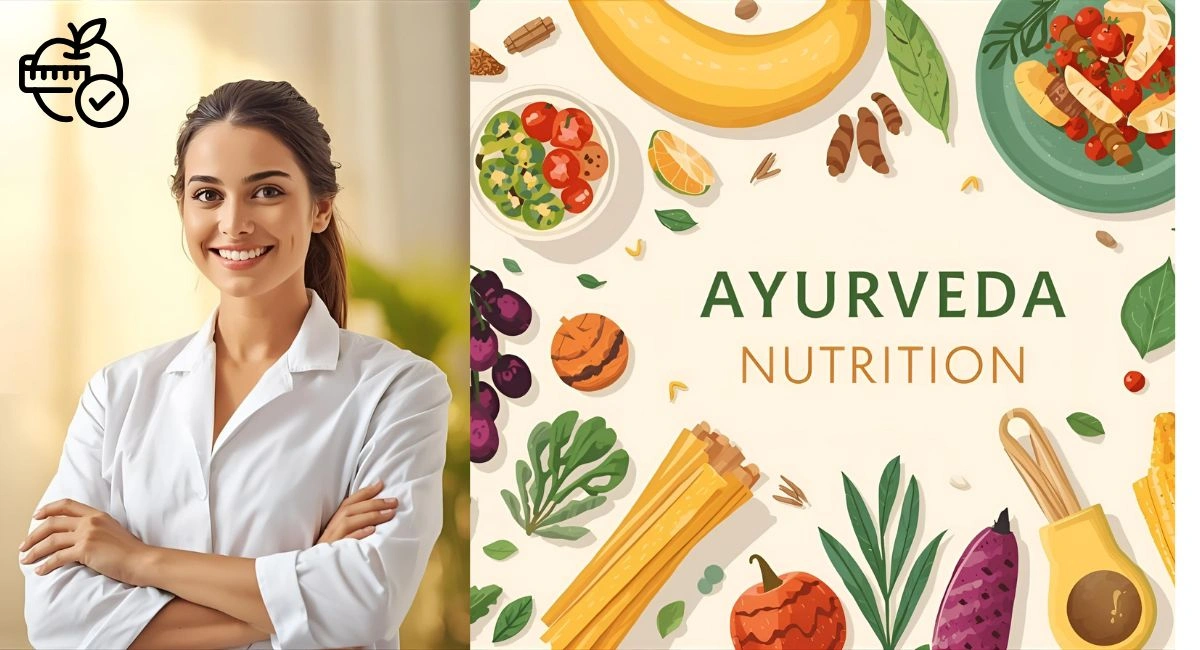
Top Online Ayurvedic Dietician Course With Certification in 2025
Interest in holistic and integrative nutrition is rising quickly, and one of the most compelling pathways today is the online Ayurvedic dietician course certification. For professionals who want to bring ancient dietary wisdom into contemporary wellness practice, this kind of credential offers both flexibility and depth. In 2025, the convergence of mature e-learning platforms and growing demand for Ayurveda-inflected services means that pursuing this certification can be a smart move.
If you’re a yoga instructor, wellness coach, nutritionist—or simply someone who wishes to work more holistically—an online Ayurvedic dietician course certification enables you to combine traditional wisdom (like prakriti, dosha, agni) with modern nutrition science. But the key challenge is: not all programs are equal.
Some are superficial, others lack support, and many don’t prepare you for real-world application. This article guides you through how to evaluate programs truly, presents top certification options for 2025, and offers recommendations to help you get the most from your learning investment.
Why Choose an Online Ayurvedic Dietician Course Certification?
Selecting an online Ayurvedic dietician certification is more than just adding a line to your résumé—it’s a strategic decision to elevate your practice and expand your service offering in holistic nutrition. Let’s unpack why this matters.
First, the flexibility of online delivery means you can study while maintaining your current commitments. Whether you already work in wellness, run a yoga studio, or have another full-time role, a credible certification helps you step into Ayurveda without pausing your life. This is particularly beneficial in 2025, when remote learning tools—including video lectures, peer forums and live Q&A—are well-established.
Second, the wellness industry is increasingly receptive to integrative nutrition frameworks. Clients are seeking more personalized, constitution-based diet planning—not simply generic calorie counts. An online Ayurvedic dietician course certification signals you understand concepts like dosha balancing, seasonal eating (ritu-ahāra), and digestion (agni) in a more nuanced way, giving you an edge.
Third, the certification helps you differentiate from informal “wellness coaching”. When your programme is offered by a recognized institution, it adds credibility and trust. That said—important caveat—this credential is not always equivalent to a licensed clinical dietician credential. So you must clarify your scope of practice with clients and assess your regional regulations.
Finally, the depth of Ayurveda offers you a unique framework. When you understand how food is seen in Ayurveda—as medicinal, energetic, seasonal—you can support clients beyond mere macronutrient breakdown. A strong online Ayurvedic dietician course certification helps you bridge modern dietetics and classical wisdom, making your work richer, more holistic and more aligned with emerging wellness trends.
Key Criteria for Evaluating Your Ayurevda Certification Program
Not all programs offering an online Ayurvedic dietician certification are created equal. To ensure you invest wisely, consider the following key criteria:
- Institutional credibility and certification recognition: Does the provider carry recognised accreditation (nationally or internationally)? Is the certification meaningful to employers or clients? For instance, some courses are affiliated with accredited Ayurvedic institutions or authorised under the Ministry of AYUSH, Government of India, which oversees the quality and authenticity of Ayurvedic education and practice. A certificate from such a body offers additional credibility and recognition in the holistic health sector.
- Curriculum depth and relevance: Look for syllabus content that covers core Ayurvedic themes (doshas, dhātus, agni/ama, ritu-ahāra, srotas) **and** applies them to dietetics—meal planning, therapeutic nutrition, case studies. Avoid courses that offer just a surface overview.
- Mode of delivery, duration and format: Whether it’s fully online, self-paced, live webinars, or hybrid—choose what fits your schedule and learning style. Ask how long the certificate takes and how often live support or peer discussion is offered.
- Practical application and support: Courses that include assignments, diet-chart creation, peer interaction, mentor feedback or practical case work tend to produce more confident graduates. For an online Ayurvedic dietician course certification you’ll want more than just video modules.
- Cost vs. value proposition: What is the investment in terms of fee, time, access, mentorship and updates? A lower-cost certificate might suffice for curiosity, but if you plan to practise professionally, look for robust support and ongoing access.
- Post-certification career scope: What can you do with the credential? Will the provider assist with career pathways (consulting, wellness centre tie-ups, diet-planning employment)? Will your credential be perceived well by clients or employers in your region?
By applying these criteria to your selection process, you reduce the risk of enrolling in a programme that looks good on paper but lacks meaningful value for your practice.
Top Online Ayurvedic Dietician Course Certification in 2025
Here are five standout programmes worth your consideration, each offering a distinct purpose depending on your background, budget and career ambition.
1. Certificate Course in Ayurveda Diet & Nutrition – Vishuddhi Isha Yoga & Ayurveda (VIY, Goa)
This programme sits at the top of our list for those seeking a well-priced, entry-level route into an online Ayurvedic dietician certification. The online version of the course is priced at **US $133** (approx ₹11,000–12,000)
Offered by a Goa-based Ayurveda school, the course includes about 20-plus hours of video content, assignments, case-studies, practical diet-chart work and a professional certificate. You learn how to identify your dosha, understand food energetics (rasa, virya, vipāka), seasonal eating, and diet planning specific to body constitution. This makes it a strong starting point for someone who wants a credible certificate without disrupting their existing work. Course duration is not specifically self paced but ideally study time is 2 months.
They offer two course versions : one is Ayurveda Foundation and second is Nutrition Masterclass with live sessions with the lead mentor and coach.
2. Certificate Course in Basics of Ayurveda Nutrition – National Institute of Ayurveda (NIA)
Offered by India’s premier government-recognized Ayurvedic institution, NIA lists its online mode course fee at **₹2,500** in its December 2024 brochure.
Though short in duration (approx 16 hours), it covers foundational topics—dosha theory, seasonal diet (ritu-ahāra), prakriti assessment—and includes an exam. For aspiring practitioners who want a respected credential with minimal time investment, this is an appealing choice. However, if you plan to practise extensively, you’ll likely need a deeper programme too.
3. Certificate in Integration of Nutrition and Ayurveda – SVT College via SNDT Women’s University
This self-paced, module-based programme (12 modules over ~3 months) is designed for nutrition or allied-health professionals seeking to integrate Ayurvedic dietetics into their practice. While explicit pricing isn’t publicly stated, this kind of mid-level commitment is appropriate for someone ready to elevate from foundational to professional practice.
4. Ayurvedic Nutrition & Dietetics Program – Global Institute of Health Science (GIHS)
Targeted at individuals who intend to work as Ayurvedic diet consultants or in wellness clinics, this course specifies roles like “Ayurvedic Nutritionist & Counsellor”. The fee is around **₹22,000** (Indian learners) for the three-month certificate version. This offers substantial depth and career-oriented framing.
5. Certificate Programme in Nutrition & Ayurveda Dietetics (CNAD) – Kottakkal Ayurveda School of Excellence (KASE)
This specialist programme emphasises therapeutic dietetics through an Ayurvedic lens—food-as-medicine, nutraceuticals, diet for clinical conditions and sports nutrition. The online batch fee is advertised at approx **₹6,900** for ~27 hours. It’s a budget option when you already have basic knowledge and want a targeted skill set.
Each of these programmes offers a different level of commitment, price, and depth—but all lead to an online Ayurvedic dietician certification of one type or another, which you can use as a stepping stone toward your desired career in holistic nutrition.
How to Choose the Best Fit for You
With so many options for an online Ayurvedic dietician course certification, the decision ultimately comes down to your baseline, your goal, and your capacity. Here’s how you can assess your situation and pick the right course.
1. Know your starting point. Are you brand new to nutrition or Ayurveda? Then a shorter entry-level certificate (like NIA’s or Vishuddhi’s) makes sense. Do you already hold a BSc nutrition or dietetics degree, or work in allied health? Then it might be worth investing time and budget into a deeper certificate (like GIHS or CNAD) unless you only value education.
2. Define your end goal. Do you simply want to add Ayurvedic dietetics to your wellness portfolio, or do you intend to practise as a consultant/dietician in your region? For the latter, pick a programme with strong practical modules, mentorship and an institution with credibility.
3. Review logistics. Could you manage 3 months of self-paced modules, or do you need something you can finish in a few weeks? Will you benefit from live sessions or are you comfortable with pre-recorded content? How much time per week can you devote?
4. Check cost-to-value ratio. A higher fee only makes sense if you get strong support, mentorship, access to community and practical tools. Don’t just pay for a certificate—pay for the transformation and capability.
5. Understand your local practice environment. In many jurisdictions, the title “dietician” is regulated. Even with an online Ayurvedic dietician certification, you may need to clarify that you offer “wellness diet coaching” rather than clinical diet therapy unless you hold the required licensure. Make sure your credential fits your region’s rules.
By thinking through these dimensions, you’ll pick a certification that aligns not just with your budget or curiosity—but with your long-term professional identity.
Career Opportunities After Certification
Completing an online Ayurvedic dietician course certification opens up many pathways—but what you actually do depends on how you position yourself post-certification. Here are several real-world roles:
- Holistic Nutrition Consultant: You can work with clients who want a more integrative approach, offering diet plans that blend Ayurvedic principles with modern nutrition.
- Ayurvedic Diet-Counsellor in Wellness Centre: Wellness resorts, spas or Ayurveda centres often seek professionals who can craft dosha-based meal plans and workshops.
- Content Creator or Educator: Use your certification to author blogs, courses, or run workshops/webinars—Ayurvedic nutrition is a growing field online.
- In-house Practitioner in Corporate Wellness: Many companies now include holistic health programmes—your certificate lets you lead sessions on eating for stress, digestion, seasonal shifts, etc.
Remember: the certificate itself is the start. Your career success will hinge on how well you package your credentials, define your niche, and present your unique value to clients or employers.
Tips to Maximize Your Learning & Career Impact
Getting your certificate is just step one. To convert it into real professional traction, try these strategies:
- Develop a niche: Rather than offer “general Ayurvedic diet coaching”, pick a specific segment—women’s hormonal health, digestive disorders, corporate stress diet, or post-retirement diet plans. It makes your service more memorable.
- Blend traditional and modern frameworks: Use Ayurveda’s dosha, agni, ama concepts—but contextualise them with modern nutrition science (macro/micro nutrients, evidence-based diet therapy). Clients appreciate both tradition and science.
- Build a clear brand: Your certification is your credential—but your brand is your promise. For example: “Prakruti-based meal plans for busy executives” or “Seasonal Ayurvedic diet coaching for digestive health”. Use your certificate in your marketing but focus on client outcome and story.
- Keep learning: The field evolves. Attend webinars, read research, join practitioner networks in Ayurveda and nutrition. Use your certification as a foundation, not the end.
- Be transparent and ethical: If your certification does not equate to a licensed dietician qualification in your country, be upfront. Position yourself as “wellness diet coach” or “Ayurvedic nutrition consultant” to avoid misleading clients. Ethical practice builds long-term trust.
Conclusion
Choosing an online Ayurvedic dietician course certification in 2025 represents both a strategic professional move and a personal commitment to holistic health. As more people seek integrative nutrition, your ability to bridge Ayurveda and modern food science puts you in a valuable position. By selecting a programme with credible credentials, rigorous curriculum and practical application—and then following through with dedication—you will be equipped to guide others toward balanced, constitution-aligned eating and lifestyle.
Remember: certification is a tool, not a guarantee. The real impact comes from how you apply your knowledge, craft your niche, and build credibility. With the right preparation, you can turn your certification into a meaningful career, helping clients align their diets with their body type, the seasons, and their lifestyle. The era for practitioners rooted in authenticity and expertise is just beginning—and you’re poised to step in.
Frequently Asked Questions
What is the difference between an Ayurvedic nutrition certification and a formal dietician degree?
An Ayurvedic nutrition certification focuses on the holistic and traditional dietary system of Ayurveda—covering body constitution (prakriti), doshas, agni, ama and seasonal diet—whereas a formal dietician degree includes clinical nutrition therapy, advanced physiology, medical dietetics and licensure requirements.
Can I practise as an Ayurvedic dietician after completing an online certification?
Yes—you can practise in wellness contexts and provide Ayurvedic diet counselling. However, whether you can call yourself a “dietician” or provide medical diet therapy depends on local regulations. Always check whether your certification aligns with your jurisdiction’s licencing rules.
How long does an online Ayurvedic dietician course certification take?
The duration varies widely: entry-level programmes can run for a few weeks (~16–20 hours), while more advanced certifications span 3–4 months or more depending on depth and practice components.
What is the cost range for online Ayurvedic dietician certification in 2025?
Costs for online certification vary—from around US $133 (≈ ₹11,000) for entry-level programmes to ₹22,000+ for professional-level programmes with mentoring and assignments. Always verify current fees directly with the provider as they may change.
Are online Ayurvedic dietician course certifications globally recognized?
Recognition depends on the issuing institution and the region where you practise. Certifications from well-known or government-recognized institutions tend to carry more weight internationally. Always assess how a credential is viewed in your target market or country.
Explore Online Ayurveda Courses offered by Vishuddhi Isha Yoga & Ayurveda, Goa