Ayurvedic Nutrition vs Modern Nutrition:Where Ancient Wisdom Meets Modern Science
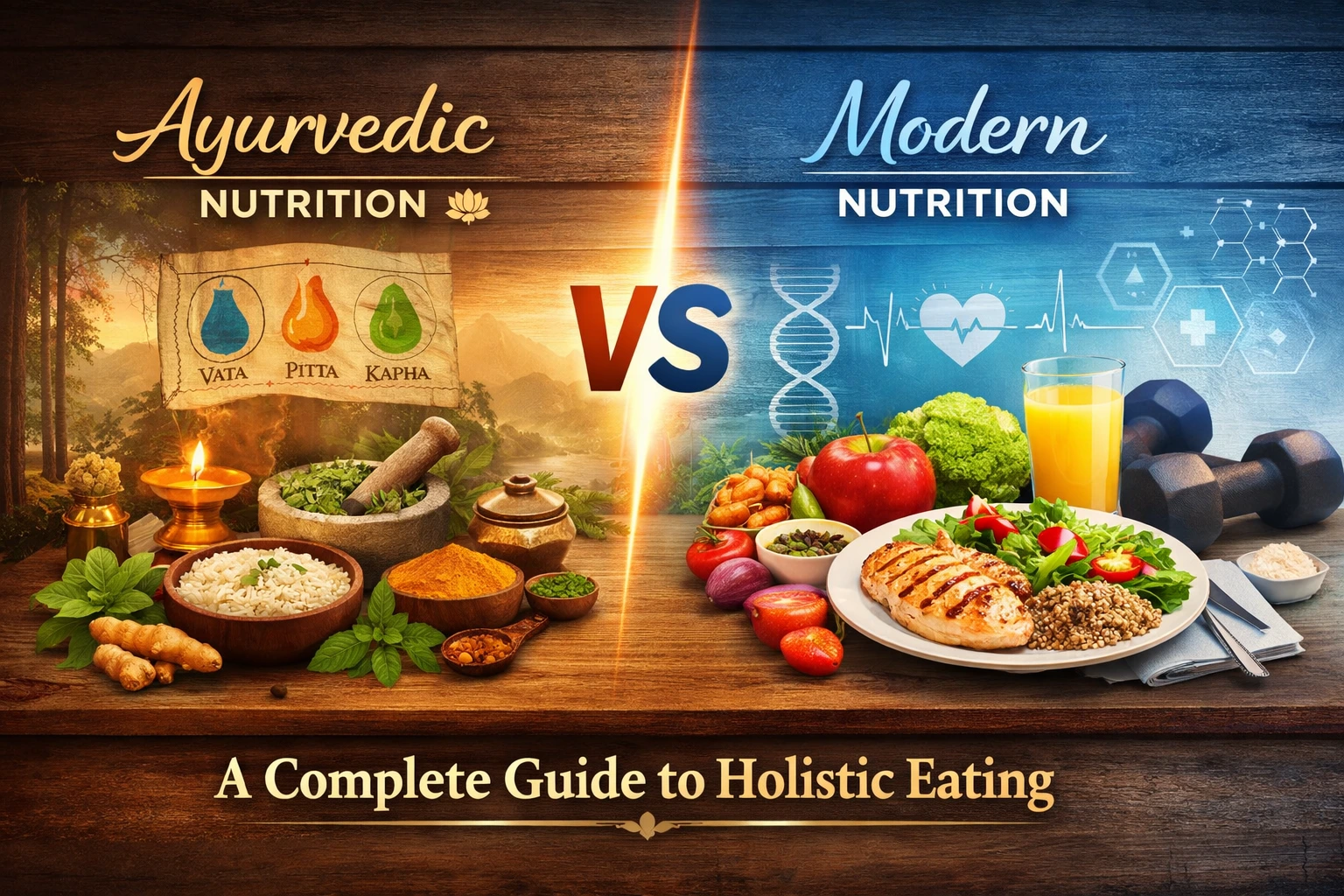
🌿 Ayurvedic Nutrition vs Modern Nutrition — An Outlook to Holistic Eating (2026)
💡 Expert Summary:
Ayurvedic Nutrition vs Modern Nutrition explores how ancient Ayurvedic dietary principles — focusing on Dosha balance,
digestive fire (Agni) and mental nourishment (Manas Agni) — compare with modern nutrition science
centred on macronutrients, micronutrients, and evidence-based health outcomes. Learn to integrate these approaches
for deep, sustainable wellness.
🌞 Introduction: Ancient Wisdom Meets Modern Science
In an age of macros, calories, and biomarkers, many people feel disconnected from their food. Ayurvedic Nutrition treats food as living intelligence that interacts with your body, mind, and energy. Modern nutrition provides data-driven models like Harvard’s Healthy Eating Plate to optimize nutrient quality and reduce disease risk — a valuable resource for evidence-based guidance.
This article bridges Ayurvedic Nutrition vs Modern Nutrition with practical frameworks, emotional awareness, and scientific evidence for a harmonious approach to eating in 2026 and beyond.
⚖️ Core Principles: Ayurveda vs Modern Science
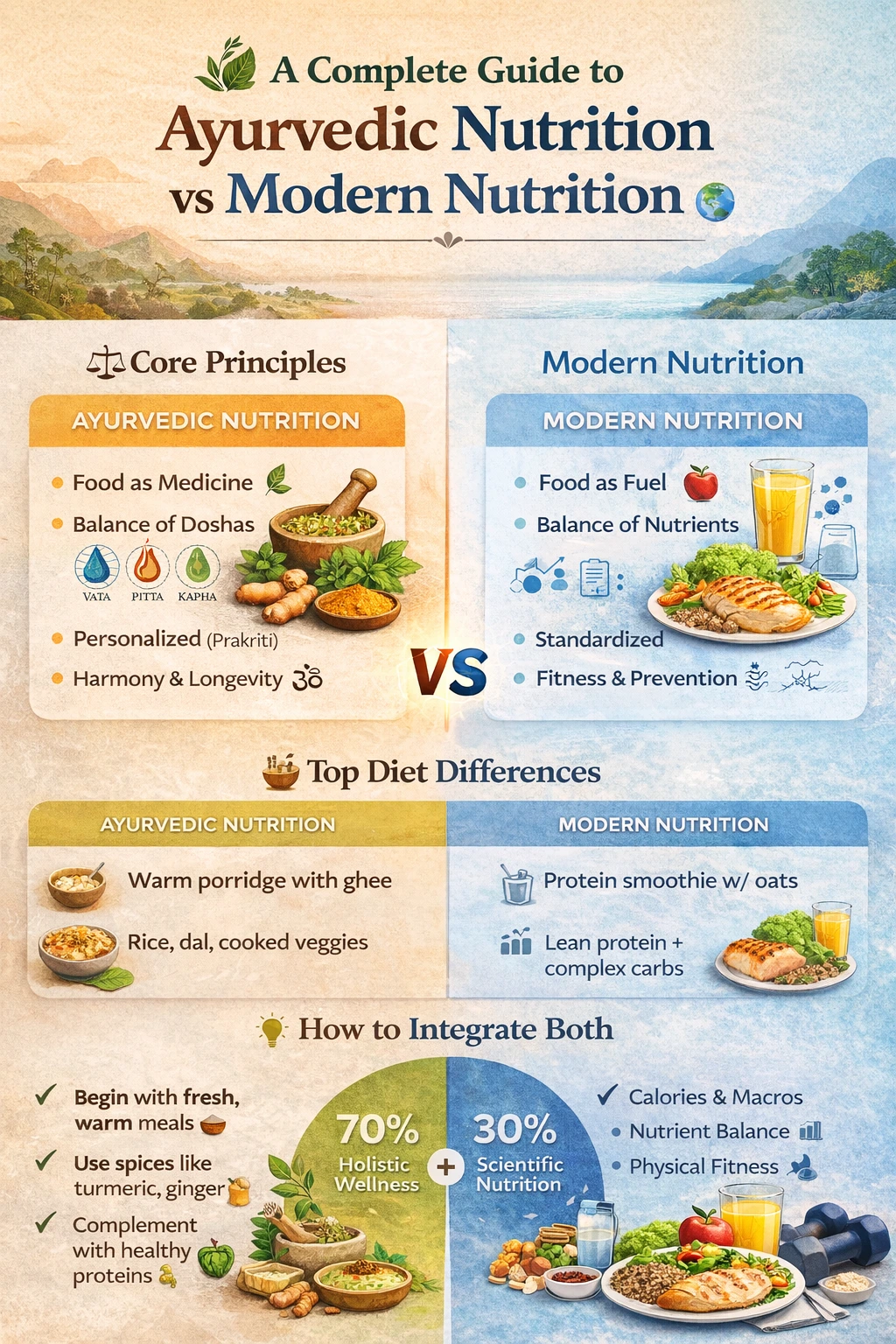
| Aspect | Ayurvedic Nutrition 🌿 | Modern Nutrition 🍎 |
|---|---|---|
| Philosophy | Food as medicine | Food as fuel |
| Core Focus | Agni, Doshas, Ojas | Macro/Micronutrients |
| Approach | Personalized (Prakriti) | Standard guidelines |
| Goal | Balance & prevention | Disease risk reduction |
Aspect: Philosophy
Ayurvedic Nutrition 🌿: Food as medicine
Modern Nutrition 🍎: Food as fuel
Aspect: Core Focus
Ayurvedic Nutrition 🌿: Agni, Doshas, Ojas
Modern Nutrition 🍎: Macro/Micronutrients
Aspect: Approach
Ayurvedic Nutrition 🌿: Personalized (Prakriti)
Modern Nutrition 🍎: Standard guidelines
Aspect: Goal
Ayurvedic Nutrition 🌿: Balance & prevention
Modern Nutrition 🍎: Disease risk reduction
Ayurveda’s perspective includes how food affects metabolism, immunity, and emotions — not just its biochemical content.
⚠️ Symptoms of Nutritional Imbalance
Signs of imbalance from both systems include:
- 😴 Low energy despite eating
- 🧠 Brain fog, poor focus
- 🍽 Bloating, irregular appetite
- 🍬 Cravings for processed foods
- 🛌 Poor sleep or mood swings
In Ayurvedic terms, these point to low Agni and Ama buildup — early markers of imbalance.
🔍 Root Causes of Poor Nutrition
| Ayurvedic View | Modern View |
|---|---|
| Weak digestion (Agni) | Ultra-processed foods |
| Emotional eating patterns | Macronutrient imbalance |
| Incompatible foods | High sugar, low fiber intake |
| Ignoring Prakriti | One-size-fits-all diets |
Ayurvedic View: Weak digestion (Agni)
Modern View: Ultra-processed foods
Ayurvedic View: Emotional eating patterns
Modern View: Macronutrient imbalance
Ayurvedic View: Incompatible foods
Modern View: High sugar, low fiber intake
Ayurvedic View: Ignoring Prakriti
Modern View: One-size-fits-all diets
Both systems reveal that timing, quality, and food psychology matter as much as food composition.
🧪 Scientific Evidence Supporting Ayurvedic Nutrition
Modern research continues to explore how Ayurvedic dietary principles can align with measurable health outcomes. Below are three examples where traditional approaches intersect with clinical and biological findings.
📌 Clinical Comparisons with Conventional Diets
A randomized clinical study comparing Ayurvedic vs. conventional nutritional therapy in Irritable Bowel Syndrome (IBS) patients found that Ayurvedic therapy significantly reduced symptom severity more than conventional diets, showing promise for integrative dietary care.
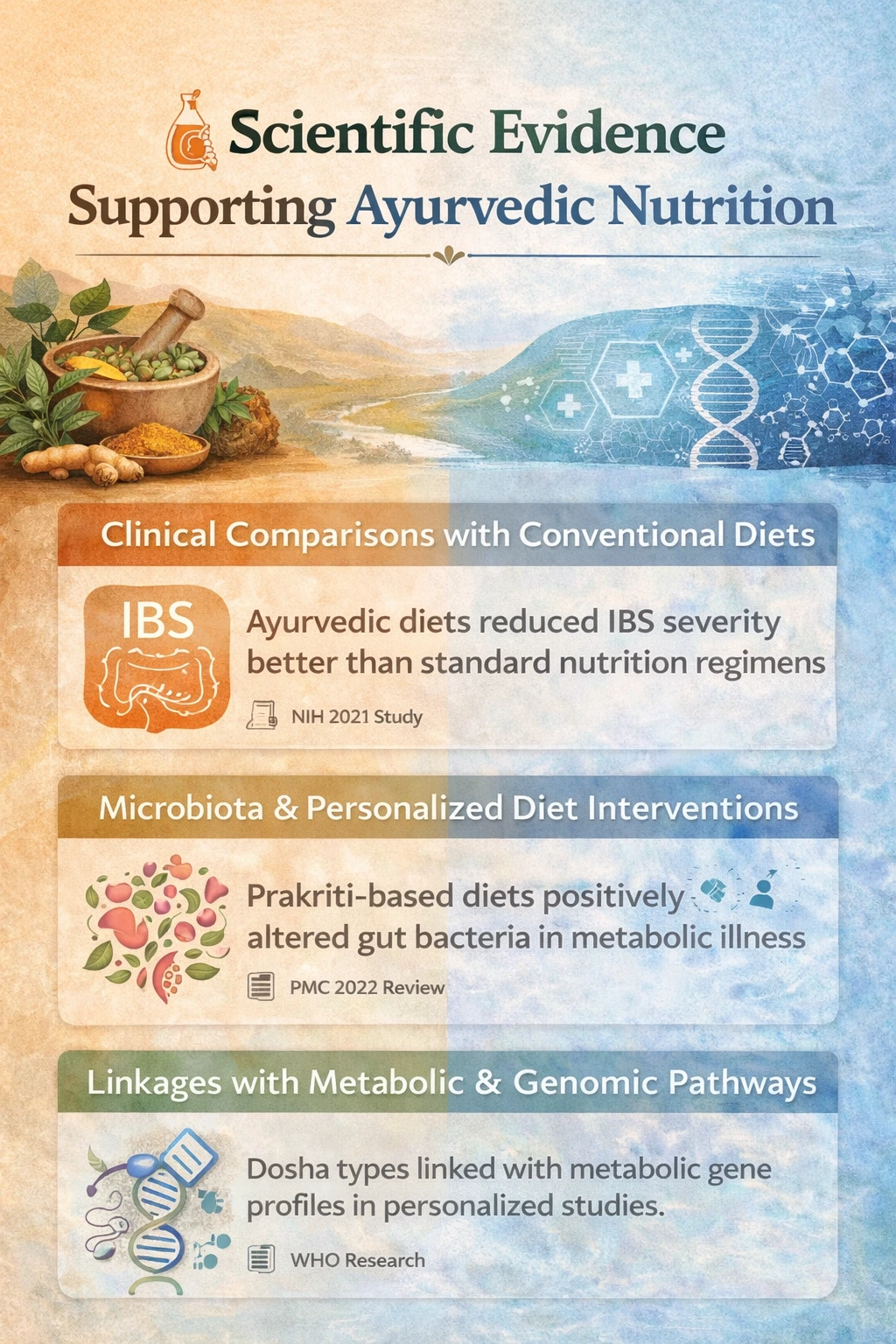
📌 Microbiota & Personalized Diet Interventions
Emerging research suggests Ayurvedic personalized diets — based on Prakriti — can modulate the gut microbiota, enriching beneficial bacteria linked with metabolic health, especially in conditions like type 2 diabetes.
📌 Linkages with Metabolic & Genomic Pathways
Studies indicate that Ayurvedic concepts like Prakriti and Dosha types correlate with metabolic and genetic profiles, hinting at a bridge between traditional constitutions and modern personalized nutrition.
👉 Taken together, these studies support the idea that Ayurveda offers measurable, evidence-aligned strategies for health and nutrition — especially in personalized contexts.
🕉️ Ayurvedic View of Nutrition
Ayurveda sees food not just as energy, but as a modulator of mind and physiology. Three core concepts guide this:
- 🍽 Agni (Digestive Fire): Determines nutrient assimilation
- 🧪 Ama (Toxins): Result of poor digestion
- ✨ Ojas (Vital Essence): Immunity, resilience, glow
Ayurvedic dietary recommendations are tailored to body type (Prakriti), season, and current imbalance, emphasizing warm, freshly cooked foods complemented by digestive spices.
🍎 Modern Nutrition Framework
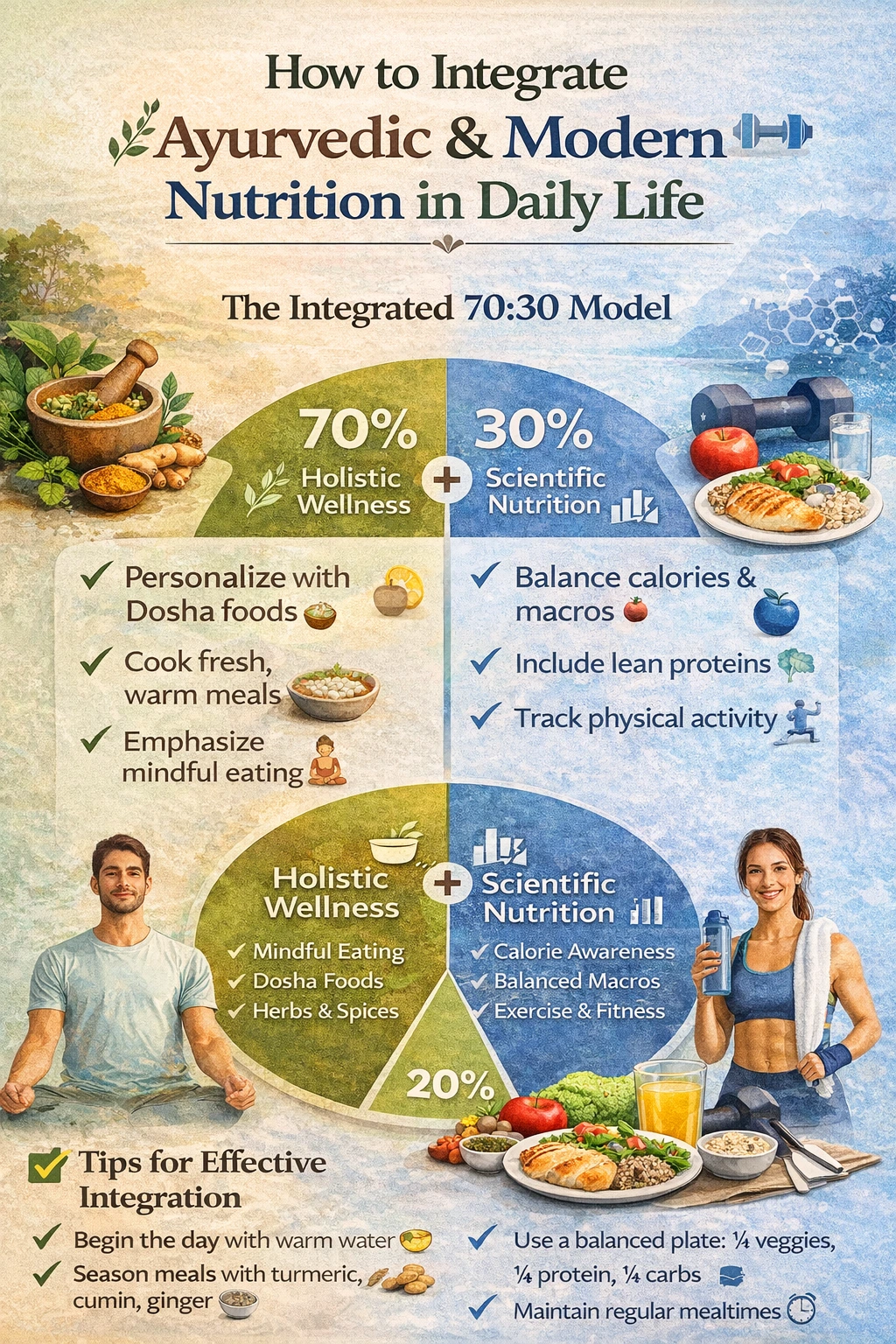
Modern nutrition uses quantified nutrient data and evidence-based guidelines like Harvard’s Healthy Eating Plate — emphasizing vegetables, whole grains, healthy proteins, and fats. This model predicts lower risk of chronic disease and supports global public health guidance.
While modern nutrition provides standardized dietary guidance for broad populations, it doesn’t always address individual metabolic nuance or emotional context — areas where Ayurveda adds rich insight.
🌼 Step-by-Step Ayurvedic Nutrition Protocol
- 🌅 Morning hydration: Warm water or ginger tea
- 🍲 Fresh, light meals: Avoid reheated or processed foods
- 🧂 Digestive spices: Cumin, coriander, turmeric
- 🕐 Meal timing: Structured eating window
- 🧘 Mindful eating: Calm environment, full awareness
- 🍃 Seasonal adjustments: Ritucharya
- 🌙 Sleep rhythm: Early, peaceful rest
Ayurveda teaches that how you eat matters as much as what you eat.
🌿 Top Ayurvedic Herbs for Digestion
| Herb | Benefit | Best Time |
|---|---|---|
| Triphala | Gut cleansing | Bedtime |
| Ginger | Stimulate Agni | Morning |
| Turmeric | Anti-inflammatory | Meals |
| Cumin & Fennel | Reduce bloating | Post-meal |
Herb: Triphala
Benefit: Gut cleansing
Best Time: Bedtime
Herb: Ginger
Benefit: Stimulate Agni
Best Time: Morning
Herb: Turmeric
Benefit: Anti-inflammatory
Best Time: Meals
Herb: Cumin & Fennel
Benefit: Reduce bloating
Best Time: Post-meal
🍲 Diet Comparison Table
| Meal | Ayurvedic Plan | Modern Plan |
|---|---|---|
| Breakfast | Warm porridge with ghee | Oats with berries |
| Lunch | Rice, dal, veggies | Healthy Eating Plate |
| Dinner | Light khichdi | Fiber-rich, balanced meal |
Meal: Breakfast
Ayurvedic Plan: Warm porridge with ghee
Modern Plan: Oats with berries
Meal: Lunch
Ayurvedic Plan: Rice, dal, veggies
Modern Plan: Healthy Eating Plate
Meal: Dinner
Ayurvedic Plan: Light khichdi
Modern Plan: Fiber-rich, balanced meal
Both emphasize real, unprocessed foods — Ayurveda adds personalization and digestive awareness.
🧘 Lifestyle & Daily Routine (Dinacharya)
Consistency fuels balance:
- 🌞 Morning: Warm water, gentle yoga
- 🕐 Day: Structured meals
- 🍽 Mindful Eating: No screens
- 🌙 Night: Unwind before sleep
This rhythm supports both digestion and emotional stability.
🧠 Emotional Eating & Mindful Nutrition
🧘 Ayurvedic Perspective: Manas Agni
Ayurveda holds that digestion begins in the mind. A calm, sattvic mental state (clarity, harmony) supports Manas Agni — mental digestion — so food nourishes not just the body but the psyche.
🧠 Modern Psychology & Emotional Eating
Modern psychology identifies emotional eating patterns — eating in response to stress or emotion rather than hunger — which disrupts metabolic signals and leads to overeating or poor food choices.
🌱 Integrated Approach
By combining mindful eating practices (screen-free meals, breath focus) with nutritional choices that support gut health and emotional resilience, you foster both physiological and psychological nourishment.
🌸 Case Study: Real-World Healing Through Food
Ritu Sharma, 34 (Delhi)
After years of bloating and fatigue, Ritu adopted Ayurvedic routines plus mindful modern eating.
In 8 weeks she saw marked improvements in digestion, sleep, and mood — a testament to the power of integrated nutrition.
🚫 Common Mistakes to Avoid
- ❌ Skipping meals
- ❌ Cold drinks during digestion
- ❌ Mixing incompatible foods
- ❌ Ignoring hunger cues
🎓 Join Our Courses & Consultations
Explore deeper learning and personal healing through authentic Ayurveda education and one-to-one consultations.
- 🌐 Ayurveda for Health Issues: A Complete Guide to Natural Healing & Holistic Wellbeing
- 🎓 Certificate Course in Ayurvedic Medicine: Advanced Ayurveda Practitioner Course (AACCC)
- 💻 Online Ayurveda Courses
- 💬 Holistic Health Consultations
📚 Suggested Readings
- 📖 Ayurvedic Diet for Gut Health
- 📖 The Science of Agni and Digestive Fire
- 📖 Integrative Nutrition: Where East Meets West
🌿 In-Depth Ayurveda Nutrition Guides
- 🔗 Ayurvedic Nutrition: A Holistic Guide to Eating for Long-Term Wellness, Balance, and Vitality
- 🔗 Ayurvedic Diet for Digestion — Top Agni-Boosting Foods for Better Gut Health
- 🔗 Ayurvedic Dosha-Based Diet Plans for Digestive Healing & Gut Health (Vata, Pitta, Kapha)
🔗 External Evidence-Based Resource
For scientifically validated dietary models aligned with modern nutrition research and chronic disease prevention, explore Harvard T.H. Chan School of Public Health – The Nutrition Source , a globally trusted reference for balanced, evidence-based eating guidelines.
🌺 Final Reflection
Ayurvedic Nutrition vs Modern Nutrition is not a choice — it’s a continuum. When you honor food as nourishment for body and mind, and align it with evidence-based dietary science, you unlock deeper health, balance, and vitality.
✨ “Eat with awareness. Digest with joy. Live with harmony.” ✨


You may also like
What Is Agni- Complete Guide to Digestive Fire in Ayurveda