
Yoga for IBS: How Yoga Therapy and Ayurveda Support Gut Healing Naturally
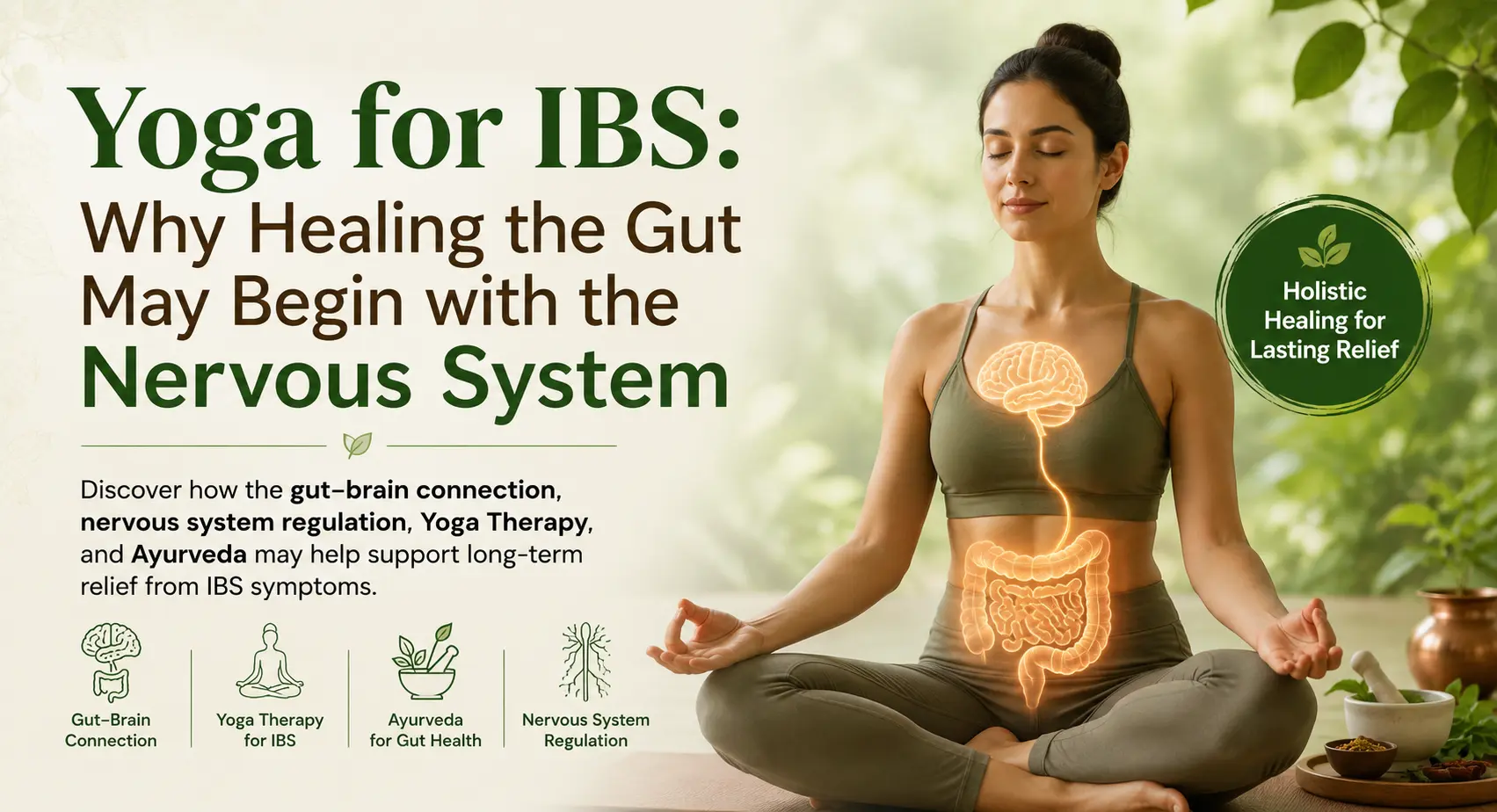
Yoga for IBS: Why Healing the Gut May Begin with the Nervous System
Discover how the gut-brain connection, nervous system regulation, Yoga Therapy, and Ayurveda may help support long-term relief from IBS symptoms.
When Everything Looks Normal, But Nothing Feels Normal
Have you ever been told that all your digestive tests are normal, yet your symptoms continue to affect every aspect of your life?
For many people living with Irritable Bowel Syndrome (IBS), this experience feels deeply frustrating. Colonoscopies appear normal. Blood tests don’t reveal major concerns. Conditions such as inflammatory bowel disease or coeliac disease are ruled out. Yet bloating, abdominal pain, constipation, diarrhoea, urgency, and unpredictable flare-ups continue.
IBS is often described as a functional digestive disorder, meaning symptoms exist without obvious structural damage. Unfortunately, many people interpret this as, “Nothing is wrong.”
But if you’ve ever planned your day around bathroom access, avoided meals out of fear, or worried constantly about how your gut might react, you know that your experience is very real.
The question is no longer:
“Is IBS real?”
Instead, researchers are increasingly asking:
“Could IBS involve a disruption in communication between the gut, brain, and nervous system?”
Modern science now recognises the importance of the gut-brain axis, while Yoga Therapy and Ayurveda have long understood that digestion is influenced by emotional wellbeing, stress, routine, and nervous system balance.
Healing may begin not by silencing symptoms, but by understanding what your body has been trying to communicate all along.
Stress and digestive health are more closely connected than many people realise. Learn more in our detailed guide oncan stress cause digestive problems.
“Healing often begins when we stop asking only what is wrong with the gut and start exploring the conversation between the gut, the brain, and the nervous system.”
Need Personalised Support?
If you’re struggling with IBS and looking for a holistic approach that combines Yoga Therapy and Ayurveda, personalised guidance can help you identify the underlying patterns affecting your digestion.
Book a Holistic Health ConsultationThe Gut Is Not Just a Tube
Most of us grow up thinking about digestion as a simple process. Food enters through the mouth, moves into the stomach, nutrients are absorbed, and waste eventually leaves the body. While this explanation isn’t entirely wrong, it overlooks something extraordinary.
Your digestive system isn’t merely a passive tube. It’s home to a vast and sophisticated network of nerves known as the enteric nervous system (ENS), often referred to as the body’s “second brain.”
Did You Know?
- The gut contains approximately 200–600 million neurons.
- It can coordinate digestive functions independently of the brain.
- Over 90% of the body’s serotonin is produced within the digestive tract.
- The gut constantly communicates with the brain through neural pathways.
This means digestion isn’t just about breaking down food. Your gut actively senses changes, interprets information, and responds to its environment every moment of the day.
The enteric nervous system monitors factors such as:
- Stretching and pressure within the intestines
- Chemical composition of food
- Fluid balance
- Movement of digestive contents
- Interactions with the gut microbiome
In people living with IBS, these normal sensations can become amplified. The gut may become overly sensitive to ordinary digestive activity, causing discomfort even when no visible disease is present.
Understanding Visceral Hypersensitivity
One of the most important concepts in IBS research is called visceral hypersensitivity.
This simply means that the digestive system becomes more sensitive to sensations that most people wouldn’t even notice.
Normal intestinal stretching after a meal may feel painful. Routine gas movement can trigger cramping. Mild digestive changes may create urgency or anxiety.
Importantly, this doesn’t mean the symptoms are imaginary.
The gut isn’t “broken.” It’s become hyper-alert.
Understanding this changes the conversation around IBS. Instead of asking why tests appear normal, we begin exploring why the nervous system has become overly protective.
If you’d like to understand how Ayurveda approaches digestive dysfunction at a deeper level, explore our guide onAyurvedic treatment for digestion.
Key Takeaway
IBS isn’t simply a disorder of digestion. It may reflect changes in how the gut senses, interprets, and responds to normal bodily signals. The digestive system has intelligence of its own—and healing often begins by restoring trust in that communication.
Understanding the Gut-Brain Axis
If your gut has its own nervous system, how does it communicate with the brain?
The answer lies in a remarkable communication network known as the gut-brain axis—a two-way connection linking your digestive system and central nervous system.
This connection helps regulate digestion, immune responses, mood, and even how your body perceives pain. Rather than working independently, your gut and brain are constantly exchanging information.
How the Gut-Brain Axis Works
- The gut sends signals to the brain about digestion and internal sensations.
- The brain responds by influencing motility, secretions, and stress responses.
- The vagus nerve acts as one of the primary communication highways.
- Gut microbes also contribute chemical messages that affect brain function.
Meet the Vagus Nerve
The vagus nerve is one of the most important players in this conversation. Extending from the brainstem to multiple organs—including the stomach and intestines—it carries signals in both directions.
Surprisingly, researchers estimate that nearly 80% of vagal communication travels from the body to the brain, rather than the other way around.
In other words, your gut is constantly reporting back to your brain about what is happening internally.
These signals influence:
- How safe or threatened the body feels
- Digestive efficiency
- Emotional regulation
- Pain sensitivity
- Inflammatory responses
The IBS Feedback Loop
For many people with IBS, this communication system can become dysregulated.
A previous flare-up may create fear around eating, travelling, or attending events. The brain anticipates danger before anything has happened. Stress signals are sent to the gut. Digestive symptoms increase. Those symptoms reinforce fear, and the cycle repeats.
Anticipation can sometimes trigger the very symptoms people are trying to avoid.
This doesn’t mean IBS is “all in your head.” It means the gut-brain conversation has become overly protective and reactive.
Understanding this feedback loop offers hope because communication patterns can change. The nervous system can learn new responses, and the body can gradually move away from chronic threat signalling.
Explore how digestive symptoms and emotional stress influence one another in our article oncan stress cause stomach issues.
Key Takeaway
The gut and brain are engaged in a continuous two-way conversation. In IBS, this communication can become hypersensitive, creating a cycle of fear, stress, and digestive symptoms. Supporting the gut-brain axis may be one of the most important steps toward long-term healing.
Why Stress Makes IBS Worse
One of the biggest misconceptions about IBS is the belief that if stress affects symptoms, the condition must be “psychological.” In reality, stress influences digestion through very real physiological pathways.
When your brain perceives a threat—whether it’s a looming deadline, financial pressure, relationship difficulties, or even anxiety about an upcoming social event—it activates the body’s natural survival response.
The Fight-or-Flight Response Explained
This survival mechanism is controlled by the sympathetic nervous system, commonly known as the fight-or-flight response.
What Happens During Fight-or-Flight?
- Your heart rate increases.
- Blood pressure rises.
- Blood flow shifts toward muscles needed for survival.
- Digestive secretions slow down.
- Bowel motility changes.
- The body prioritises immediate safety over digestion.
From an evolutionary perspective, this response makes perfect sense. If our ancestors were escaping danger, digesting lunch wasn’t the body’s priority.
The challenge today is that many of our stressors aren’t short-lived. Work demands, caregiving responsibilities, social pressures, and ongoing worries can keep the nervous system activated for weeks, months, or even years.
When Stress Becomes Chronic
Chronic stress can lead to what experts sometimes describe as sympathetic dominance—a state where the body spends too much time in survival mode.
During this time, the parasympathetic nervous system, often called the “rest-and-digest” system, becomes less active.
One of the most important components of this system is the vagus nerve, which helps regulate:
- Digestive secretions
- Healthy bowel movements
- Inflammatory balance
- Communication between the gut and brain
- The body’s ability to return to a calm state
Your body cannot fully focus on digestion while it’s preparing for danger.
This is why stressful periods often coincide with worsening IBS symptoms. It isn’t because symptoms are imagined—it’s because the nervous system is doing exactly what it was designed to do.
The issue arises when that protective response never truly switches off.
Why This Matters for IBS
If stress contributes to digestive dysfunction through the nervous system, then supporting nervous system regulation becomes an essential part of healing—not an optional extra.
Learn more about how stress can influence digestive health and symptom flare-ups in our article oncan stress cause digestive problems.
Looking Beyond Symptom Management?
A holistic approach can help you understand how stress, digestion, and the nervous system interact—so you can begin addressing the underlying patterns affecting your wellbeing.
Book Your Holistic Health ConsultationThe Yogic View of IBS: When Digestive Rhythm Is Lost
In modern medicine, health is often defined as the absence of disease. In Yoga and Ayurveda, health is viewed differently. It represents a state of balance where the body’s systems work together in harmony, supporting physical, emotional, and mental wellbeing.
From this perspective, digestion isn’t simply a mechanical process of breaking down food. It is an intelligent act of transformation. The food we consume becomes energy, tissues, and ultimately part of who we are.
Ayurveda refers to this transformative power as Agni, commonly translated as “digestive fire.” Agni governs not only the digestion of food but also our ability to process experiences, emotions, and the constant stream of information we encounter each day.
What Happens When Agni Becomes Imbalanced?
- Digestion becomes unpredictable.
- Symptoms fluctuate from day to day.
- Bloating and gas become more frequent.
- Constipation and diarrhoea may alternate.
- The body loses confidence in its natural rhythm.
These characteristics closely resemble the lived experience of many people with IBS. There may be good days and difficult days with no obvious explanation. The unpredictability itself often becomes one of the most distressing aspects of the condition.
IBS Through an Ayurvedic Lens
Ayurveda frequently associates IBS with a pattern known as Vishama Agni, which means irregular or inconsistent digestion.
Rather than viewing symptoms as isolated digestive events, this perspective recognises that disrupted routines, stress, irregular eating habits, excessive stimulation, and nervous system imbalance may all contribute to the loss of digestive rhythm.
It shifts the focus away from simply suppressing symptoms and instead asks a deeper question:
What underlying patterns are keeping the body stuck in imbalance?
This broader perspective encourages us to look beyond what we eat and consider how we eat, when we eat, how we manage stress, and whether our daily habits support digestive resilience.
If you’d like a deeper understanding of how Ayurveda identifies the underlying patterns contributing to IBS symptoms, explore our guide onthe Ayurvedic root-cause approach to IBS.
Restoring Trust in the Body
One of the most profound insights from Yoga Therapy is that healing often involves rebuilding trust in the body rather than fighting against it.
Over time, chronic digestive symptoms can create fear, hypervigilance, and a sense that the body is unpredictable or unsafe. Yoga invites a different relationship—one based on observation, compassion, and gradual restoration.
This doesn’t mean ignoring symptoms. Instead, it means learning to understand their language and responding with awareness rather than fear.
Key Takeaway
From a yogic and Ayurvedic perspective, IBS may represent a disruption in digestive rhythm rather than a fundamentally “broken” gut. Supporting balance, routine, and nervous system regulation can help restore the body’s innate capacity for healing.
Yoga Therapy for IBS: More Than Just Stretching
When most people hear the word “yoga,” they immediately think of physical postures and flexibility. While yoga classes can certainly promote general wellbeing, Yoga Therapy is fundamentally different.
Yoga Therapy uses evidence-informed yogic practices within a personalised therapeutic framework designed to address specific health concerns. Rather than offering a one-size-fits-all routine, practices are adapted according to an individual’s symptoms, nervous system patterns, lifestyle, and overall health.
For people living with IBS, this distinction matters.
How Yoga Therapy Differs From a Regular Yoga Class
- Focuses on therapeutic outcomes rather than fitness goals.
- Adapts practices based on individual symptoms and needs.
- Addresses the nervous system alongside physical symptoms.
- Integrates breathing techniques, relaxation, and lifestyle guidance.
- Evolves over time as the body responds and changes.
Different IBS Patterns Require Different Approaches
IBS isn’t the same for everyone. Some people predominantly experience diarrhoea, others struggle with constipation, while many fluctuate between both extremes. A therapeutic approach should reflect these differences.
For example:
- IBS-D (Diarrhoea Predominant): Practices may emphasise grounding, relaxation, slower movements, and longer exhalations to calm nervous system activation.
- IBS-C (Constipation Predominant): Gentle stimulation, mindful movement, diaphragmatic breathing, and supportive twists may encourage digestive motility.
- Mixed IBS: Greater flexibility is required, with practices adjusted according to the body’s changing needs.
The goal isn’t to force the body into submission. Instead, Yoga Therapy encourages the body to rediscover its natural capacity for balance and regulation.
Every Practice Asks a Therapeutic Question
Within Yoga Therapy, techniques are chosen intentionally rather than randomly.
A restorative posture may ask:
“Can your body experience rest without anticipating danger?”
A gentle forward fold may ask:
“Can you soften the protective tension you’ve been holding in your abdomen?”
An extended exhalation may ask:
“Can you communicate safety to a nervous system that has forgotten how to slow down?”
Healing often emerges not through intensity, but through consistency and repetition. Small shifts practiced regularly can gradually reshape how the gut and nervous system interact.
If you’re interested in understanding how integrative approaches combine Ayurveda, Yoga, and personalised care, read our guide onholistic healing through Ayurveda and Yoga.
Healing Is a Process, Not a Performance
One of the greatest strengths of Yoga Therapy is its emphasis on sustainability. Progress isn’t measured by how deeply you stretch or how perfectly you perform a posture.
Instead, it is reflected in everyday changes:
- Greater confidence around food and social situations.
- Improved awareness of stress responses.
- Reduced fear surrounding symptoms.
- Increased resilience during flare-ups.
- A growing sense of trust in your body.
Key Takeaway
Yoga Therapy is not simply about stretching or exercise. It is a personalised process that supports nervous system regulation, digestive function, and the restoration of trust between the mind and body.
Looking for Personalised Support?
If you’re ready to explore a holistic approach tailored to your unique digestive patterns, professional guidance can help you create a practical roadmap for healing.
Book a Holistic Health ConsultationBreath, the Vagus Nerve and Digestion: The Bridge Between Gut and Brain
Of all the tools used in Yoga Therapy, breathwork may be one of the most powerful for supporting the gut-brain connection.
Breathing occupies a unique position within the human body. It happens automatically without conscious effort, yet it is also one of the few physiological processes we can intentionally influence.
This makes the breath a bridge between the conscious mind and the autonomic nervous system.
For individuals living with IBS, this connection matters because the state of the nervous system directly affects digestion. When stress keeps the body in a heightened state of alertness, breathing often becomes shallow, rapid, and restricted to the upper chest.
These breathing patterns reinforce the body’s perception of threat, making it more difficult to activate the parasympathetic “rest-and-digest” response.
Why Breathing Influences Digestion
- Slow breathing can stimulate vagal activity.
- Diaphragmatic breathing gently massages abdominal organs.
- Longer exhalations help shift the body toward relaxation.
- Improved vagal tone supports digestive regulation.
- Breath awareness can reduce stress-related symptom amplification.
The Diaphragm’s Hidden Role
The diaphragm, your primary breathing muscle, sits directly above the digestive organs. With each inhalation, it descends gently, creating a natural massage effect on the stomach and intestines.
During exhalation, it rises again, supporting circulation and healthy movement within the abdominal cavity.
This rhythmic motion may help support digestive function while simultaneously sending calming signals throughout the nervous system.
Every slow exhalation is an opportunity to communicate safety to the body.
Simple Breath Practices Used in Yoga Therapy
- Diaphragmatic Breathing: Encourages deeper abdominal breathing patterns.
- Extended Exhalation: Lengthening the out-breath may enhance parasympathetic activation.
- Nadi Shodhana (Alternate Nostril Breathing): Traditionally used to cultivate balance and steadiness.
- Bhramari (Humming Bee Breath): Uses gentle vibration to encourage relaxation and inward awareness.
These practices aren’t about achieving perfection. Their value lies in consistency. Even a few minutes of intentional breathing each day may help interrupt the cycle of chronic stress and digestive tension.
Watch: How Yoga Supports Gut Healing
If you’d like to explore these concepts visually, this video explains how yogic practices may help regulate the nervous system and support digestive wellbeing.
Prefer watching on YouTube? View the full video here.
Key Takeaway
Breath is more than a relaxation technique. It is one of the few tools capable of influencing both conscious awareness and autonomic physiology. By learning to breathe differently, many people begin changing the way their nervous system communicates with the gut.
Why IBS Isn’t Just About Food
If you’ve been living with IBS for any length of time, chances are you’ve spent countless hours wondering:
“What food triggered this?”
Food undeniably plays an important role in digestive health. Many people experience genuine symptom improvement through dietary modifications, identifying food sensitivities, or following evidence-based approaches such as low-FODMAP protocols under professional guidance.
However, focusing exclusively on food often overlooks another critical piece of the puzzle:
The state of your nervous system when you eat.
When Eating Becomes Associated With Fear
After experiencing repeated digestive flare-ups, it’s natural to become cautious around food. Meals that once brought comfort can begin to provoke anxiety.
Many people start avoiding restaurants, declining social invitations, and narrowing their list of “safe foods.” They monitor every bite, scanning their body for signs of bloating, urgency, discomfort, or pain.
Over time, eating itself can become stressful.
The IBS Food Fear Cycle
- Symptoms occur after eating.
- Fear develops around certain foods.
- Meals become associated with anxiety.
- The nervous system shifts into vigilance.
- Digestive efficiency decreases.
- Symptoms become more noticeable.
- The cycle repeats.
This doesn’t mean food triggers aren’t real. Rather, it highlights that digestion depends on more than what appears on your plate.
Digestion Depends on the Environment Too
Think about the difference between rushing through lunch while answering emails versus enjoying a meal in a calm, relaxed environment.
The food may be identical, yet the digestive experience can be dramatically different.
When the nervous system perceives safety:
- Digestive secretions function more efficiently.
- Motility becomes better regulated.
- Nutrient absorption improves.
- The body is less focused on threat detection.
- The gut-brain axis communicates more effectively.
This is why many people notice fewer symptoms during holidays, relaxed family gatherings, or periods of lower stress—even when their diet isn’t perfect.
Ayurveda’s Perspective on Eating
Ayurveda teaches that digestion involves more than food itself. It includes the environment, the pace of eating, emotional state, attention, and daily routines.
The question shifts from:
“What should I eat?”
To:
“How can I support the conditions that allow digestion to work well?”
Creating consistency around meal timing, eating without distractions, chewing thoroughly, and cultivating a calmer state before meals can all become part of the healing process.
If you’d like to explore how Ayurveda supports healthy digestive function through personalised strategies, herbs, and lifestyle recommendations, read our guide onAyurvedic treatment for digestion.
Key Takeaway
IBS isn’t always just about identifying the “perfect diet.” Digestion is influenced by what you eat, how you eat, the environment you’re in, and the state of your nervous system. Supporting all of these factors creates a more holistic foundation for healing.
The Ayurvedic Perspective on IBS
Ayurveda offers a unique lens through which to understand IBS—not simply as a digestive disorder, but as an imbalance affecting the entire person.
Rather than separating physical symptoms from emotional wellbeing, Ayurveda recognises that digestion, mental state, lifestyle habits, and daily routines are deeply interconnected.
At the centre of this understanding lies the concept of Agni, often translated as digestive fire.
Understanding Agni
Agni represents the body’s transformative intelligence. It governs how efficiently we digest food, absorb nutrients, eliminate waste, and process experiences.
When Agni functions optimally, digestion feels steady and predictable. Energy levels remain balanced, elimination is regular, and the body maintains resilience.
However, when Agni becomes disturbed, symptoms can begin to emerge.
Signs of Disturbed Digestive Fire
- Irregular appetite patterns
- Gas and bloating
- Alternating constipation and diarrhoea
- Digestive unpredictability
- Increased sensitivity to stress
- Fatigue after meals
Vishama Agni and IBS
Ayurveda often associates IBS with a state known as Vishama Agni, meaning irregular digestion.
Vishama Agni reflects inconsistency. Some days digestion feels normal. On others, symptoms appear without warning. This unpredictable pattern mirrors the experience of many individuals living with IBS.
It is commonly linked with an aggravation of Vata dosha, the principle responsible for movement, communication, adaptability, and nervous system activity.
When Vata becomes imbalanced, it may manifest as:
- Irregular bowel habits
- Excess gas and abdominal discomfort
- Anxiety and restlessness
- Difficulty maintaining routines
- Heightened nervous system sensitivity
Healing Through Rhythm and Routine
One of Ayurveda’s most powerful teachings is that healing often begins by restoring rhythm.
Modern lifestyles frequently encourage irregular eating patterns, multitasking, overstimulation, inadequate sleep, and constant busyness. These habits may contribute to digestive instability over time.
In contrast, Ayurveda emphasises consistency through simple daily practices such as:
- Eating meals at regular times
- Prioritising adequate rest and sleep
- Choosing warm, freshly prepared foods when appropriate
- Reducing unnecessary stimulation
- Creating moments of stillness throughout the day
- Supporting emotional balance alongside physical health
Healing isn’t always about doing more. Sometimes it’s about returning to the rhythms that the body understands best.
A Complementary Approach
Ayurveda is not intended to replace appropriate medical evaluation. Instead, it can work alongside conventional care by offering a broader understanding of the factors influencing digestive health.
It invites us to ask not only:
“What symptoms am I experiencing?”
But also:
“What patterns in my daily life may be contributing to them?”
Key Takeaway
Ayurveda views IBS as more than an isolated digestive problem. By understanding concepts such as Agni, Vata, and the importance of routine, it encourages a holistic approach that supports both digestive function and overall wellbeing.
Healing Versus Symptom Elimination
One of the greatest challenges people with IBS face is the belief that healing only counts if symptoms disappear completely.
While symptom improvement is an important goal, chronic conditions don’t always follow a perfectly linear path. Good days and difficult days may still occur.
When healing becomes defined solely by the absence of symptoms, even small setbacks can feel like failure.
But perhaps a more compassionate and realistic question is:
What if healing means reclaiming your life, even if occasional symptoms remain?
What Healing May Actually Look Like
- Feeling less fearful about eating.
- Travelling without constant anxiety.
- Attending social events with greater confidence.
- Understanding how stress affects your body.
- Responding to flare-ups with practical tools rather than panic.
- Developing trust in your body’s resilience.
- Living a fuller life that isn’t controlled by symptoms.
Healing doesn’t necessarily mean your body never speaks again.
It may mean learning to listen differently.
Instead of viewing every symptom as a catastrophe, you begin recognising them as signals—opportunities to pause, adjust, and respond with greater awareness.
The goal isn’t perfection. It’s resilience.
Bringing It All Together
Throughout this article, we’ve explored how IBS may involve far more than the digestive tract alone.
We’ve examined the enteric nervous system, the gut-brain axis, the role of stress, the importance of breath, the wisdom of Yoga Therapy, and Ayurveda’s emphasis on rhythm and routine.
These perspectives remind us that digestion isn’t isolated from the way we live. Our pace, our relationships, our nervous system, our habits, and our beliefs about our bodies all shape the environment in which healing unfolds.
For many people, the path forward isn’t found in chasing the next quick fix. It lies in creating a sustainable relationship with the body—one built on understanding, consistency, and compassion.
“Healing may not begin when symptoms disappear. It may begin the moment we stop fighting our bodies and start working with them.”
Ready to Take a Holistic Approach to IBS?
If you’re looking for personalised support that integrates Yoga Therapy, Ayurveda, and nervous system awareness, a one-to-one consultation can help you understand the patterns influencing your digestive health and create a sustainable healing plan.
Book Your Holistic Health ConsultationFrequently Asked Questions
Does yoga really help IBS?
Research suggests that yoga may improve IBS symptoms, reduce stress, and enhance quality of life by supporting nervous system regulation and reducing symptom-related anxiety.
Is IBS caused by stress?
Stress doesn’t directly cause IBS in every individual, but it can significantly influence symptom severity through its effects on the gut-brain axis and autonomic nervous system.
How is Yoga Therapy different from a regular yoga class?
Yoga Therapy is individualised and designed around specific health concerns, whereas general yoga classes are often intended for fitness and wellbeing.
Can Ayurveda replace conventional treatment for IBS?
Ayurveda is best used as a complementary approach alongside appropriate medical evaluation and guidance from qualified healthcare professionals.
How long does it take to see improvement?
The timeline varies. Some individuals notice shifts in stress levels and symptom perception within weeks, while deeper changes in resilience and nervous system regulation often develop through consistent practice over months.