Yoga Asanas: The Real Meaning, Purpose & What Patanjali Actually Taught
The Honest Question Most Yoga Students Never Get Asked
For many practitioners, yoga begins with movement. But the deeper tradition asks a far more profound question—one that has little to do with flexibility, performance, or mastering increasingly complex postures.
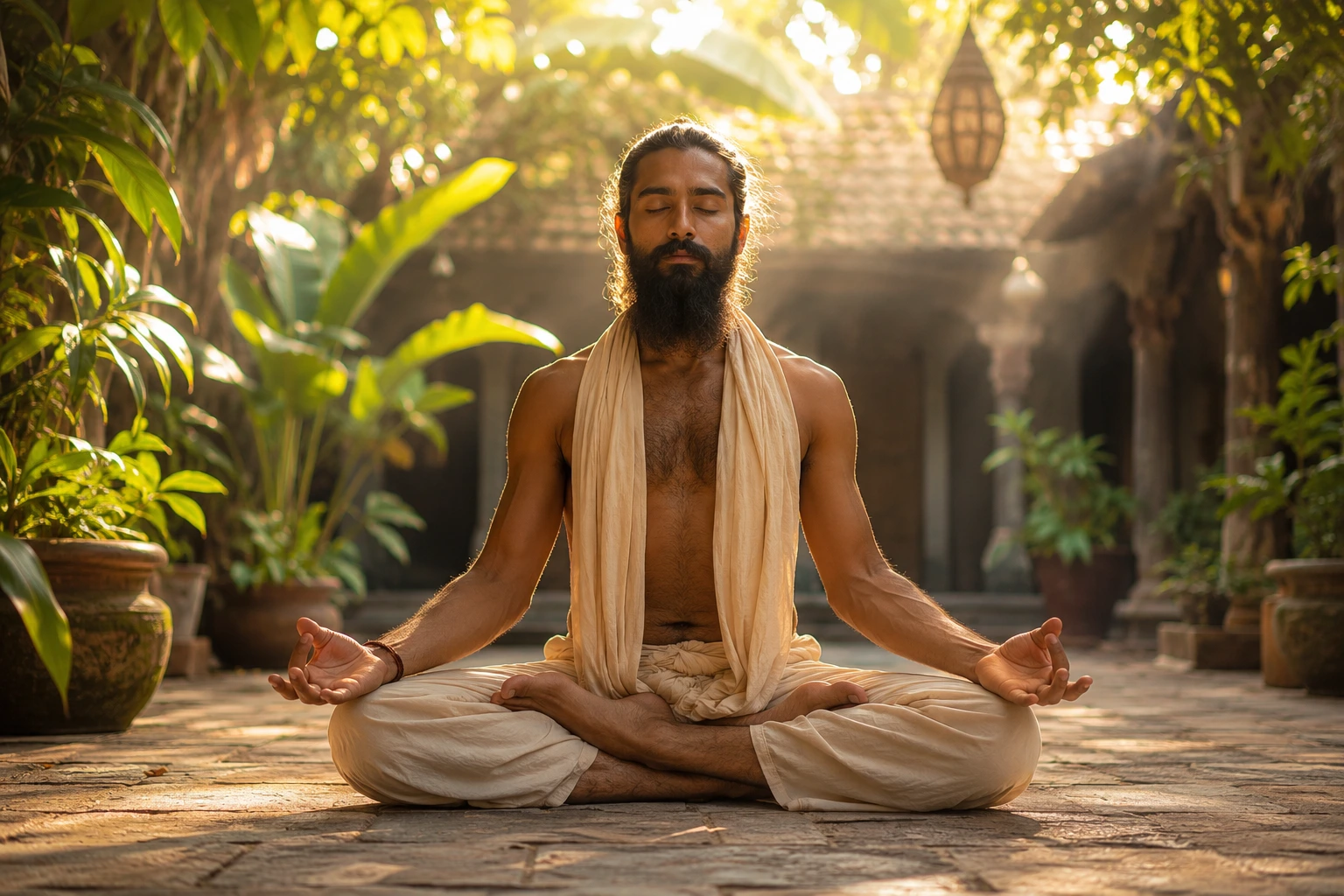
How long have you been practising yoga asanas? A year? Three years? A decade? Perhaps even longer.
Now consider a different question—asked not to diminish your dedication, but to honour it.
Has your practice ever required something from you beyond the physical?
Not whether you can hold a pose for another minute. Not whether you can achieve a more advanced shape. Not whether your flexibility has improved.
But whether your practice has ever invited your attention inward— toward your breath, your awareness, your nervous system, and ultimately your relationship with yourself.
If that question makes you pause, this article is for you.
And if your answer is already “Yes.” you may still discover that the classical tradition has something deeper to reveal.
Most Modern Yoga Begins with the Body. Classical Yoga Begins with Awareness.
Across much of the modern world, asana has gradually become identified with movement, fitness, mobility, and physical wellbeing. These benefits are genuine and valuable.
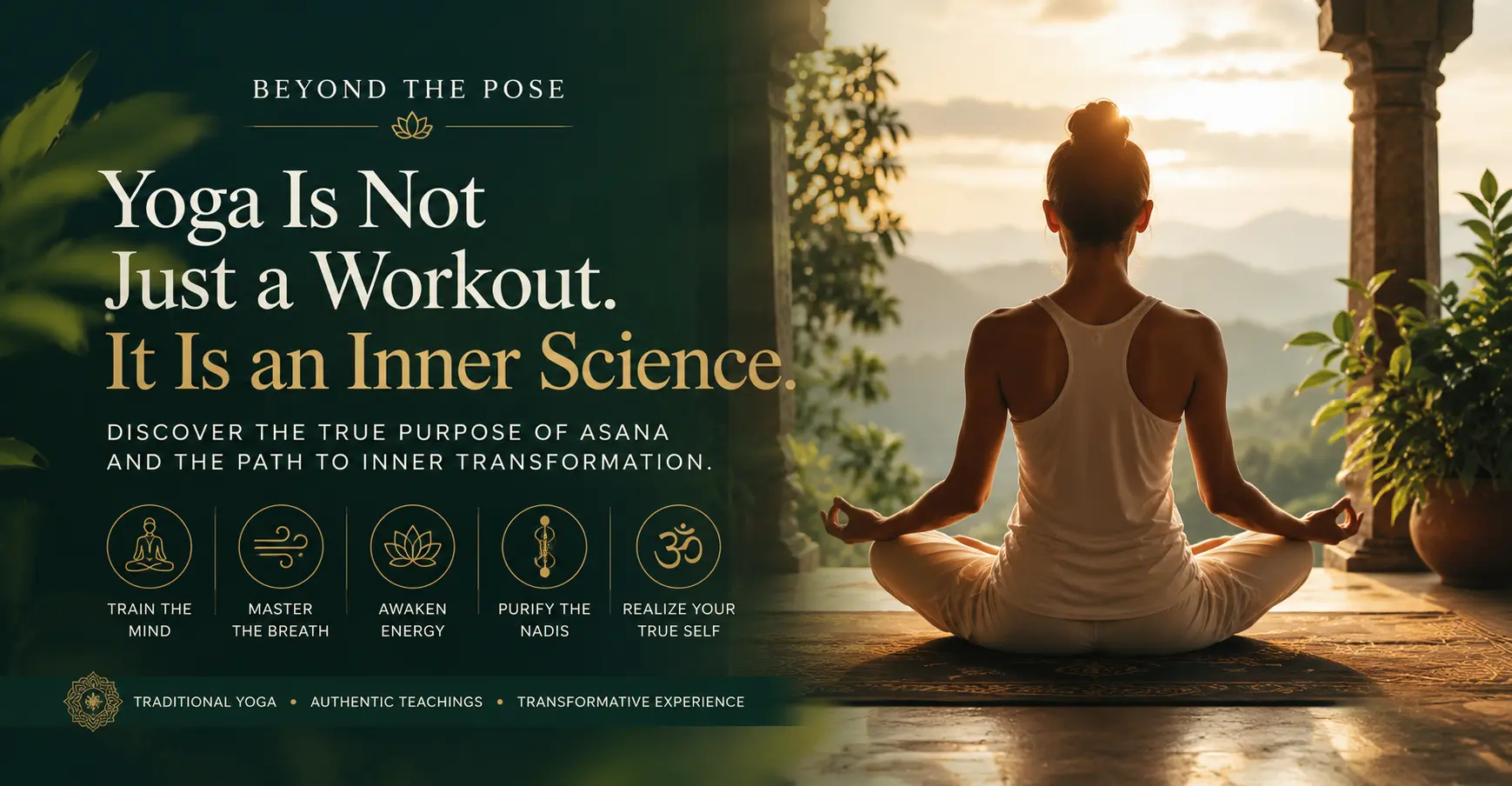
Yet within the original yogic tradition, physical posture was never intended to be the destination. It was designed as preparation— a stable foundation from which attention, breath, and consciousness could become increasingly refined.
This distinction changes everything.
“Yoga does not begin when the body moves. It begins when awareness awakens.”
The posture is only the doorway. The practice begins when attention steps through it.
Yoga Asanas: The Real Meaning, Purpose & What Patanjali Actually Taught
By Pradip Krishnaaa · Vishuddhi Issha Yoga & Ayurveda
The Honest Question
Has your practice ever asked anything of you beyond the physical? Not whether you can hold a pose longer, but whether your practice has drawn your attention inward in a way that changed the quality of your day.
What is the Real Meaning of Asana?
The word asana comes from the Sanskrit root “as” (आस्), meaning “to sit” or “to inhabit a seat.” It originally referred not to an acrobatic sequence, but to a stable posture for meditation.
Insights into the traditional practice of Yoga Asana.
Difference Between Yoga and Exercise
Physical culture (workouts) is a catabolic process (breaking down). True yogic asana is anabolic—anchoring the practitioner in the parasympathetic “rest and digest” state.
What Asana Was Actually Designed to Cultivate
The physical form is merely a container. The tradition is interested in the quality of attention brought to that container. It is a training to remain present within sensation without the mind seeking escape.
3 Signs Your Yoga Practice is “Just a Workout”
- The mirror matters more than your internal state.
- Your breath is incidental rather than the primary driver.
- You feel physically exhausted but not inwardly settled.
From Asana to Kundalini
In the Kundalini tradition, asana is one layer of a complete energetic science. Through the integration of asana with pranayama, mantra, and kriya, latent spiritual energy is systematically refined and awakened. This is the true meaning of yoga.
…then what actually separates genuine yogic practice from physical exercise?The distinction is far more significant than most practitioners realise.
What is the Difference Between Yoga and Exercise?
Let’s be precise about something, because clarity matters here. What happens in the vast majority of mainstream yoga studios today is not without value. Far from it. A well-taught vinyasa class or a vigorous Hatha session builds immense physical capacity.
That is genuine physical culture, which has real worth. But physical culture is primarily a catabolic process (breaking down tissue, burning high calories, and stimulating the sympathetic “fight or flight” nervous system). True yogic asana is designed to be anabolic—conserving energy, reducing oxygen consumption, and anchoring the practitioner in the parasympathetic “rest and digest” state.
To clearly understand what separates an external physical workout from an internal yogic practice, look at how their core mechanisms compare:
Physical Culture (Workouts)
External alignment, performance, and aesthetic shapes.
Genuine Yogic Practice (Asana)
Internal awareness, energy flow, and mental stillness.
Physical Culture
Sympathetic activation (increases heart rate and cortisol).
Yogic Practice
Parasympathetic dominance (lowers heart rate and calms cortisol).
Physical Culture
Catabolic (burns and expends metabolic energy).
Yogic Practice
Anabolic (conserves, stores, and channels vital prana).
Physical Culture
Poses unlocked, flexibility gained, and duration held.
Yogic Practice
Consistency of attention, breath ease, and internal presence.
Physical Culture
Secondary consequence (breathing hard due to physical exertion).
Yogic Practice
Primary driver (the entire movement organises around the breath).
| Feature / Metric | Physical Culture (Workouts) | Genuine Yogic Practice (Asana) |
|---|---|---|
| Primary Focus | External alignment, performance, and aesthetic shapes. | Internal awareness, energy flow, and mental stillness. |
| Nervous System | Sympathetic activation (increases heart rate and cortisol). | Parasympathetic dominance (lowers heart rate and calms cortisol). |
| Energy Dynamics | Catabolic (burns and expends metabolic energy). | Anabolic (conserves, stores, and channels vital prana). |
| Success Metric | Poses unlocked, flexibility gained, and duration held. | Consistency of attention, breath ease, and internal presence. |
| Breath Role | Secondary consequence (breathing hard due to physical exertion). | Primary driver (the entire movement organises around the breath). |
The problem arises when an external workout is called yoga, and nothing further is offered. When the student believes they are mastering yoga, the essential inner methodology of the science remains entirely untouched.
What Asana Was Actually Designed to Cultivate
When yoga asanas are understood and practised through the lens of the classical tradition that created them, your orientation shifts across three core dimensions.
1. Asana as Training in Attention
The physical form of the pose is not the point; it is simply the container. What the tradition of yoga is specifically interested in is the quality of attention brought to that container.
It is a systematic training to remain fully present within sensation, effort, and discomfort without the mind bracing, fragmenting, or seeking escape. This shifts your internal dialogue away from execution and toward pure observation:
Old Focus
“Can I go deeper into this stretch?”
→ Yogic Focus
“Am I fully present within this boundary?”
Old Focus
“Does my pose look right in the mirror?”
→ Yogic Focus
“What is actually happening inside my nervous system?”
Awareness Changes Everything
“As Sadhguru explains, ‘Yogasanas are not exercises. They are very subtle processes of manipulating your energy in a certain direction. It needs to be done with a certain level of awareness.'”
2. Asana as Breath Work (Pranayama Preparation)
In genuine yogic practice, the breath is the primary channel through which transformation operates. When the physical body moves in coordination with conscious, organised breathing, it directly alters the subtle energetic dimension—the pranic body.
The breath is not something that happens during yoga.It is the mechanism through which yoga happens.
3. Asana as Preparation for Inner Practice
The tradition is explicit: the eight limbs of classical Ashtanga yoga are a progressive path. Asana (the third limb) prepares the physical frame and nervous system for Pranayama (fourth), which stabilises the energy enough to trigger Pratyahara (sense withdrawal; fifth). This internal turning creates the exact conditions necessary for Dharana (concentration), Dhyana (meditation), and ultimately Samadhi (self-realisation). Asana is never the destination; it is the runway.
3 Signs Your Yoga Practice is “Just a Workout”
These signs are diagnostic, not critical. Naming what is missing is the first step toward accessing something deeper.
Sign One
The mirror matters more than your internal state.
If you constantly adjust your position based on how it appears from the outside rather than how it registers on the inside, your attention remains externalised.
Sign Two
Your breath is incidental.
If your breathing is shallow, held, or restricted while you try to achieve a shape, you have traded yoga for gymnastics. Without the breath, the pranic science of the pose cannot function.
Sign Three
You feel physically tired, but not inwardly settled.
Physical workouts make the body feel exhausted but good. True yogic asana does something additional: it alters your inner state, leaving you profoundly calm, integrated, and feeling “more like yourself.”
Scientific Observation
“The Yoga subjects reported greater improvement in mood and greater decreases in anxiety than the walking group. The yoga group had positive correlations between changes in mood scales and changes in GABA levels.”
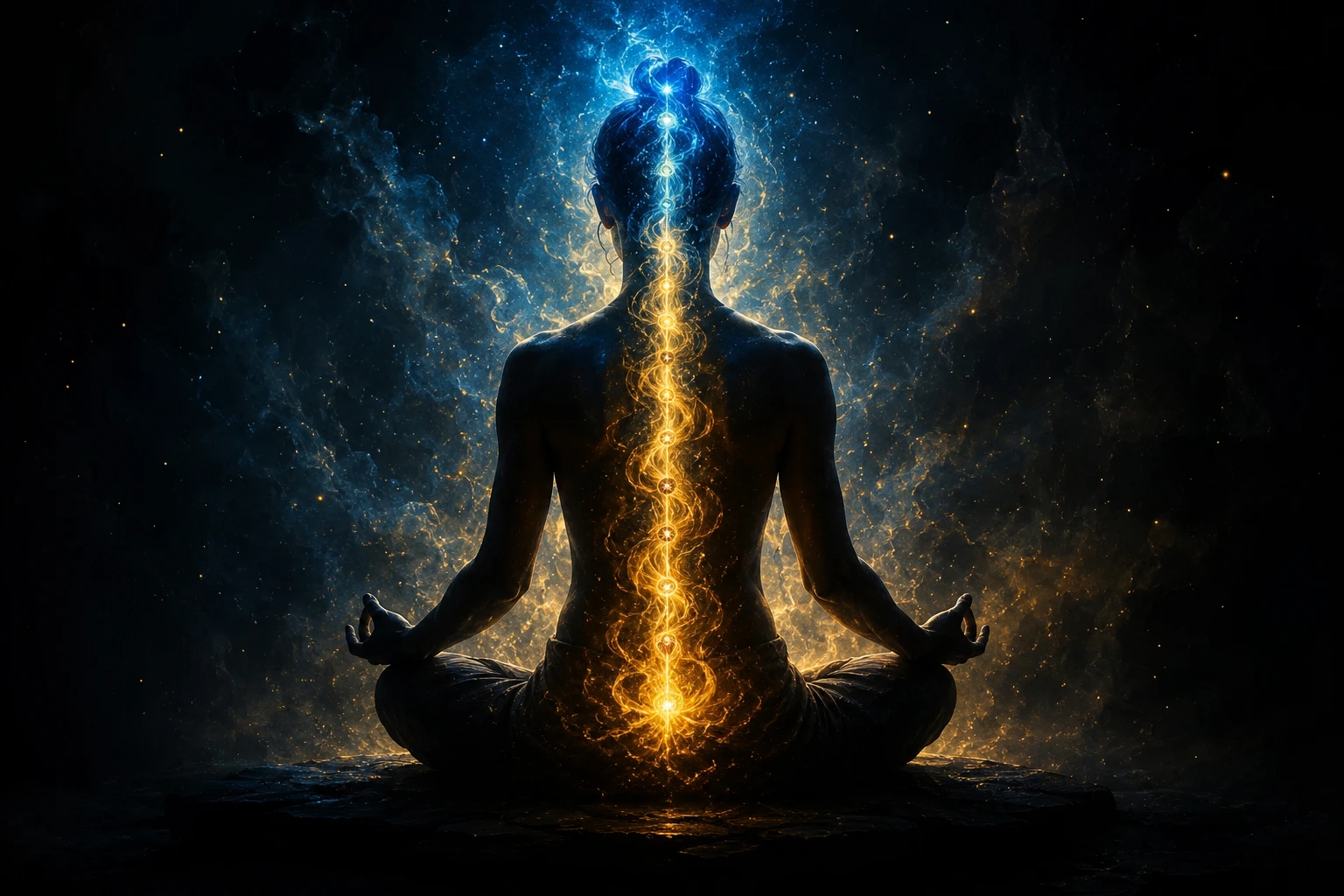
From Asana to Kundalini: The Deeper Dimension
The shift from physical culture to true yoga is invisible from the outside. You will not necessarily be doing more difficult poses; in fact, you may choose much simpler ones. What changes entirely is the relationship between you and the practice. Instead of something you perform, it becomes a space you enter.
Prepares the physical body and nervous system.
Directs and refines pranic energy.
Creates energetic circuits within the subtle body.
Locks and redirects internal energy.
Integrates every element into a complete transformative practice.
The Energetic Mechanism
As the tradition teaches, the practice of asanas “causes a mild awakening of the chakras” and helps “distribute prana evenly throughout the body.”
When the body is prepared through asana, and the nadis are purified, “the prana easily forces its way up through the mouth of the sushumna.”
The Ultimate Aim
The ultimate effect is union—the individual soul with the supreme soul. This is the true meaning of yoga.
The Practice Was Never About the Pose.
The deeper journey of yoga is not measured by flexibility, strength, or increasingly difficult postures. It is measured by clarity, presence, equanimity, and ultimately your direct experience of yourself.
Ready to Go Deeper?
Whether you wish to deepen your personal practice or become a certified teacher, our programs are designed to help you experience yoga as an authentic inner science.
Yoga is not about becoming someone else.
It is about remembering who you already are.
Whether you are a long-time practitioner, a teacher, or someone who has simply never had this conversation before — the inquiry is the same: what is your practice actually cultivating? And is there more available to you than what you are currently accessing?
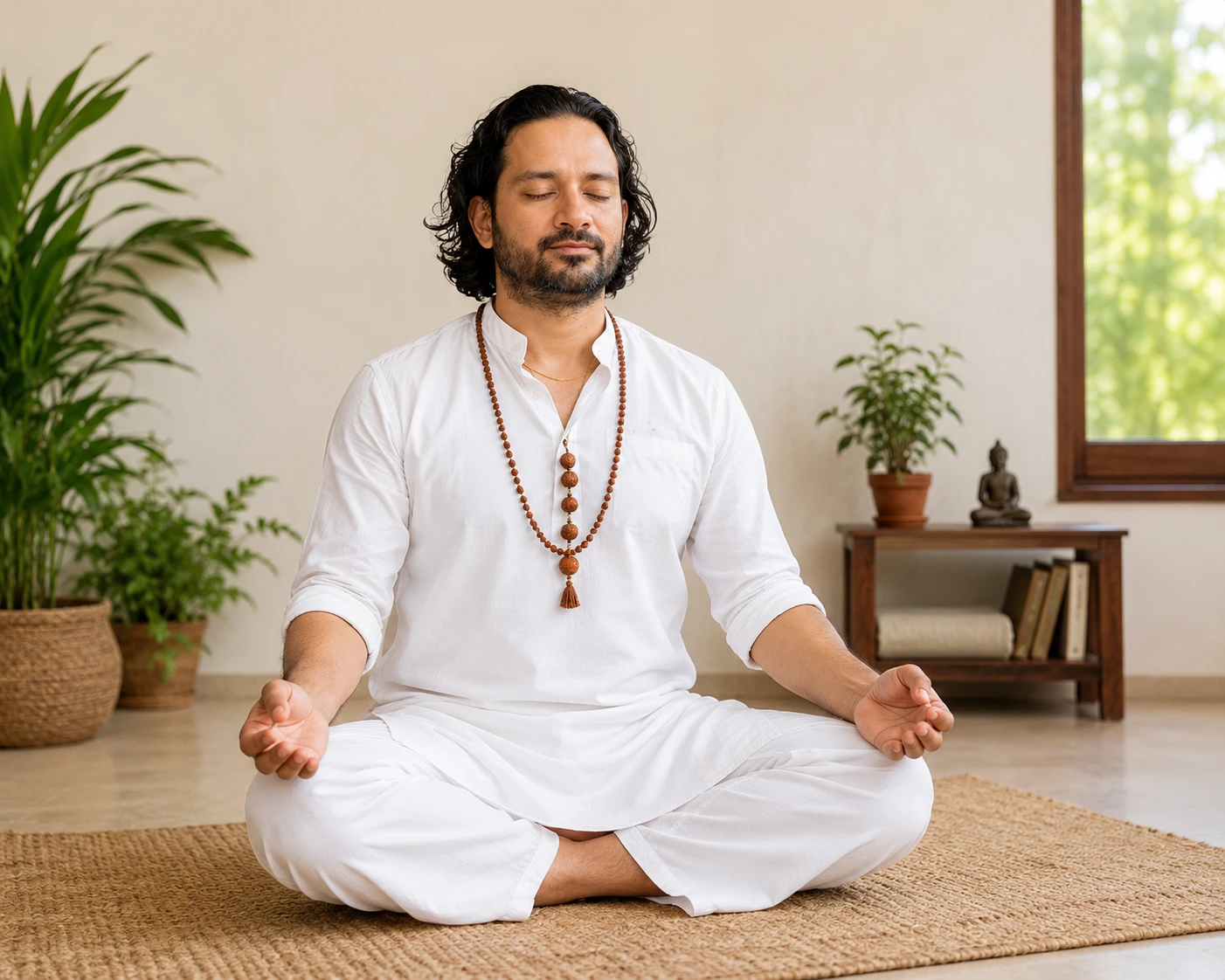
Pradip Krishnaaa is the founder and lead teacher at Vishuddhi Issha Yoga & Ayurveda, Candolim, North Goa. He teaches Kundalini Kriya Yoga, Yoga Therapy, pranayama, and Ayurvedic wellness, and has been working with students and teachers for over fifteen years.