
Can Stress Cause Digestive Problems? What Science and Yoga Reveal About the Gut-Brain Connection
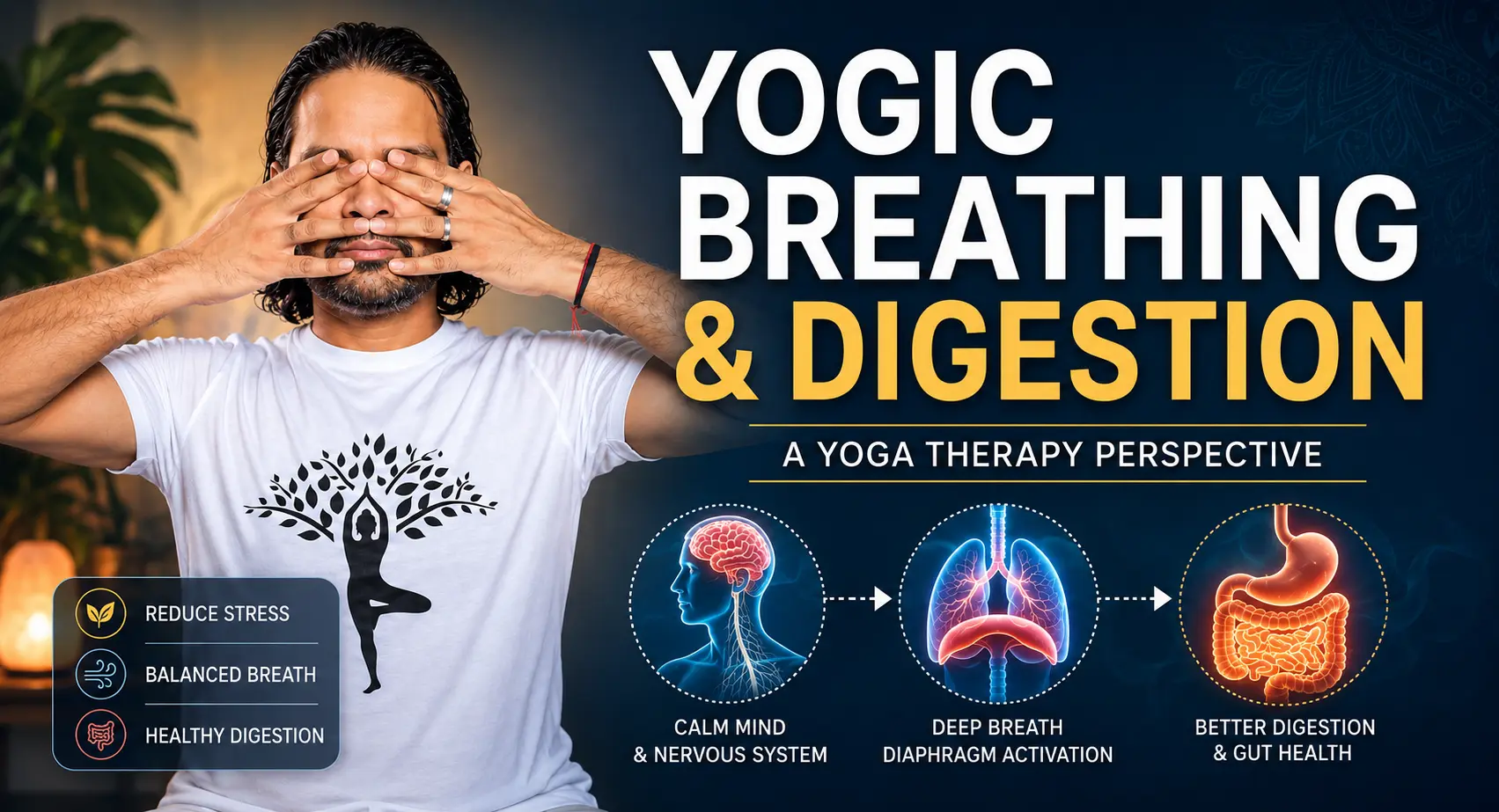
Can Stress Cause Digestive Problems?
GUT HEALTH • YOGA THERAPY • STRESS MANAGEMENTHave you ever noticed that your stomach seems to have a mind of its own?
Perhaps it tightens before an important presentation.
Maybe bloating appears during difficult periods at work.
You finally get away on holiday, and suddenly your digestion settles down.
Then life becomes hectic again, and the acid reflux, constipation, or abdominal discomfort quietly returns.
For many people, these experiences are so common that they barely question them. Instead, they focus almost exclusively on food.
Maybe it’s gluten.
Maybe dairy.
Maybe coffee.
Maybe they just haven’t found the “right” supplement yet.
And while nutrition undeniably matters, it may not tell the whole story.
What if some digestive symptoms don’t begin in the gut at all?
What if they begin in the nervous system?
The Immediate Answer
Yes. Stress can affect digestion.
Research over the last few decades has shown that the brain and digestive system communicate continuously through what is known as the gut-brain axis. During periods of chronic stress, this communication can influence digestive motility, sensitivity, inflammation, and even the way we perceive discomfort.
This does not mean stress causes every digestive condition.
Nor does it mean digestive symptoms are “all in your head.”
However, it does suggest that the state of your nervous system may play a much bigger role in digestive health than many of us realise.
Emerging evidence also suggests that practices aimed at regulating the stress response—including diaphragmatic breathing and certain yogic breathing techniques—may support overall well-being and improve how some individuals experience digestive symptoms.
The key word is support.
Not replace.
Support.
When Your Gut Speaks the Language of Stress
Think back to the last time you were truly anxious.
Maybe you were waiting for medical results.
Perhaps you were navigating financial uncertainty.
You might have been preparing for an interview, facing relationship difficulties, or caring for a loved one.
What happened in your body?
Did your appetite disappear?
Did you experience nausea?
Did you find yourself running to the bathroom more often?
Or perhaps the opposite happened—you became constipated, bloated, and uncomfortable.
These reactions are surprisingly common.
As a yoga educator, I have spoken with countless people who arrive convinced that their digestive symptoms are solely the result of what they ate. Yet, as we explore their experiences together, a pattern frequently emerges.
The symptoms intensified during a divorce.
After a major career transition.
While caring for ageing parents.
During prolonged periods of emotional exhaustion.
The connection is not always obvious at first.
But once people begin paying attention, many realise that their gut has been responding to stress long before they recognised it consciously.
Why Your Body Does Not Prioritise Digestion During Stress
Imagine this:
You are walking through a forest when suddenly you encounter danger.
Perhaps it is a wild animal.
Your body does not pause to digest lunch.
Instead, it mobilises every available resource for survival.
Your heart beats faster.
Your muscles tense.
Your breathing becomes shallow.
Your senses sharpen.
Blood flow shifts toward systems needed for immediate action.
This response is often called the fight-or-flight response, and it has helped humans survive for thousands of years.
In short bursts, it is incredibly useful.
The problem is not the stress response itself.
The problem arises when the body struggles to switch it off.
Modern threats rarely resemble predators in the forest.
Instead, they look like:
- Endless deadlines.
- Financial pressures.
- Information overload.
- Relationship conflicts.
- Sleep deprivation.
- Constant notifications.
- The emotional burden of carrying responsibilities without adequate recovery.
Although these situations differ from physical danger, the nervous system can react in remarkably similar ways.
When stress becomes chronic, digestion may begin to suffer.
The Digestive Symptoms Stress May Influence
While stress does not directly cause every digestive disorder, it can influence how symptoms are experienced and perceived.
People commonly report worsening symptoms during stressful periods, including:
- Bloating – a feeling of fullness or swelling in the abdomen.
- Indigestion – discomfort or burning in the upper stomach.
- Abdominal discomfort – vague pain, cramping, or unease.
- Changes in bowel habits – alternating between loose stools and constipation.
- Constipation – difficulty passing stool or infrequent bowel movements.
- Diarrhoea – loose, watery stools occurring more frequently than usual.
- Increased sensitivity – noticing normal digestive sensations as uncomfortable or painful.
- Flare-ups of irritable bowel syndrome (IBS) – worsening of existing symptoms.
You may have experienced this yourself.
Perhaps your digestion feels manageable most of the time, only to deteriorate during emotionally demanding periods.
If so, you are not imagining it.
And you are certainly not alone.
Understanding the Gut-Brain Axis
The idea that the brain and gut communicate with one another is not a fringe concept.
It is a well-established area of scientific interest.
The gut-brain axis refers to the complex, two-way communication network linking the central nervous system and the digestive system.
This communication occurs through multiple pathways.
The Nervous System
The brain constantly exchanges signals with the digestive tract through extensive neural networks.
One of the most discussed players is the vagus nerve, which acts as an information highway between the brain and many internal organs, including the stomach and intestines.
When the vagus nerve functions well, it helps the body shift from a stressed state to a relaxed, restorative state.
Hormonal Signalling
Stress hormones such as cortisol and adrenaline help prepare the body to respond to challenges.
However, prolonged activation of these systems may influence digestive processes over time.
Elevated cortisol, for example, has been linked to increased intestinal permeability (sometimes called “leaky gut”) and altered gut motility.
Immune Activity
The immune system and digestive system are closely intertwined.
In fact, approximately 70–80% of the body’s immune cells reside in the gut.
Researchers continue exploring how stress-related immune changes may affect gastrointestinal function and inflammation.
The Gut Microbiome
Trillions of microorganisms live within the digestive tract.
They help digest food, produce vitamins, and communicate with the brain.
Although much remains to be understood, scientists are increasingly interested in how stress and the microbiome may influence one another.
Early research suggests that chronic stress may alter the composition of gut bacteria, which in turn may affect digestion and mood.
The relationship is not one-directional.
The brain influences the gut.
But the gut also influences the brain.
This is why digestive discomfort can affect mood, and emotional distress can affect digestion.
They are part of the same conversation.
What Experts Agree On
Despite ongoing research, there are several areas of broad consensus.
| What Experts Agree On | Why It Matters |
|---|---|
| ✔Stress influences digestive function | Your symptoms may have a real physiological basis. |
| ✔The gut and brain communicate continuously | What affects one affects the other. |
| ✔Digestive symptoms often worsen during emotional strain | Stress management is not separate from digestive care. |
| ✔Managing stress may improve overall quality of life | Small changes can have meaningful effects. |
| ✔Breathing and relaxation practices can support nervous system regulation | You have accessible tools available at any moment. |
| ✔Persistent or severe symptoms require medical evaluation | Breathing practices complement, not replace, medical care. |
✔Stress influences digestive function
Your symptoms may have a real physiological basis.
✔The gut and brain communicate continuously
What affects one affects the other.
✔Digestive symptoms often worsen during emotional strain
Stress management is not separate from digestive care.
✔Managing stress may improve overall quality of life
Small changes can have meaningful effects.
✔Breathing and relaxation practices can support nervous system regulation
You have accessible tools available at any moment.
✔Persistent or severe symptoms require medical evaluation
Breathing practices complement, not replace, medical care.
These statements may sound simple.
But for many people, they offer something profound:
Permission to stop blaming themselves.
Your symptoms are real.
Your experiences matter.
And understanding the role of stress does not diminish the importance of your digestive concerns.
It expands the conversation.
Instead of asking only:
“What should I eat?”
You may also begin asking:
“What state is my nervous system in while I am living my life?”
The Yogic Perspective on Digestion
Classical yoga has always understood digestion as something deeper than food chemistry.
According to yogic philosophy, digestion is not only about what enters the stomach. It is about how energy moves through the body, how well we absorb not just nutrients but also life experiences, and how balanced our internal systems remain amidst external change.
Samana Vata: The Force of Digestion
In yogic and Ayurvedic traditions, there is a concept called Samana Vata.
Samana means “balancing” or “bringing together.” Vata is one of the three fundamental energies (doshas) responsible for movement in the body.
Samana Vata is specifically associated with:
- Digestion
- Assimilation
- Absorption
- Metabolic balance
When Samana Vata functions efficiently, digestion feels harmonious. Food is broken down properly. Nutrients reach the tissues that need them. Waste is eliminated without difficulty.
When stress, tension, or imbalance disturb this force, digestive issues may arise. This disturbance can happen through irregular eating habits, emotional suppression, overwork, or living in a constant state of hurry and anxiety.
Manipura Chakra: The Solar Plexus Center
Yoga also identifies the Manipura Chakra, located in the navel region.
In traditional yogic anatomy, this center is associated with:
- Transformation
- Vitality
- Digestive power (often called Agni or digestive fire)
- Personal will and sense of agency
Whether you interpret these ideas energetically, psychologically, or metaphorically, the message is consistent and profound:
Healthy digestion depends on more than food.
It depends on how you live, how you feel, and how balanced your nervous system remains.
How Yogic Philosophy Meets Modern Science
It is worth noting that traditional yogic concepts were not derived from controlled laboratory studies. They emerged from centuries of observation, introspection, and practice.
Yet it is striking how often modern research arrives at conclusions that echo these ancient teachings.
Traditional Yogic Concept: Samana Vata governs digestion.
Modern Scientific Understanding: The enteric nervous system (often called the “second brain”) regulates digestive processes.
Traditional Yogic Concept: Manipura Chakra is the seat of digestive power.
Modern Scientific Understanding: The solar plexus region contains extensive neural networks that influence gut function.
Traditional Yogic Concept: Stress disturbs Samana Vata.
Modern Scientific Understanding: Chronic stress alters gut motility, sensitivity, and the microbiome.
Traditional Yogic Concept: Breathing practices balance internal energies.
Modern Scientific Understanding: Diaphragmatic breathing stimulates the vagus nerve and activates the parasympathetic nervous system.
The language differs. The underlying insight is remarkably similar.
Digestion does not happen in isolation. It happens within a living, feeling, responding human being.
Evidence Snapshot: What Research Tells Us
To help you navigate the evidence, here is a simple summary of what current research suggests.
Strong evidence: Stress influences gut symptoms, including bloating, pain, and altered bowel habits.
Strong evidence: The gut-brain axis is bidirectional – the gut affects the brain, and the brain affects the gut.
Moderate evidence: Relaxation techniques, including slow breathing, can improve quality of life in people with IBS.
Moderate evidence: Yoga and pranayama practices reduce perceived stress and anxiety.
Emerging evidence: Specific pranayama protocols may influence vagal tone and gut function.
Insufficient evidence: That any breathing practice alone can “cure” organic digestive diseases.
The most honest conclusion is this:
Breathing practices are unlikely to replace medical treatment for serious digestive conditions. But they may offer a low-risk, accessible way to support nervous system regulation, which in turn may help some people experience fewer stress-related digestive symptoms.
Can Breathing Exercises Actually Influence Digestion?
This is the question that brings many people to yoga.
And the answer, based on current understanding, is yes – but indirectly.
Here is how it works.
The Diaphragm and Abdominal Organs
The diaphragm is a large, dome-shaped muscle that sits beneath the lungs. When you inhale deeply, the diaphragm descends. When you exhale, it rises again.
This movement is not only about breathing. The diaphragm gently massages the stomach, liver, and intestines with each breath. Shallow, chest-only breathing reduces this natural massage. Deep, diaphragmatic breathing restores it.
The Vagus Nerve Connection
The vagus nerve runs from the brainstem down through the chest and abdomen, connecting to the heart, lungs, and digestive organs.
When you breathe slowly and deeply, you stimulate the vagus nerve. This activation helps shift the nervous system from sympathetic mode (fight-or-flight) toward parasympathetic mode (rest-and-digest).
In a parasympathetic state:
- Heart rate slows.
- Blood pressure decreases.
- Digestive secretions increase.
- Gut motility normalises.
- Inflammation may reduce.
Stress Hormone Regulation
Controlled, slow breathing has been shown to reduce cortisol levels in some studies. Lower cortisol may help reduce stress-related inflammation and support healthier gut barrier function.
Emotional Regulation
Anxiety and emotional distress often accompany digestive symptoms. Breathing practices help calm mental agitation.
When the mind becomes calmer, the body often follows. And when the body becomes calmer, digestion may function more efficiently.
The bottom line:
Breathing does not directly “fix” digestion. But it creates an internal environment in which healthy digestion is more likely to occur.
Does Breathing Affect Digestion?
Short answer:
Yes. Slow, diaphragmatic breathing activates the parasympathetic nervous system via the vagus nerve, which supports the “rest-and-digest” state.
This can influence gut motility, reduce stress-related digestive sensitivity, and improve how some people experience bloating, indigestion, and IBS symptoms.
However, breathing practices complement – they do not replace – medical evaluation and treatment.
Three Yogic Breathing Practices for Digestive Support
The following practices are drawn from traditional yogic pranayama. They are gentle, accessible, and suitable for most people when practiced with care.
1. Abdominal (Diaphragmatic) Breathing
This is the foundation of all yogic breathing. Anyone can begin with this practice.
How to practice:
- Find a comfortable seated position or lie down on your back with knees bent.
- Place one hand on your chest and the other hand on your abdomen.
- Inhale gently through your nose. Allow your abdomen to expand – imagine a balloon filling in your belly.
- Exhale slowly through your nose. Allow your abdomen to soften and fall.
- The hand on your chest should remain relatively still. The movement happens primarily in the abdomen.
- Continue for 2–5 minutes.
What it does:
- Encourages full diaphragmatic movement.
- Gently massages abdominal organs.
- Activates the vagus nerve.
- Shifts the nervous system toward calmness.
When to use it:
Before meals, after a stressful meeting, or any time you notice shallow, rapid breathing.
2. Nadi Shodhana (Alternate Nostril Breathing)
This practice is one of the most well-known pranayama techniques. It is traditionally said to balance the two hemispheres of the brain and calm mental agitation.
How to practice:
- Sit comfortably with a tall spine.
- Use your right thumb to close your right nostril.
- Inhale slowly through your left nostril.
- Close your left nostril with your ring finger. Release your right nostril.
- Exhale slowly through your right nostril.
- Inhale through your right nostril.
- Close your right nostril. Release your left nostril.
- Exhale through your left nostril.
- This completes one round. Continue for 5–10 rounds.
Important safety note:
If you have a cold, sinus infection, or nasal congestion, skip this practice. Never force your breath. Always practice gently, ideally under the guidance of an experienced teacher.
What it does:
- Balances the nervous system.
- Reduces mental agitation.
- Promotes internal equilibrium.
- May help reduce stress-related digestive symptoms.
When to use it:
During periods of anxiety, before sleep, or as a midday reset.
3. Bhramari (Humming Bee Breath)
This is a particularly gentle practice that involves creating a soft humming sound during exhalation. The vibration has a naturally calming effect.
How to practice:
- Sit comfortably with eyes closed.
- Take a slow, deep breath in through your nose.
- As you exhale, make a soft humming sound – like a bee. Keep your lips gently closed or slightly open.
- Feel the vibration in your head, throat, and chest.
- Repeat 5–7 times.
- After completing, sit quietly for a moment and notice the internal stillness.
What it does:
- Calms the nervous system quickly.
- Reduces mental chatter.
- May lower heart rate and blood pressure.
- Creates a sense of internal safety and ease.
When to use it:
During acute stress, before sleep, or when you feel emotionally overwhelmed.
Prefer to follow along visually? Watch this guided video exploring the gut-brain connection and practical breathing techniques for digestive support.
After watching, continue with the step-by-step breathing practices below and choose the technique that feels most supportive for you.
A Simple 10-Minute Daily Routine
Consistency matters more than duration. A short daily practice is more valuable than a long practice done once per week.
Abdominal breathing
Settle in, place one hand on your belly, and breathe slowly for 2 minutes.
Nadi Shodhana
Practice alternate nostril breathing for 4 minutes.
Bhramari
Complete humming bee breath for 2 minutes.
Quiet observation
Sit still and breathe naturally for 2 minutes.
Try this routine for two weeks. Keep a simple journal.
Notice whether your digestive symptoms feel different during stressful periods.
Notice whether you feel different overall.
If you’d like more structured guidance and supportive practices you can follow at home, you may wish to explore our online yoga courses .
Beyond Breathing: What Else Supports the Gut-Brain Connection?
Breathing is a powerful tool. But it is not the only tool.
If you are dealing with stress-related digestive symptoms, consider these additional practices.
Mindful Eating
How you eat matters as much as what you eat.
- Sit down for meals.
- Do not eat while driving, scrolling, or working.
- Chew thoroughly. Digestion begins in the mouth.
- Take three slow breaths before picking up your fork.
- Eat without distractions.
Regular Meal Timing
The digestive system thrives on rhythm.
Eating at roughly the same times each day helps regulate gut motility and hormone release.
Gentle Movement
Walking after meals supports digestion.
Yoga asanas that involve gentle twisting and forward folding may also help.
Sleep
Poor sleep elevates cortisol and worsens stress-related digestive symptoms.
Prioritise 7–8 hours of restful sleep whenever possible.
Emotional Awareness
Suppressed emotions do not disappear.
They often manifest as physical tension – including in the gut.
Journaling, talking with a trusted friend, or working with a therapist can help.
Signs You Should Seek Medical Advice
Breathing practices are complementary. They are not a substitute for medical care.
Please consult a qualified healthcare professional if you experience:
- Unintentional weight loss (without trying).
- Persistent vomiting or nausea.
- Blood in your stool.
- Difficulty swallowing.
- Severe or worsening abdominal pain.
- Symptoms that wake you from sleep.
- A family history of digestive cancers or inflammatory bowel disease.
Your breathing practice can continue alongside medical treatment. But never delay seeking medical advice because you are “trying breathing first.”
If you’re looking for a more personalised approach that integrates yogic wisdom with your unique health history, you may wish to book a holistic health consultation .
Expert Perspective: Why I See These Connections in Practice
This section reflects my experience as a yoga educator.
Over years of teaching, I have sat with many individuals who arrived believing their digestive problems were purely dietary.
They had tried elimination diets.
They had tested for allergies.
They had spent hundreds – sometimes thousands – on supplements.
And yet, their symptoms persisted.
When we began exploring their lives, not just their plates, a different picture emerged.
One person’s bloating always intensified during quarterly reporting periods at work.
Another person’s IBS flare-ups reliably followed family gatherings.
A third person noticed that constipation coincided with periods of emotional numbness – times when they were not expressing what they truly felt.
These patterns were not random.
They were not “imagined.”
They were real, measurable, physical responses to emotional and environmental stress.
I am not suggesting that breathing practices cured these individuals.
Medical care, dietary adjustments, and other factors played important roles.
But consistently, those who incorporated regular, gentle breathing practices reported feeling more resilient.
Their symptoms did not always disappear.
But their relationship to their symptoms changed.
They felt less helpless.
They had a tool they could use anywhere, at any time, without cost or prescription.
That is not magic.
That is physiology.
And it is available to you as well.
Food Matters – But It Is Not the Whole Story
Let me be clear.
Food matters.
What you eat influences your gut microbiome, inflammation levels, and overall health.
If you have coeliac disease, gluten is a real problem.
If you have lactose intolerance, dairy will cause symptoms regardless of how calmly you breathe.
But many people spend years chasing dietary perfection while ignoring the state of their nervous system.
They ask:
“Is this food safe for me?”
But they rarely ask:
“Is my nervous system safe for me?”
A well-regulated nervous system does not eliminate the need for good nutrition.
But it creates the conditions in which good nutrition can actually do its work.
Frequently Asked Questions
Can stress cause IBS symptoms?
Short answer: Yes. Stress does not cause IBS directly, but it can trigger or worsen IBS symptoms. The gut-brain axis means emotional distress influences gut motility and sensitivity. Many people with IBS report symptom flares during stressful life periods.
Expanded explanation: IBS is a functional gastrointestinal disorder, meaning the digestive system looks normal on scans but functions abnormally. Stress is considered a major contributing factor because the brain and gut share neural pathways. Managing stress through breathing, therapy, or lifestyle changes often reduces IBS symptom frequency and severity.
Can anxiety trigger acid reflux?
Short answer: Yes. Anxiety can increase stomach acid production and heighten sensitivity to normal acid reflux. Some people experience reflux symptoms only during anxious periods even without dietary triggers.
Expanded explanation: The relationship between anxiety and reflux is complex. Stress hormones can relax the lower oesophageal sphincter (the valve keeping stomach acid from rising into the oesophagus). Anxiety also makes the nervous system more sensitive to normal sensations, so small amounts of acid feel more uncomfortable.
What is the gut-brain axis?
Short answer: The gut-brain axis is the two-way communication network between the central nervous system (brain and spinal cord) and the digestive system.
Expanded explanation: This communication happens through the vagus nerve, stress hormones like cortisol, immune signalling, and the gut microbiome. When the gut-brain axis functions well, digestion and mood remain balanced. When it becomes dysregulated, digestive symptoms and emotional distress can reinforce each other.
Can breathing exercises improve digestion?
Short answer: Indirectly, yes. Slow, diaphragmatic breathing activates the parasympathetic nervous system, which supports healthy digestion.
Expanded explanation: The diaphragm massages abdominal organs with each deep breath. Vagus nerve activation from slow breathing reduces stress hormones and shifts blood flow toward digestive organs. Many people report reduced bloating, less discomfort, and more regular bowel movements when they practice consistently.
Which pranayama is best for digestion?
Short answer: Abdominal (diaphragmatic) breathing is the best place to start.
Expanded explanation: No single pranayama has been proven “best” for digestion. The most effective practice is the one you will actually do consistently. Begin with 3–5 minutes of abdominal breathing daily.
How long does it take to notice benefits?
Short answer: Some people notice immediate relaxation after one session. For digestive symptom changes, most people need 2–4 weeks of daily practice.
Expanded explanation: Breathing practices retrain the nervous system over time. Consistency matters more than duration. Even 5–10 minutes daily for two weeks can produce noticeable changes.
Can yogic breathing replace medical treatment?
Short answer: No. Yogic breathing is complementary, not a replacement for medical treatment.
Expanded explanation: Breathing practices cannot treat infections, coeliac disease, inflammatory bowel disease, structural abnormalities, or cancer. Always seek appropriate medical care.
Who should avoid certain breathing practices?
Short answer: People with uncontrolled high blood pressure, recent abdominal surgery, hernias, glaucoma, or a history of seizures should consult a doctor before practising pranayama.
Expanded explanation: Most gentle practices are safe. However, rapid breathing techniques and breath retention carry risks for certain conditions. When in doubt, stick with slow, natural breathing and seek guidance from an experienced yoga therapist.
Perhaps Healing Begins with a Single Breath
We began with a question:
Can stress cause digestive problems?
The answer, supported by both science and yogic tradition, is yes.
But perhaps a more useful question is this:
Now that you know the connection, what will you do differently?
For many people, the instinct is to search for another supplement.
Another restrictive diet.
Another test.
And sometimes those things are necessary.
But sometimes, the most powerful shift is also the simplest.
Before changing your diet for the tenth time, pause.
Place one hand on your belly.
Breathe in slowly.
Let your abdomen rise.
Breathe out.
Let everything soften.
You do not need special equipment.
You do not need a prescription.
You do not need permission.
You need only to remember that you are already breathing — and that you can choose to breathe differently.
The gut-brain connection is real.
The science is growing.
The yogic wisdom is ancient.
And the tool is already yours.
Your digestive symptoms are not “all in your head.” They are real. They matter. And they deserve care.
But sometimes, healing does not begin with adding more.
Sometimes it begins with one slow, intentional breath.
Namaste.
If this article has helped you understand the connection between stress, the nervous system, and digestion, perhaps the next step is not simply learning about these practices — but experiencing them for yourself.
Our 200-Hour Yoga Teacher Training offers a deeper exploration of yogic philosophy, pranayama, meditation, anatomy, and the practical tools that help cultivate resilience, self-awareness, and holistic well-being.
Whether you aspire to teach others or simply wish to transform your own relationship with health and stress, this journey begins with the same place we started today: one conscious breath at a time.


You may also like