What Is Kundalini Meditation? Classical Techniques, Traditional Lineage, and How to Begin
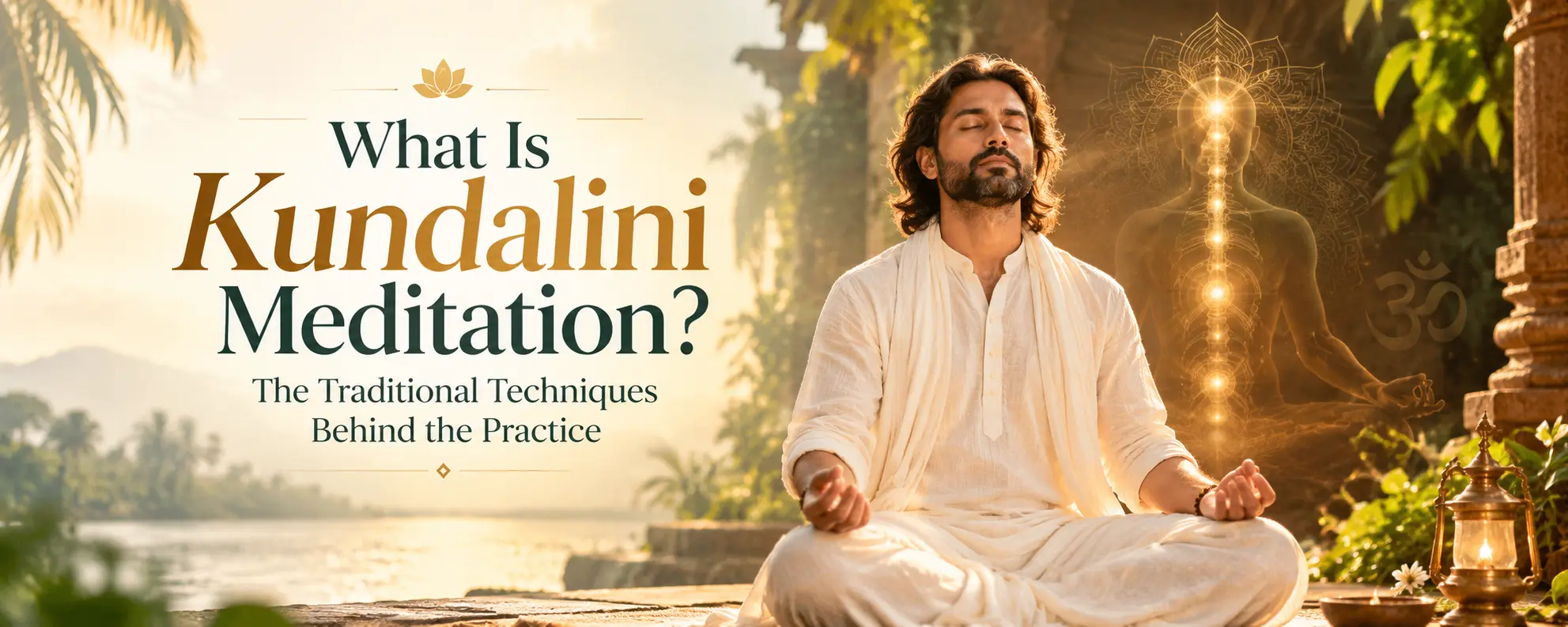
What Is Kundalini Meditation? The Traditional Techniques Behind the Practice
Part of our complete Kundalini Yoga Guide.
Kundalini meditation is a set of internal, mind-focused practices…
Kundalini meditation is a set of internal, mind-focused practices used to prepare the body and nervous system for the rise of kundalini energy — the dormant potential said to rest at the base of the spine. It’s often confused with “Kundalini Yoga,” the system of breath-mudra-mantra sets popularised in the West since the 1970s. But in the older Sivananda-Satyananda lineage this school teaches within, kundalini meditation refers to four specific, systematic techniques: antar mouna, ajapa japa, yoga nidra, and trataka. Each has a defined purpose, a defined sequence, and generations of documented practice behind it — not a generic “close your eyes and breathe” routine.
This guide covers what kundalini meditation actually is, how it differs from kundalini yoga, where the tradition comes from, the four classical techniques, what happens in the body during practice, and how to begin safely at home.
What Is Kundalini Meditation, Exactly?
At its core, kundalini meditation is any meditative technique whose specific purpose is to still the mind, withdraw the senses (pratyahara), and direct awareness inward so that prana (life-force) can move more freely along the spine. “Kundalini” is Sanskrit for “coiled,” describing the dormant energy pictured as a coiled serpent resting at the base of the spine, in the muladhara (root) chakra.
Where a physical yoga practice moves the body, kundalini meditation moves attention. It doesn’t rely on movement, chanting aloud, or elaborate breath sequences — those belong to kriya and pranayama practice. It’s an internal discipline of watching the mind, following the breath, or holding a single point of focus for an extended period, until the mind settles enough for subtler experience to arise.
This distinction matters because most of what circulates online under “kundalini meditation” is actually a simplified version of Kundalini Yoga as taught by Yogi Bhajan’s 3HO organisation from the 1970s onward — a specific system built around kriyas (movement-breath sets), mudras, and mantra, with techniques like Kirtan Kriya (chanting Sa-Ta-Na-Ma while moving the fingers) as its best-known meditation. It’s a legitimate, widely taught practice with its own following. But it is one branch, not the whole tree — and it is not the tradition this school teaches.
Where the Classical Tradition Comes From
The techniques covered in this guide come from a different, older source: Swami Sivananda’s ashram in Rishikesh, carried forward by his direct disciple Swami Satyananda Saraswati, who went on to found the Bihar School of Yoga. Satyananda’s own writings on the subject, most notably Kundalini Tantra, lay out a structured, progressive approach to awakening kundalini safely — built around preparatory purification (shatkarma), physical practice (asana), breath control (pranayama), and finally, a specific sequence of meditation techniques refined over decades of teaching.
This lineage is what’s taught in this school’s residential Kundalini Kriya Yoga Teacher Training in Goa, and it’s the framework behind everything below.
Kundalini Meditation vs. Kundalini Yoga: What’s the Difference?
This is one of the most searched questions on the topic, and the confusion is understandable — the two are taught together so often that people assume they’re interchangeable. In simple terms:
Kundalini Yoga
The umbrella practice — physical postures, kriyas (specific movement-breath sequences), pranayama, and meditation, combined into a single class or daily sadhana.
Kundalini Meditation
The seated, internal component — the practices used once the body has been prepared through asana, shatkarma, and pranayama.
Within the Sivananda-Satyananda lineage, the meditation techniques are taught as a separate, sequential curriculum, not bolted onto a kriya sequence. A kriya works the body and breath; meditation works the mind. Both aim at the same outcome — the gradual, safe rise of kundalini energy through the chakras — but they use different tools to get there. For a broader comparison against Hatha Yoga more generally, see our guide on Hatha vs. Kundalini Yoga.
The Two Kundalini Meditation Traditions You’ll Find Online
Search for “kundalini meditation” and almost every result describes the same handful of techniques: Kirtan Kriya, “Breath of Fire,” or short guided visualisations. These come from the 3HO/Yogi Bhajan lineage, and they’re widely accessible and easy to package into a ten-minute video — which is largely why they dominate search results and app libraries.
The classical tradition described here predates that movement by decades and takes a slower, more sequenced approach. Rather than a single combined technique, it separates meditation into four distinct practices, each building a specific mental skill the next one depends on. Neither approach is “wrong” — they’re genuinely different systems, developed by different teachers for different contexts. But most online content only describes one of them, which is why so much of what beginners read about “kundalini meditation” doesn’t match what’s actually taught in a traditional teacher training. If some of this runs against what you’ve read elsewhere, our guide to demystifying common Kundalini myths covers the most persistent misconceptions in more depth.
The Four Classical Techniques of Kundalini Meditation
These are the four techniques taught as the core kundalini meditation curriculum in the Satyananda tradition. They’re typically learned in sequence, each preparing the ground for the next.
Antar Mouna
Inner Silence
Antar mouna means “inner silence.” It’s a structured practice of watching the mind without engaging it — first noticing external sounds, then physical sensations, then the flow of thoughts themselves, held as a neutral witness rather than a participant. It’s usually the first meditation technique taught, because it trains the basic skill every other technique depends on: observing mental activity instead of being pulled into it. Traditionally taught in stages, it builds pratyahara (sensory withdrawal), the preparatory step before deeper concentration practices.
Ajapa Japa
Effortless Mantra Repetition
Ajapa japa links the breath to a mantra — most commonly “So-Ham” (“I am That”) — so the mantra repeats itself silently with each inhale and exhale, without conscious effort. Over time, the mind’s habitual, effortful repetition (japa) becomes automatic and “un-repeated” (ajapa), which is where the name comes from. This technique is also used to guide awareness along the spinal passage connecting the lower chakras to the crown, which is why it’s specifically associated with kundalini practice rather than general mindfulness meditation. For more on mantra’s role in this tradition, see our guide to Kundalini mantras and the science of sound healing.
Yoga Nidra
Psychic Sleep
Yoga Nidra is a systematised relaxation technique practised lying down, guiding awareness through the body and successive layers of consciousness while staying just on the edge of sleep. Codified by Swami Satyananda from older tantric nyasa practices, it’s one of the most widely researched techniques associated with this tradition, used for deep nervous-system rest. Within a kundalini curriculum specifically, it’s used to release the physical and subconscious tension that otherwise blocks the rise of energy — and it’s often the technique beginners find easiest to start with, since no seated concentration is required.
Trataka
Candle-Gazing Concentration
Trataka is a fixed-gaze concentration practice, traditionally performed on a candle flame, that trains one-pointed attention (ekagrata). It’s classified as both one of the six shatkarmas (cleansing techniques) and a meditation practice in its own right. It works differently from the other three — instead of withdrawing attention inward, it trains the mind to hold a single external point without wavering, which is a prerequisite for the deeper concentration (dharana) stages that follow kundalini meditation.
These four aren’t the only meditation techniques described in the tradition, but they form its practical foundation, and they’re the ones most students encounter first — whether in a teacher training or a home practice.
How Kundalini Meditation Works With the Chakras
Each of the four techniques above is connected to specific points along the spine — the chakras. Antar mouna and ajapa japa in particular are used to bring awareness systematically to the muladhara, manipura, anahata, and ajna chakras, building the subtle “map” a practitioner needs before attempting more advanced practices. Understanding this map matters more than most beginners realise: without it, kundalini meditation can feel like abstract visualisation rather than a structured process with a clear sense of progress. Our complete guide to the seven chakras and Kundalini energy covers each chakra’s role in more depth.
What Happens in the Body During Kundalini Meditation?
Physiologically, these techniques share a common mechanism: they shift the nervous system from sympathetic dominance (fight-or-flight) toward parasympathetic activation (rest-and-digest), primarily through slowed, regularised breathing and sustained, undistracted attention.
This is measurable — heart rate variability tends to improve, cortisol drops, and studies on related practices show increased alpha and theta brainwave activity, associated with relaxed alertness rather than either stress or sleep. We cover the full nervous-system mechanics, including what’s well-established and what’s still speculative, in our dedicated article on the science of Kundalini yoga and the nervous system.
Is Kundalini Meditation Safe? What Beginners Should Know
For the large majority of practitioners, these techniques are calming, not destabilising — that’s precisely why yoga nidra, in particular, is used clinically for stress and insomnia well outside any spiritual context. The tradition itself is explicit about sequencing for a reason: antar mouna before ajapa japa, physical practice before subtle practice.
Moving too quickly into intensive concentration or breath practices without preparation is what occasionally produces uncomfortable symptoms — racing thoughts, emotional intensity, disrupted sleep — sometimes described as “kundalini syndrome.”
The practical takeaway: start with yoga nidra or basic antar mouna, keep sessions short, and work with an experienced teacher before progressing to more intensive techniques, especially if you have a history of anxiety, psychosis, or unresolved trauma — our guide on how these practices interact with the vagus nerve and trauma release is worth reading first in that case.
We go into this in detail, including how to distinguish ordinary practice effects from genuine awakening experiences, in our article on the signs of a genuine Kundalini awakening.
Common Mistakes Beginners Make
A few patterns show up repeatedly among students who arrive at a teacher training after struggling with a home practice built from scattered online sources:
- Skipping straight to advanced practices. Attempting ajapa japa or intensive pranayama before antar mouna has settled the mind tends to produce frustration, not progress.
- Treating it as a performance. Judging a session by whether “something happened” misses the point — the steadying itself is the practice, especially in the early months.
- Inconsistent practice. Ten minutes daily builds the nervous-system familiarity these techniques depend on far more reliably than occasional long sessions.
- No context for chakras. Practising ajapa japa without understanding the chakra map it’s meant to move through makes the visualisation component feel arbitrary rather than purposeful.
- Mixing unrelated systems. Combining 3HO kriyas with classical meditation techniques isn’t inherently wrong, but doing so without understanding that they come from different systems, with different sequencing logic, is how people end up confused about why a practice “isn’t working.”
How to Start a Kundalini Meditation Practice at Home
You don’t need a teacher training to begin. A simple, traditionally grounded starting sequence looks like this:
-
01Choose one technique, not four. Start with yoga nidra (guided, lying down) or basic antar mouna (seated, eyes closed, simply noticing sounds and thoughts without engaging them).
-
02Keep it short. Ten to fifteen minutes daily is more effective long-term than forty-five minutes twice a week.
-
03Same time, same place. Early morning (brahma muhurta, roughly ninety minutes before sunrise) is traditionally preferred because the mind is naturally quieter, but consistency matters more than the exact hour.
-
04Sit, don’t force. A simple cross-legged posture with a straight spine is enough; you don’t need a full lotus to begin.
-
05Track, don’t judge. Notice restlessness or wandering attention as information, not failure — that noticing is itself the practice of antar mouna.
-
06Progress in order. Move to ajapa japa only once antar mouna feels stable, and treat trataka and deeper pranayama-linked practices as later stages, ideally under direct guidance.
This sequence mirrors how the techniques are actually taught in a residential teacher training — as a progressive system, not a set of isolated “hacks.”
Kundalini Meditation and the Ayurvedic View
Ayurveda and this branch of yoga developed alongside each other, and the overlap shows up directly in kundalini meditation practice. The nervous-system settling these techniques produce is, in Ayurvedic terms, a pacifying of vata — the air-and-space quality responsible for restlessness, anxiety, and a scattered mind when it’s aggravated.
This is part of why traditional teaching pairs meditation practice with attention to daily routine (dinacharya), diet, and sleep: a vata-aggravating lifestyle makes the mind genuinely harder to settle, regardless of how correctly a technique is practised. Students preparing for deeper kundalini work are traditionally advised to stabilise these basics first, rather than treating meditation as something that can override an otherwise erratic routine.
Frequently Asked Questions
Is Kundalini meditation the same as Kundalini yoga?
No. Kundalini yoga is the broader practice — postures, kriyas, and pranayama together. Kundalini meditation refers specifically to the seated, internal techniques, such as antar mouna and yoga nidra, used within that broader practice.
How long should a beginner practice each session?
Ten to fifteen minutes is a reasonable, sustainable starting point. Traditional teaching favours short, consistent daily practice over long, infrequent sessions.
Can I learn Kundalini meditation without a teacher?
Basic techniques like yoga nidra are safe to explore independently using a guided recording. More advanced practices — ajapa japa, trataka, and anything paired with intensive pranayama — are traditionally learned under direct guidance, partly for safety and partly because correct technique is genuinely difficult to self-verify.
Is Kundalini meditation dangerous?
For most people practising the foundational techniques at a measured pace, no — it’s a recognised relaxation and concentration practice. Reported difficulties tend to occur when practitioners skip the sequencing, jumping straight into intensive pranayama or prolonged concentration practices without preparation or guidance.
What’s the best time of day to practice?
Early morning is traditionally preferred, but any consistent, quiet time works. Regularity matters more than the exact hour chosen.
Do I need to believe in kundalini energy for these techniques to help?
No. The relaxation and concentration benefits of yoga nidra and antar mouna are well documented independent of any spiritual framework. The chakra and energy-body context is how the tradition explains why the techniques are sequenced the way they are, not a precondition for benefiting from them.
Why do most online guides describe a different set of techniques?
Because “Kundalini meditation” content is dominated by the 3HO/Yogi Bhajan lineage, which built an accessible, brandable system in the West from the 1970s onward. The older Sivananda-Satyananda lineage is less commercially visible online, even though it’s the source many of the underlying concepts — chakras, prana, pratyahara — actually come from.
The four techniques aren’t a set of isolated “hacks” — they’re a sequenced curriculum, each stage preparing the ground for the next.
Learning the Full Practice
The four techniques above are a genuine starting point, but they’re taught as a complete, sequenced curriculum — with the correction and pacing a book or video can’t provide — in this school’s Kundalini Kriya Yoga Teacher Training, within the direct Sivananda-Satyananda lineage, held residentially in Goa each January and February.
For those who’d rather begin from home first, the Kundalini Kriya online course covers the same foundational sequence at your own pace, before deciding whether to go deeper residentially.