
Kundalini Yoga Poses With Names, Benefits and How to Do Them (15 Essentials)
Kundalini Yoga Poses: The 15 Essential Postures & How to Do Them
Most lists of kundalini yoga poses give you a name and a photo. They rarely tell you how long to hold a pose, which version of the name is correct, who should skip it, or what to do instead. This guide does all four for 15 poses, in plain steps you can follow without a teacher in the room.
The essential kundalini yoga poses are Sukhasana, dynamic spinal flexion, Ardha Matsyendrasana, Marjari Asana, Vajrasana, Ustrasana, Bhujangasana, Dhanurasana, Naukasana, Janu Sirsasana, Mandukasana, Kakasana, Akarna Dhanurasana, Savasana and Shashankasana. Unlike ordinary stretches, these poses are usually held or repeated for a set time with a specific breath pattern, and they are combined into sequences called kriyas.
- There are 15 core poses here, each with how-to, hold time, what it works on and who should modify it.
- Beginners should start with six gentle poses and add the stronger ones after four to six weeks.
- Some pose names mean different things in different traditions. We settle the confusion below.
- This page is a pose library. For a ready-made sequence, use the 15-minute kundalini yoga routine for beginners.
What are kundalini yoga poses?
Kundalini yoga poses are the postures and movements used in kundalini yoga. Three things make them different from poses in a general yoga class:
- They are timed or repeated. A pose may be held for one to three minutes, or repeated rhythmically with the breath.
- They are paired with breath, sound or locks. A pose might be combined with long deep breathing, breath of fire, a mantra or a gentle lock (bandha).
- They are built into kriyas. A kriya is a defined sequence of poses, breath and sound aimed at one effect. See What is a Kundalini Kriya? for how they work.
In everyday searches, “poses” and “positions” mean the same thing here, so you will find both words used throughout this page.
If you are new to the practice, read our complete guide to Kundalini Yoga first, then use this page as your pose library.
Kundalini yoga poses with names: quick-reference table
Print this table or use your browser’s “Save as PDF” to keep it as a cheat sheet.
| # | Pose | Sanskrit name (if any) | Position | Beginner hold | Main focus |
|---|---|---|---|---|---|
| 1 | Sukhasana | Sukhasana | Seated, cross-legged | 1–5 min | Steady base, posture |
| 2 | Dynamic Spinal Flex | none standard | Seated | 1 min | Lower spine |
| 3 | Ardha Matsyendrasana | Ardha Matsyendrasana | Seated | 1 min | Spine rotation |
| 4 | Marjari Asana | Marjari Asana | Hands and knees | 1–2 min | Spine flexibility |
| 5 | Vajrasana | Vajrasana | Kneeling on heels | 1–3 min | Stable base |
| 6 | Ustrasana | Ustrasana | Kneeling backbend | 20–30 sec | Chest, front body |
| 7 | Bhujangasana | Bhujangasana | Face down | 20–30 sec | Spine, chest |
| 8 | Dhanurasana | Dhanurasana | Face down | 15–30 sec | Front body, core |
| 9 | Naukasana | Naukasana | On the back | 30–60 sec | Core, navel centre |
| 10 | Janu Sirsasana | Janu Sirsasana | Seated forward bend | 1–2 min | Back of legs, spine |
| 11 | Mandukasana | Mandukasana | Kneeling | 5–10 reps | Legs, hips |
| 12 | Kakasana | Kakasana | Hands and knees (arm balance) | 1–2 min | Legs, hips, digestion |
| 13 | Akarna Dhanurasana | Akarna Dhanurasana | Seated | 30 sec per side | Legs, focus |
| 14 | Savasana | Savasana | On the back | 3–5 min | Deep relaxation |
| 15 | Shashankasana | Shashankasana | Kneeling forward fold | 1–3 min | Rest, reset |
Kundalini yoga positions: the 15 essential poses and how to do them
Warm up your spine before any of the stronger poses. If you want the breath and lock techniques mentioned below, see breath of fire and understanding bandhas.
Group 1: Foundation and spine
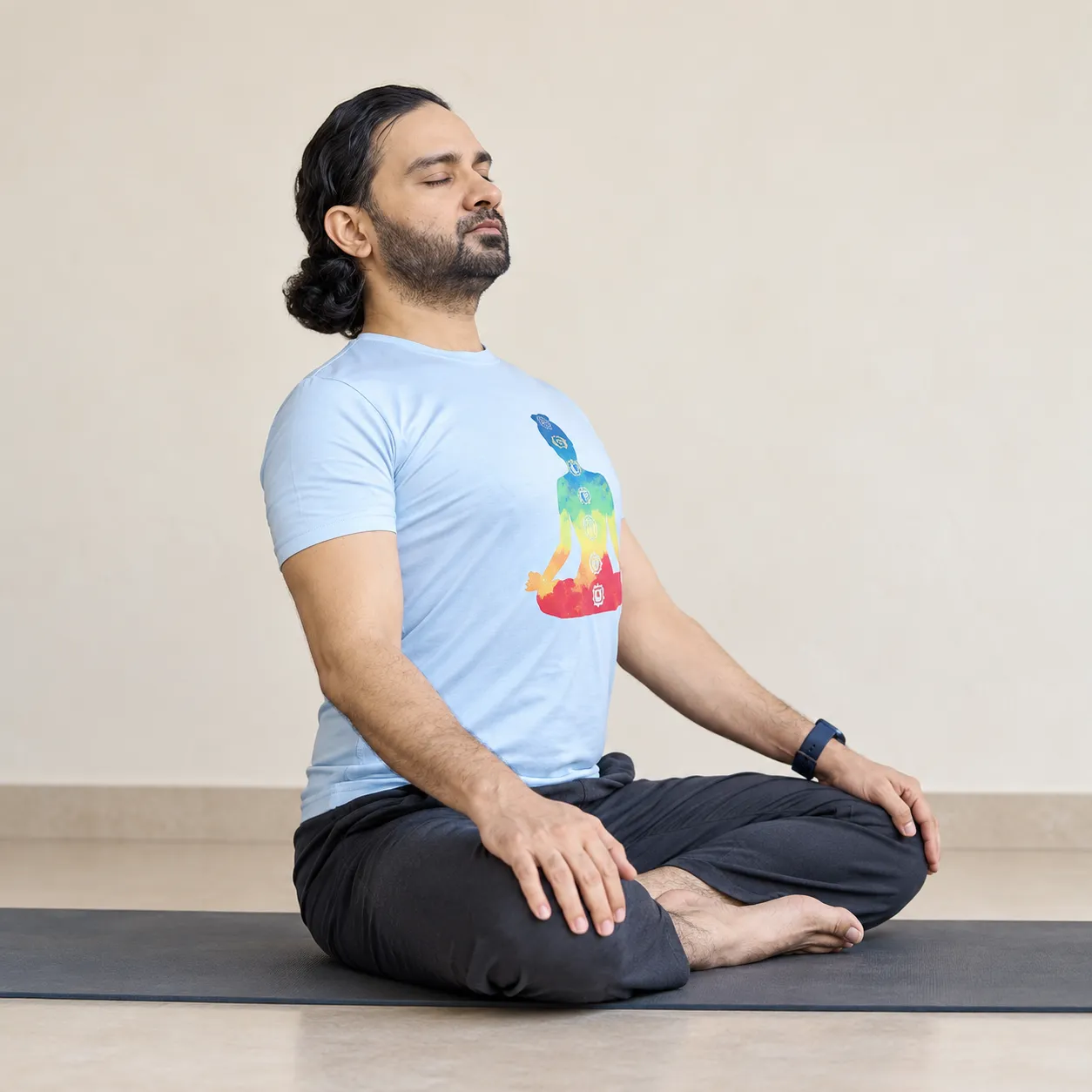
1. Sukhasana (Easy Pose)
How: Sit cross-legged with your sit bones grounded, spine long and chin slightly tucked. Rest your hands on your knees. Relax your shoulders. Hold: One to five minutes. It is the starting seat for most seated exercises. Works on: Posture and hip opening. Modify or avoid: Sit on a folded blanket if your knees rise above your hips, or use a chair if your hips or knees hurt.

2. Dynamic spinal flexion–extension
How: In Sukhasana, hold your shins. Inhale and arch the lower spine so your chest moves forward and up. Exhale and round the spine back. Keep the rhythm with the breath. Hold: One minute to start. Build to three minutes. Works on: Lower-spine mobility. Teachers use it to warm the spine and the root and navel region. Modify or avoid: Reduce the range if your neck or back is sore, or sit on your heels instead.
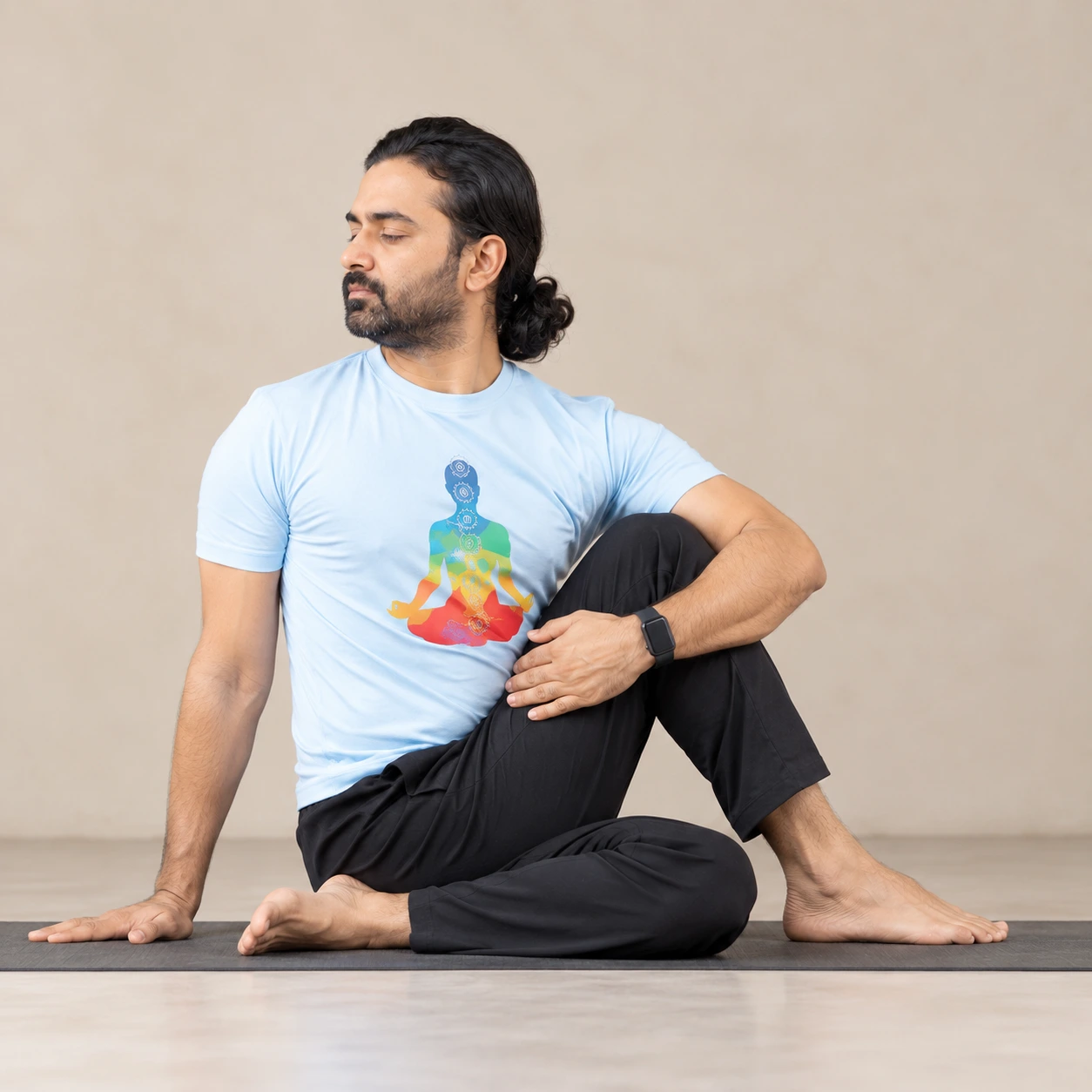
3. Ardha Matsyendrasana (Half Spinal Twist)
How: Sit with one leg straight and the other bent, foot flat on the floor outside the straight knee. Twist your torso toward the bent knee, using your arm as a lever. Keep your spine tall and hips grounded. Hold: One minute. Works on: Spinal rotation and mid-back stiffness. Modify or avoid: Use a smaller range. Get guidance first if you have a disc problem or recent spine surgery.
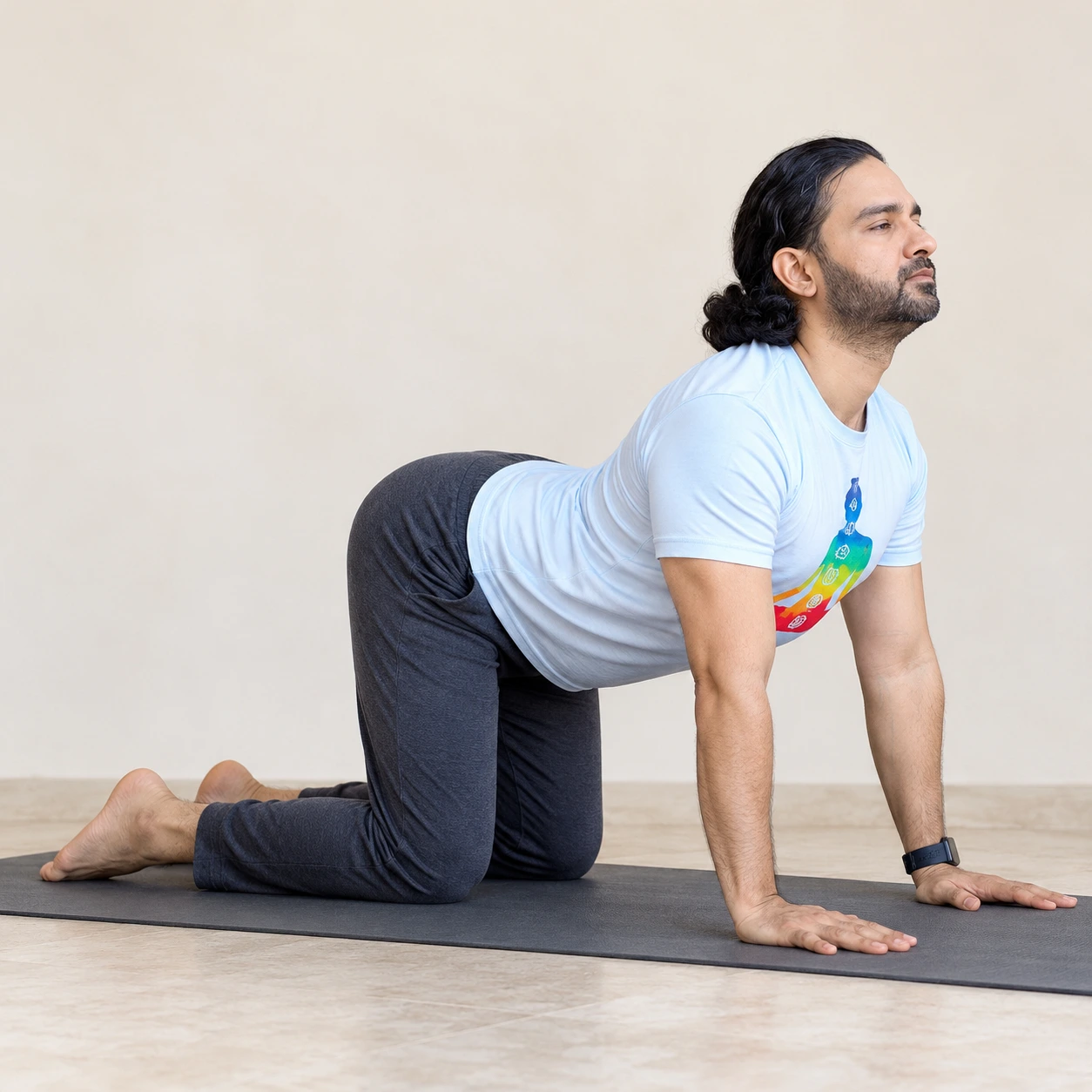
4. Marjari Asana (Cat Stretch)
How: On hands and knees, inhale and drop the belly as you lift the chest and tailbone. Exhale and round the spine. Hold: One to two minutes, moving with the breath. Works on: Spine flexibility and linking breath with movement. Modify or avoid: Pad your knees. Come onto fists or forearms if your wrists complain.
Group 2: Core, chest and legs
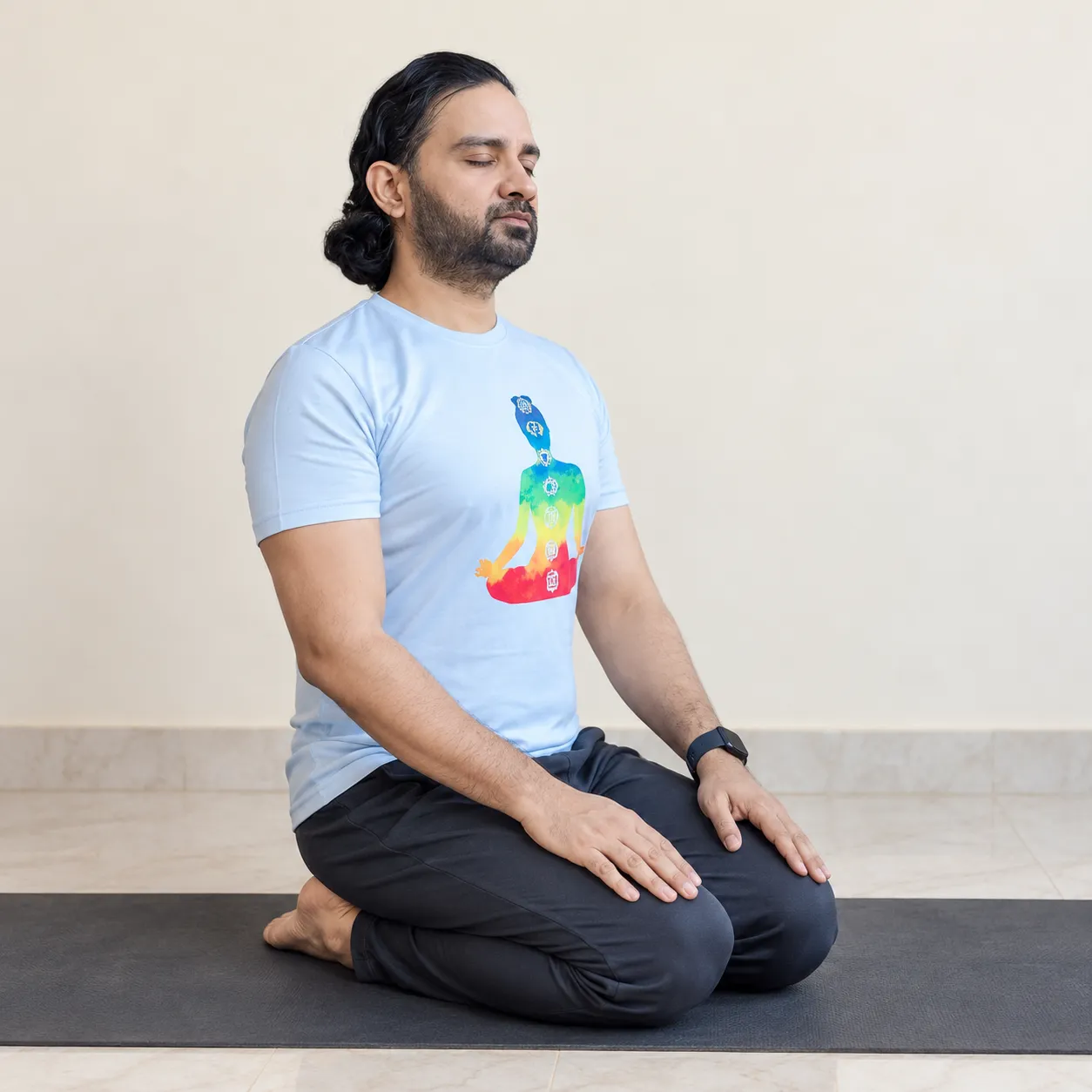
5. Vajrasana (Rock Pose)
How: Kneel and sit back on your heels, toes pointing back, spine tall, hands on your thighs. Hold: One to three minutes. Works on: A stable kneeling base. It is the seat for many kundalini exercises. Modify or avoid: Place a cushion between your heels and hips. Avoid it with knee or ankle injuries.
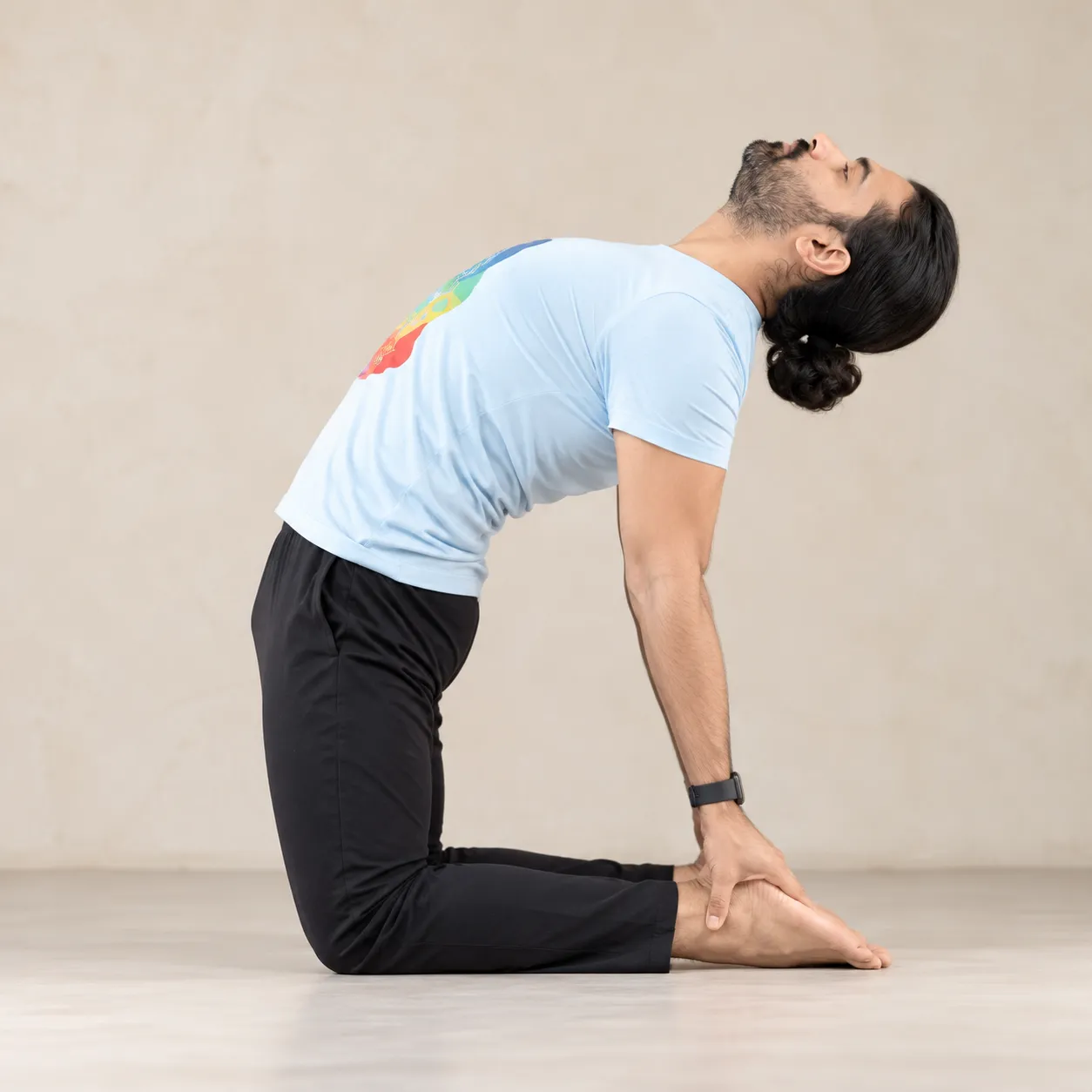
6. Ustrasana (Camel Pose)
How: Kneel with knees hip-width apart and hands on your lower back. Inhale, lift your chest and arch back, keeping your neck neutral. Reach for your heels only if it feels comfortable. Exhale to come up. Hold: Three to five breaths, about 20 to 30 seconds. Works on: The whole front of the body, the chest and spinal extension. Teachers traditionally link it to the heart centre. Modify or avoid: Keep your hands on your lower back. Skip it with neck or lower-back pain, high blood pressure or in pregnancy unless a prenatal teacher guides you.
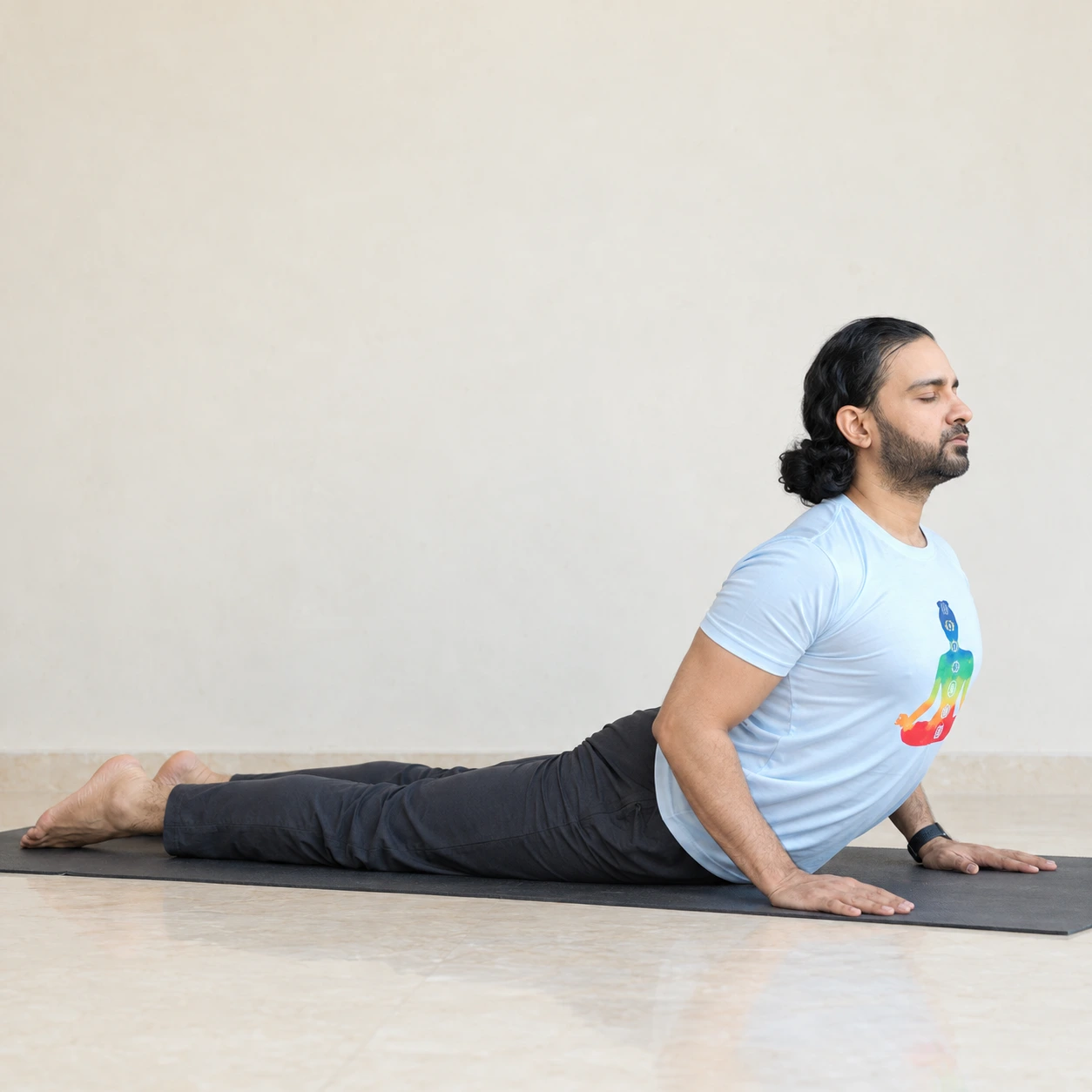
7. Bhujangasana (Cobra Pose)
How: Lie face down with palms under your shoulders. Inhale and lift your chest, keeping your pubic bone grounded and your elbows slightly bent. Draw your shoulders away from your ears. Exhale to lower. Hold: Three to five breaths. Works on: Spinal extension, the chest and the front of the throat. Modify or avoid: Avoid it in pregnancy, with a hernia, after abdominal surgery or with severe lower-back pain.
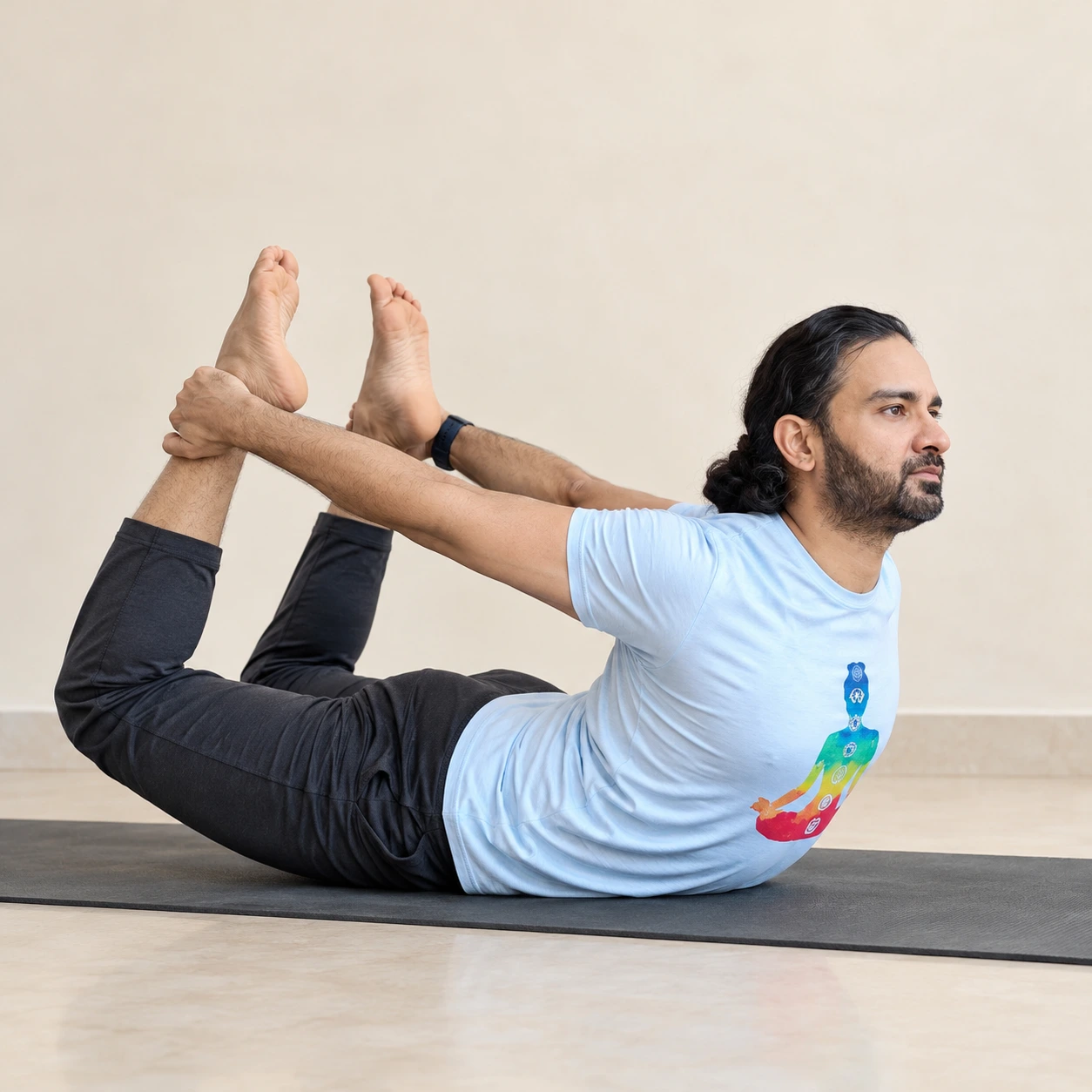
8. Dhanurasana (Bow Pose)
How: Lie face down, bend your knees and hold your ankles. Inhale, lift your chest and thighs together, and look forward without cranking your neck. Exhale to lower. Hold: 15 to 30 seconds. Learn Bhujangasana first. Works on: The whole front body and the navel centre. Modify or avoid: Avoid it in pregnancy, with a hernia, high blood pressure, recent surgery or back and neck injuries.
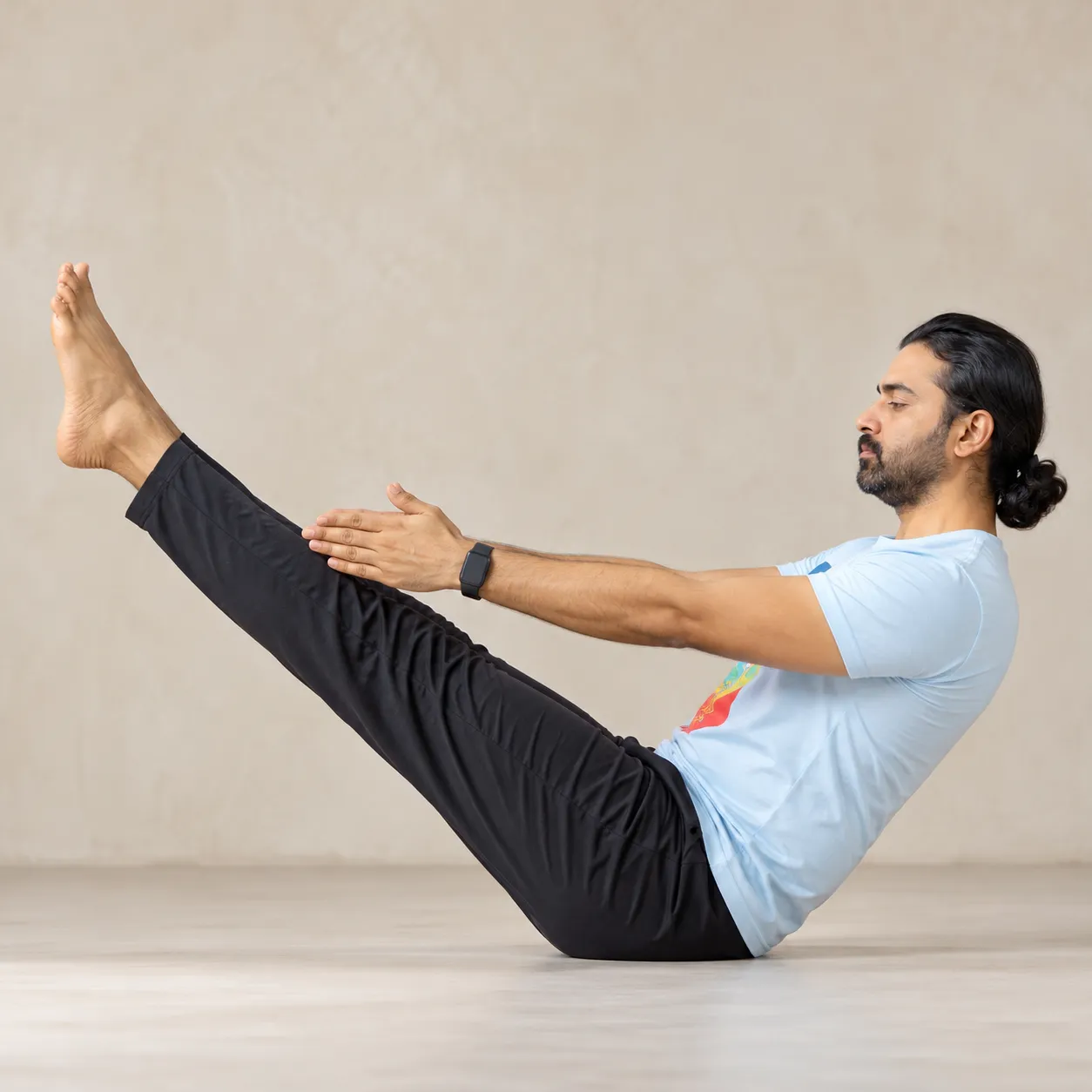
9. Naukasana (Boat Pose)
How: Sit with legs straight. Lean back slightly and lift your feet off the floor, balancing on your sit bones. Keep your chest lifted and arms parallel to the floor (or reaching toward your toes). Breathe long and steady. Hold: 30 to 60 seconds. Build to one to three minutes. Works on: The abdominal core and the navel centre. Modify or avoid: Bend your knees or rest your head down if it strains your neck or back. Skip it with lower-back pain, in pregnancy or with a hernia.
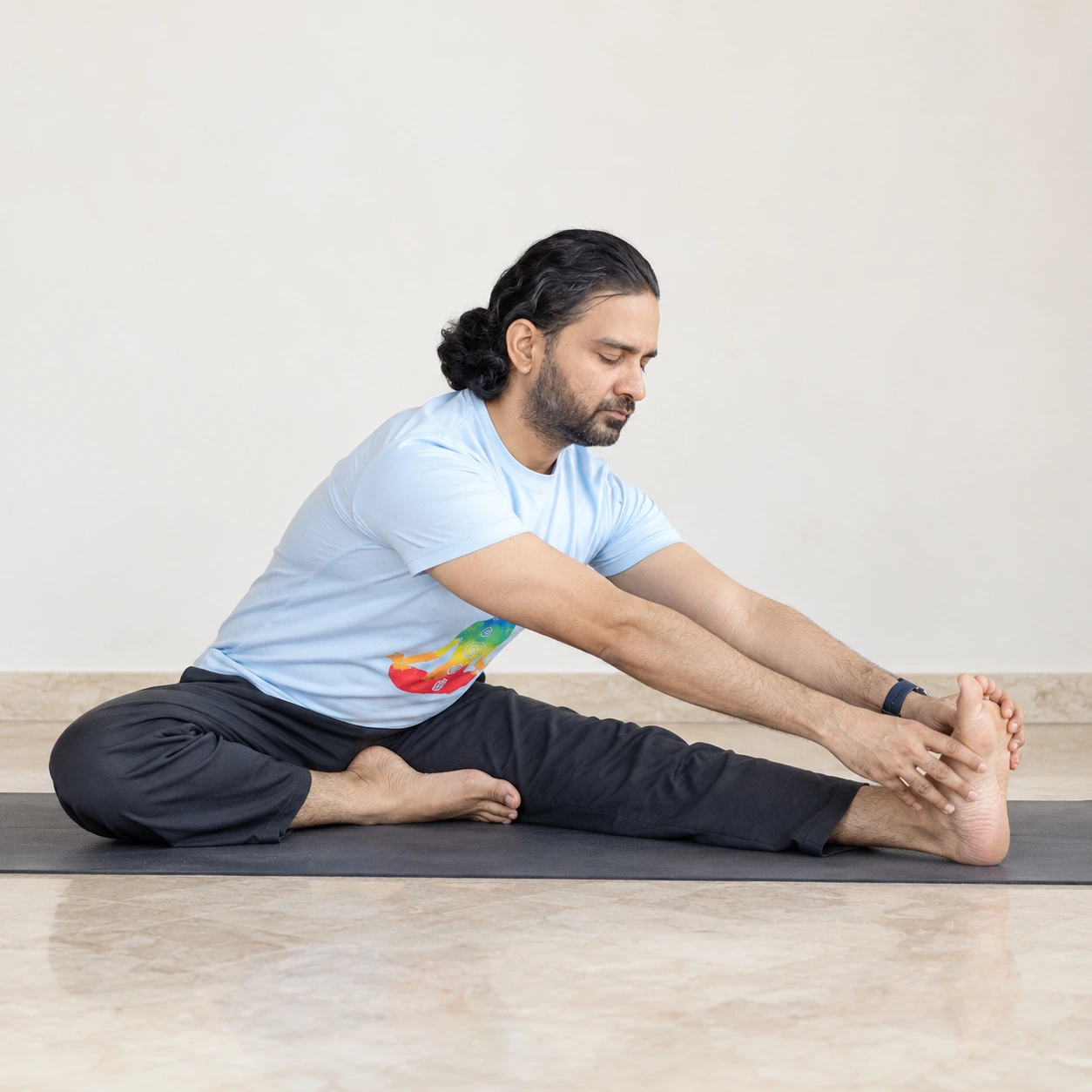
10. Janu Sirsasana (Head-to-Knee Pose)
How: Sit with one leg straight and the other bent, foot against the inner thigh. Inhale to lengthen the spine, then fold forward from the hips over the straight leg. Hold your toes, ankle or shin. Keep your back long. Hold: One to two minutes. Works on: The back of the legs and the spine. Modify or avoid: Bend your knee or use a strap. Go gently with sciatica, disc problems or hamstring injuries.
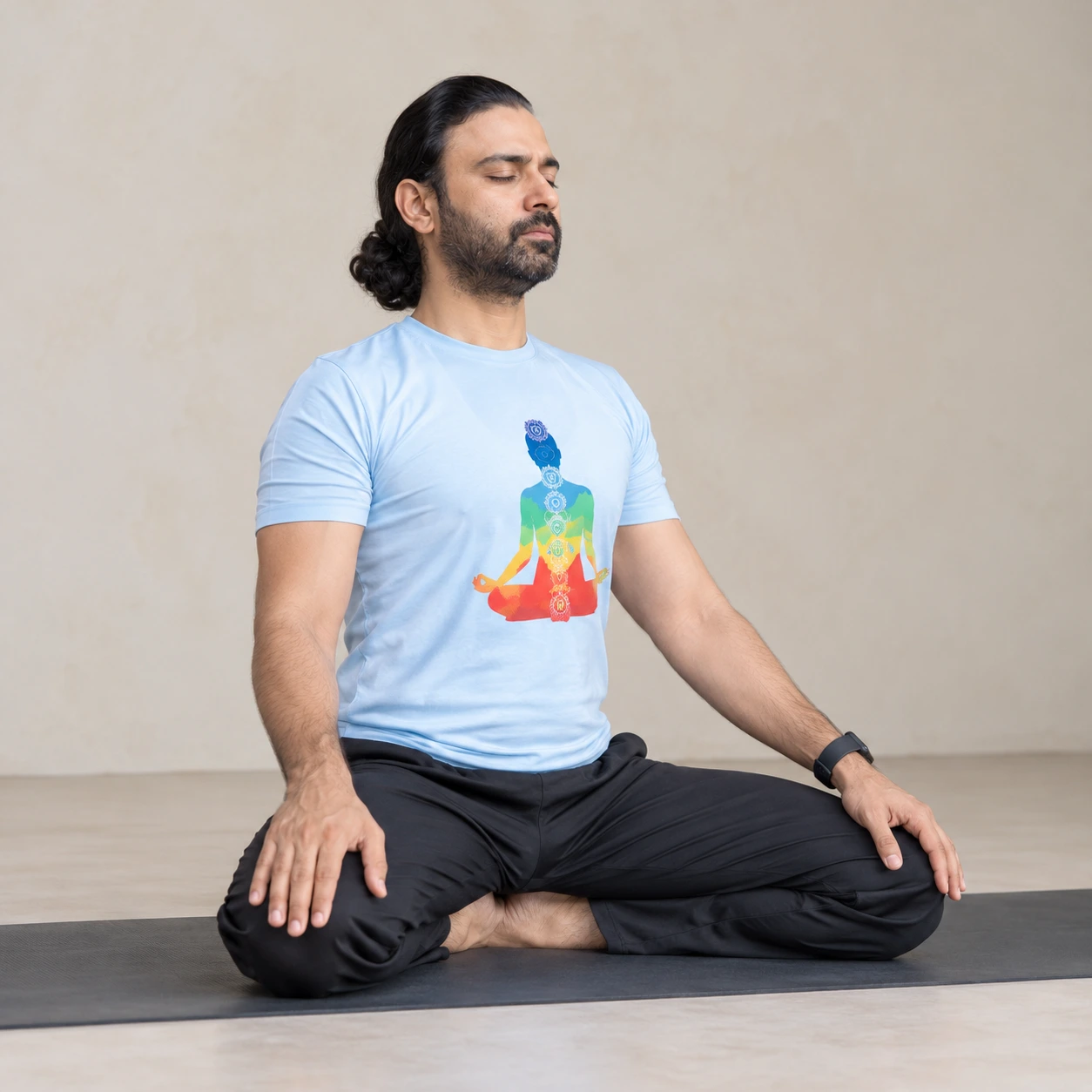
11. Mandukasana (Frog Pose)
How: Kneel with knees wide apart. Bring your big toes together and sit back on your heels (or a block). Place your hands on the floor in front of you or on your thighs, and fold forward gently. Hold: Five to ten repetitions to start. Works on: Legs, hips and building heat. Modify or avoid: Use a cushion under your hips. Avoid it with knee or ankle injuries and in later pregnancy.
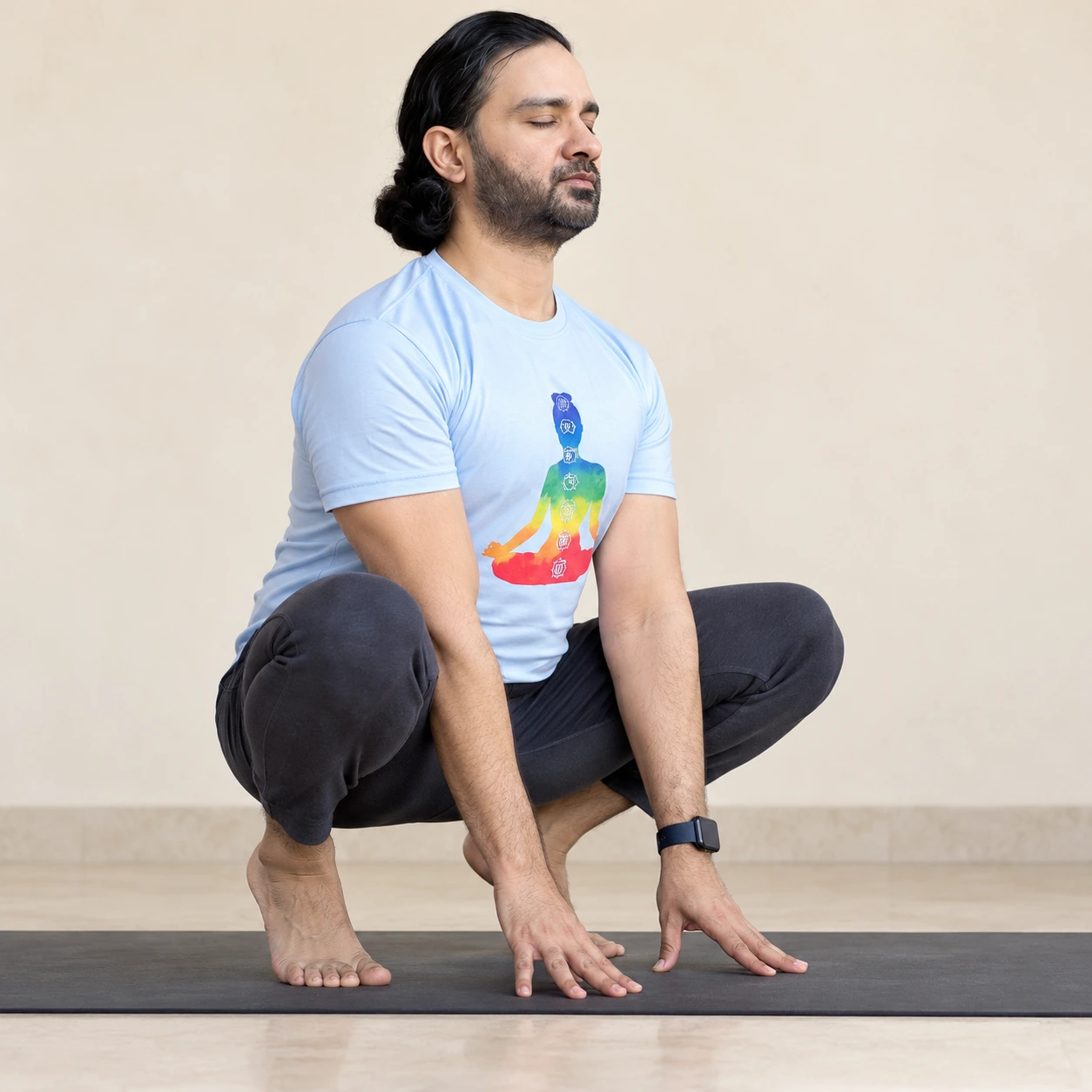
12. Kakasana (Crow Pose)
How: Squat with hands flat on the floor. Bend your elbows and place your knees on your upper arms. Lean forward, lifting your feet off the floor, balancing on your hands. Hold: One to two minutes. Works on: Legs, hips and the abdomen. Teachers often use it to support digestion. Modify or avoid: Put a folded blanket under your heels. Avoid it with wrist or knee problems.
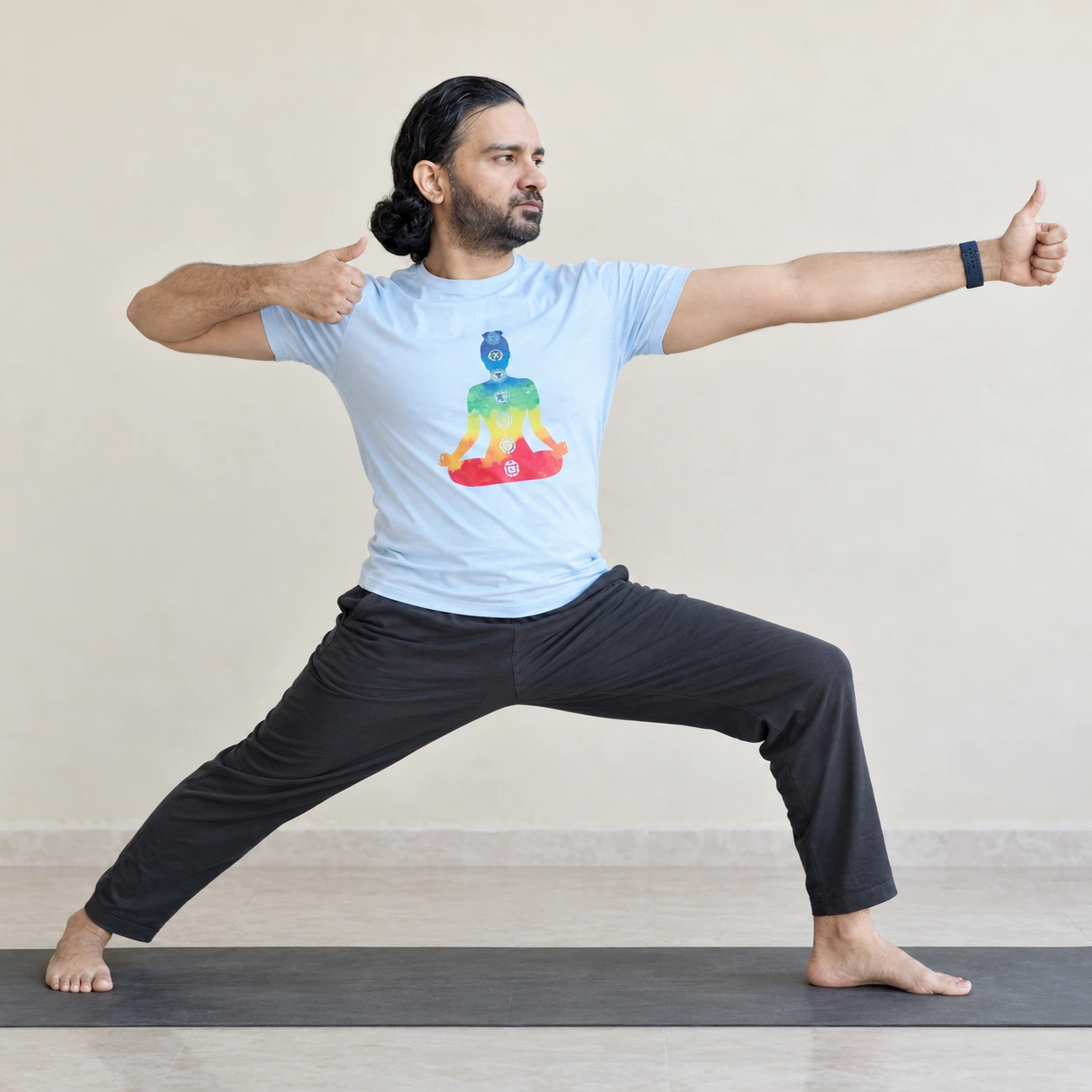
13. Akarna Dhanurasana (Shooting Bow Pose)
How: Sit with legs straight. Hold the big toe of your right foot with your right hand, bending the elbow and drawing the foot up like a bowstring. Keep the left leg straight. Look toward the right foot. Hold: About 30 seconds, then switch sides. Works on: Leg strength and focus. Teachers describe it as a pose for focus and courage. Modify or avoid: Use a strap around the foot. Avoid it with hamstring or lower-back injuries.
Group 3: Rest and integration
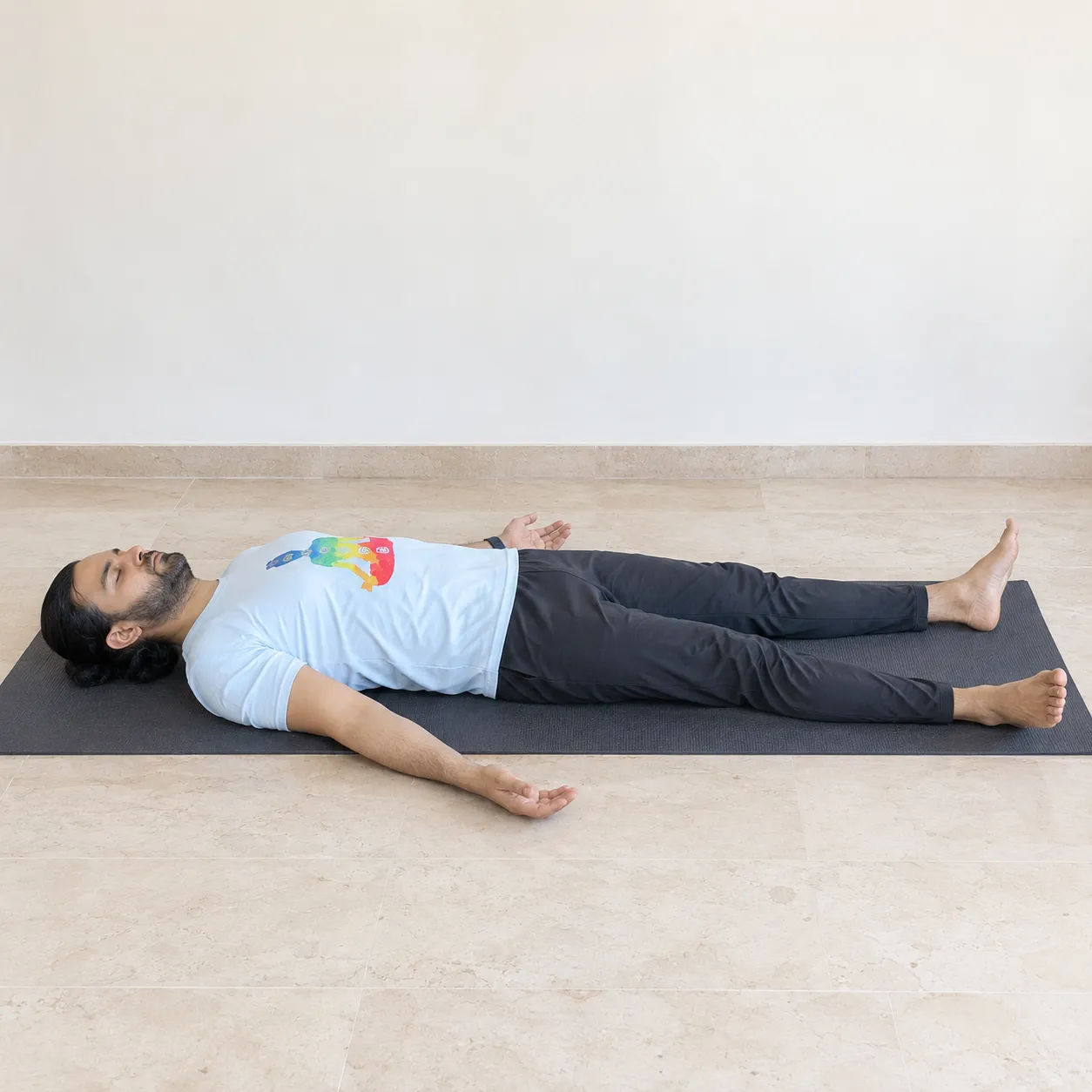
14. Savasana (Corpse Pose)
How: Lie on your back with arms slightly away from the body, palms up, legs relaxed. Close your eyes and let the breath settle. Hold: Three to five minutes. After a full session, rest longer. Works on: Letting the nervous system settle after effort. Modify or avoid: Put a pillow under your knees or head. Don’t skip this pose.
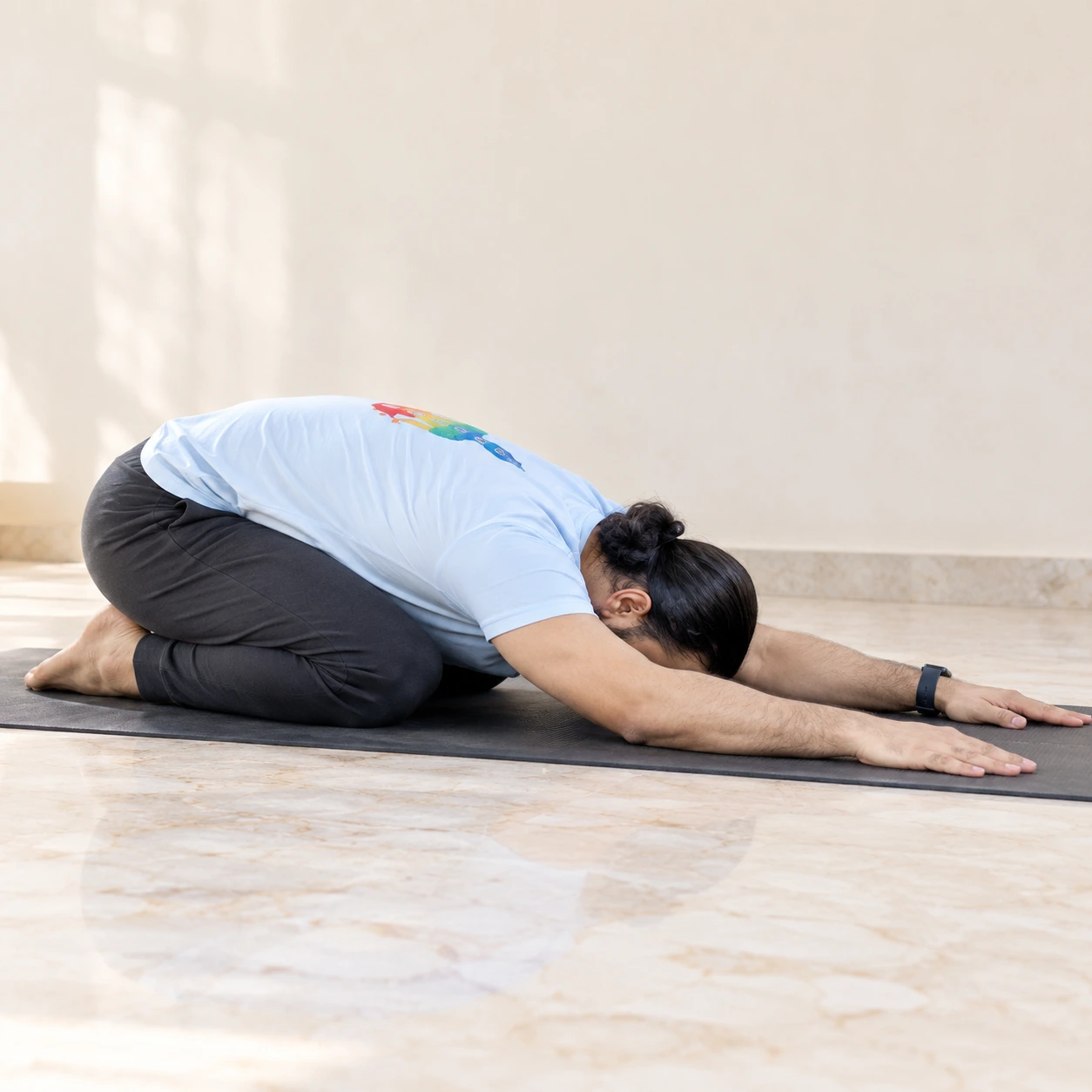
15. Shashankasana (Hare Pose)
How: Kneel and sit back, then fold forward with your forehead on the floor and arms forward or by your sides. Hold: One to three minutes. Use it between strong exercises. Works on: Rest, the hips and the back. Modify or avoid: Place a cushion under your forehead or hips. Skip it with knee injuries or in later pregnancy.
Which kundalini yoga poses are best for beginners?
Start with these six for the first four to six weeks:
- Sukhasana
- Dynamic spinal flexion
- Ardha Matsyendrasana
- Marjari Asana
- Shashankasana
- Savasana
They loosen the spine and calm the nervous system without strain. Add Ustrasana, Dhanurasana, Mandukasana, Naukasana and Akarna Dhanurasana only once the basics feel easy and you can hold them without pain. If you’d like a ready-made beginner sequence, follow our 15-minute kundalini yoga routine for beginners. When your body is steady, read how to prepare your body for kundalini awakening before adding stronger breathwork.
Kundalini yoga poses and their benefits
Research on kundalini yoga is still limited and mostly small studies, so treat these as typical effects of the movements, not guarantees.
| If you want | Poses to use | What they may help with |
|---|---|---|
| A less stiff spine | Dynamic Spinal Flex, Ardha Matsyendrasana, Marjari Asana | Stiffness from long sitting |
| A stronger core | Naukasana, Dhanurasana | Abdominal strength and steadiness |
| Better posture and an open chest | Ustrasana, Bhujangasana | Rounded shoulders and a tight chest |
| Stronger legs and stamina | Mandukasana, Kakasana, Akarna Dhanurasana | Leg strength and endurance |
| A calmer mind | Shashankasana, Savasana, Sukhasana with slow breathing | Winding down after stress |
For the full picture, including breath, meditation and nervous-system effects, see the benefits of daily kundalini yoga practice.
Which kundalini yoga poses work with which chakras?
Traditional teaching pairs poses with chakras. The pairings vary by teacher and tradition, so use them as a learning aid, not as a rule. For a full explanation of each centre, see the chakras and kundalini energy.
| Chakra | Location | Poses commonly paired |
|---|---|---|
| Root (Muladhara) | Base of the spine | Kakasana, Mandukasana, Sukhasana |
| Sacral (Svadhisthana) | Lower abdomen | Marjari Asana, Ardha Matsyendrasana |
| Navel (Manipura) | Upper abdomen | Naukasana, Dhanurasana |
| Heart (Anahata) | Centre of the chest | Ustrasana, Bhujangasana |
| Throat (Vishuddha) | Throat | Bhujangasana, with a gentle chin tuck |
| Third eye (Ajna) | Between the brows | Shashankasana |
| Crown (Sahasrara) | Top of the head | Savasana, seated meditation |
Same name, different pose: Frog, Crow and Archer explained
A common source of confusion is that the same name points to different postures in different traditions.
| Name | In Kundalini Yoga | Elsewhere |
|---|---|---|
| Mandukasana (Frog) | A kneeling variation where you fold forward between wide knees | Different variations exist in Hatha yoga |
| Kakasana (Crow) | An arm balance where knees rest on the upper arms | Often confused with Bakasana (Crane Pose) |
| Akarna Dhanurasana (Archer) | A seated pose pulling the foot to the ear like a bowstring | Distinct from the standing Kundalini Archer Pose |
If a website gives a Sanskrit name for a pose that comes from the kundalini tradition, check the description. It may be describing something different.
Kundalini yoga poses in the Sivananda–Satyananda tradition
Most lists of “kundalini yoga poses,” including the names above, draw on the style of Kundalini Yoga taught by Yogi Bhajan. I teach in the Sivananda–Satyananda lineage of Kundalini Kriya Yoga, where the vocabulary differs. This lineage uses classical asanas as preparation for pranayama, mudra, bandha and kriya. Typical examples include:
- Siddhasana (Accomplished Pose): a meditation seat where the heel presses the perineum. It supports mula bandha (the root lock).
- Padmasana (Lotus Pose): a stable seat for longer meditation.
- Vajrasana (Rock Pose): a kneeling seat for breathwork.
- Bhujangasana (Cobra Pose): a spinal extension that prepares the body for deeper practice.
The asanas here are mainly there to give you a steady seat and a ready spine. For a clear comparison of the two approaches, see Hatha vs Kundalini Yoga.
How to do kundalini yoga poses correctly
- Warm the spine first. Begin with Dynamic Spinal Flex and Ardha Matsyendrasana before any strong pose.
- Breathe through the nose. Keep the breath steady. If you lose it, rest.
- Respect the hold times. Stay within the beginner times in the table above.
- Use locks lightly. Add the root lock gently and only when the pose feels stable.
- Rest between strong exercises. Use Shashankasana or Sukhasana for a few breaths.
- End with relaxation. Finish with Savasana, then sit quietly for a minute.
How long should you hold each kundalini yoga pose?
Beginners can hold most poses for 30 to 60 seconds, or repeat a movement for about one minute, then rest. Traditional kriyas use timed holds from one to three minutes. Build up gradually over several weeks. If you want to try longer holds, do it with a qualified teacher.
Who should avoid or modify kundalini yoga poses?
Speak with your doctor before practising if you have any of these:
- Pregnancy (skip Ustrasana, Bhujangasana, Dhanurasana, Naukasana and breath of fire)
- High or uncontrolled blood pressure
- A hernia, glaucoma or epilepsy
- Recent surgery
- Neck, back or knee injuries
- A history of psychosis or mania
Stop if you feel sharp pain, dizziness, chest discomfort or unusual agitation. Modify or skip the pose and tell your teacher.
Five common mistakes with kundalini yoga poses
- Skipping the warm-up. Cold spines don’t enjoy backbends.
- Holding the breath. Poor breathing is the clearest sign you’ve gone too far.
- Forcing a deep backbend. Ustrasana and Dhanurasana reward patience.
- Holding strong poses too long, too soon. Build up over weeks.
- Skipping Savasana. The rest is where the practice sinks in.
Frequently asked questions
What are the main kundalini yoga poses?
The main kundalini yoga poses are Sukhasana, dynamic spinal flexion, Ardha Matsyendrasana, Marjari Asana, Vajrasana, Ustrasana, Bhujangasana, Dhanurasana, Naukasana, Janu Sirsasana, Mandukasana, Kakasana, Akarna Dhanurasana, Savasana and Shashankasana. Most are held or repeated with a set breath pattern as part of a kriya.
What are the best kundalini yoga poses for beginners?
Start with Sukhasana, Dynamic Spinal Flex, Ardha Matsyendrasana, Marjari Asana, Shashankasana and Savasana. They loosen the spine and calm the nervous system without strain. Add Ustrasana, Dhanurasana, Mandukasana and Naukasana only after four to six weeks of regular practice.
How long should I hold kundalini yoga poses?
Beginners can hold most poses for 30 to 60 seconds, or repeat movements for about one minute, and rest between exercises. Traditional kriyas use timed holds of one to three minutes. Build longer timings gradually and with a teacher.
Which kundalini poses are for chakras?
Traditional pairings link Kakasana and Mandukasana to the root chakra, Marjari Asana and twists to the sacral, Naukasana and Dhanurasana to the navel, Ustrasana and Bhujangasana to the heart and throat, Shashankasana to the third eye and Savasana to the crown. Pairings vary by teacher.
What are kundalini yoga poses called in Sanskrit?
Some have Sanskrit names: Sukhasana, Vajrasana, Ustrasana, Bhujangasana, Dhanurasana, Janu Sirsasana, Mandukasana, Kakasana, Akarna Dhanurasana, Savasana and Shashankasana. Dynamic Spinal Flex is a movement, not a separate classical asana name.
Is there a kundalini yoga poses PDF?
You can make your own. Print this page’s quick-reference table, or use your browser’s Print option and Save as PDF. It gives you a one-page cheat sheet of pose names, hold times and focus.
Are kundalini yoga poses different from hatha yoga poses?
Many share names, such as Bhujangasana and Ustrasana, but kundalini versions are usually dynamic or timed and paired with breath patterns, sound and locks. Hatha poses are mainly held for alignment and stretch. In kundalini, poses are building blocks of a kriya.
Who should avoid kundalini yoga poses?
Check with your doctor first if you are pregnant or have high blood pressure, a hernia, epilepsy, glaucoma, recent surgery or a history of psychosis or mania. Skip strong backbends and abdominal poses if you have neck, back or knee injuries, and ask a teacher for modifications.
Put these poses into practice
• Follow a full sequence: the 15-minute kundalini yoga routine for beginners, or a longer session in our guide to kundalini awakening yoga and meditation
• Practise with a teacher: Kundalini Yoga Classes Near Me
• Learn step by step online: Kundalini Kriya Yoga Course (Upward Spiral)
• Train to teach: Kriya Kundalini Yoga Teacher Training in India
• Browse all courses: Online Yoga Courses
Disclaimer. This article is for education only and does not replace advice from a doctor or physiotherapist. Stop any pose that causes pain, and seek help if you feel unwell.
Sources and further reading
- Satyananda Saraswati, S. Asana Pranayama Mudra Bandha. Bihar School of Yoga.
- Svatmarama. Hatha Yoga Pradipika (15th century).