15-Minute Kundalini Yoga Routine for Beginners: 5 Techniques to Start Safely
Kundalini Cluster · Satyananda / Bihar School
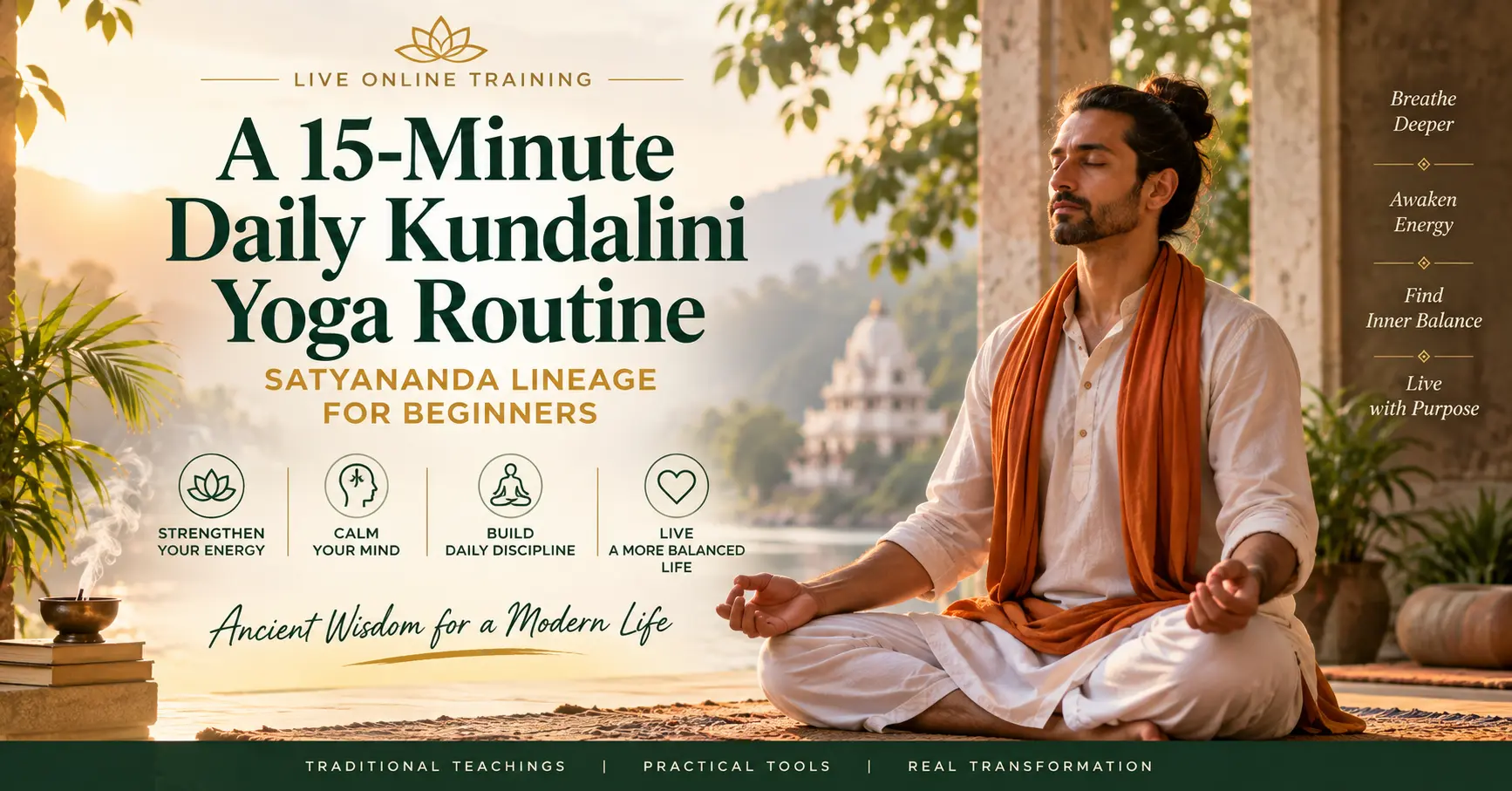
A 15-Minute Kundalini Yoga Routine for Beginners (Satyananda Lineage)
Search “15 minute Kundalini yoga routine” and you’ll get the same handful of techniques recycled across every result: Breath of Fire, Sat Kriya, Sa Ta Na Ma, Ego Eradicator. That’s Kundalini Yoga as taught by Yogi Bhajan starting in 1969 — a real, established tradition, but not the only one, and not the one this routine comes from.
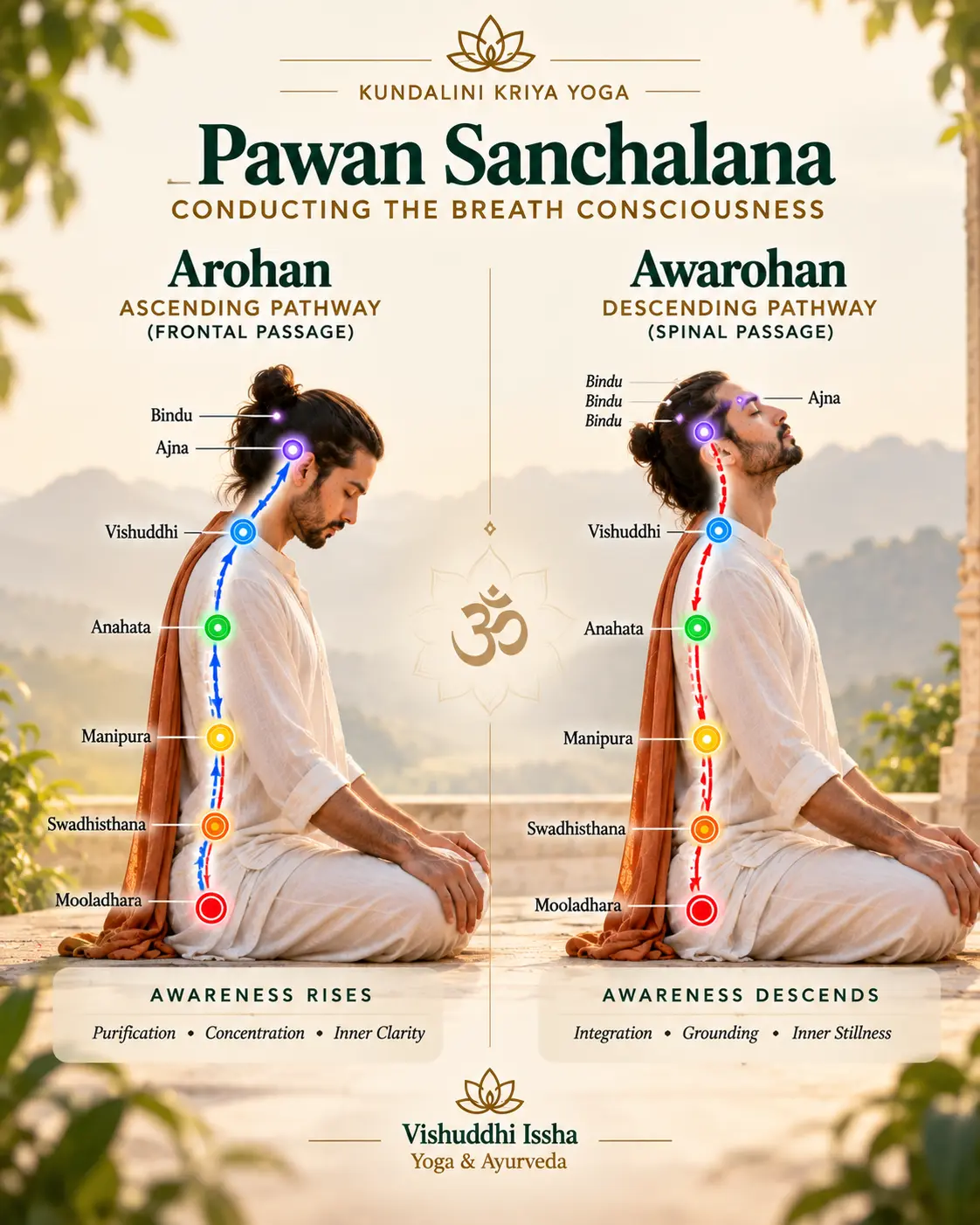
This sequence draws from the Kriya Yoga system documented in the Satyananda/Bihar School lineage — a staged system organized around Pratyahara (sensory withdrawal), Dharana (concentration), and Dhyana (meditation), tracing awareness along two psychic pathways: the Arohan (ascending frontal passage) and Awarohan (descending spinal passage).
The underlying mechanism is different from what most Western Kundalini content describes: rather than dynamic physical movement, these techniques work through what the tradition calls a bio-feedback loop, systematically directing awareness to specific physical points — the perineum, the throat, the base of the spine — which the tradition associates with corresponding nerve plexuses along the spinal column. If you’ve only encountered the Western version, these names and this approach will be unfamiliar. That’s expected — it’s a different system, not a variation on the one you’ve seen.
One thing worth saying plainly: the full system this comes from is staged and gated on purpose — later stages require years of asana foundation and strict weekly progression under a teacher. What follows is drawn exclusively from its earliest, lowest-risk techniques, appropriate for genuine beginners practicing alone.
01 · Practice length
How Long Should Beginners Practice Kundalini Yoga Each Day?
Fifteen minutes practiced daily produces more actual change than 60 minutes practiced once a week. It’s long enough to include real breathwork and a proper concentration practice — the elements this tradition treats as non-negotiable — without becoming something you skip on busy mornings.
02 · Context
Why This Looks Different From What You’ve Seen Online
Two separate traditions carry the name “Kundalini Yoga.” The version most Westerners know — 3HO/Yogi Bhajan’s system — emphasizes dynamic movement, numbered kriyas, and mantra repetition, brought to the US in 1969.
The lineage this routine draws from is older, structured around internal visualization of psychic pathways rather than external physical exertion. There’s no equivalent of a vinyasa flow or a held physical posture doing the primary work here — the body stays largely still, and the practice happens through breath, sound, and directed attention instead. Neither tradition is more “real” than the other — a fuller breakdown is here — but they don’t overlap much in technique, so this will feel like an entirely different practice from anything you’ve seen in a studio.
03 · Sequence logic
Why the Sequence Order Actually Matters
Every technique in this beginner sequence appears in a specific order for a reason, and the order isn’t arbitrary. The tradition this comes from treats sequencing as part of the technique itself — each step is understood to prepare the nervous system for the one that follows, rather than functioning as an interchangeable menu of options.
- Settling comes first because the mind needs a moment to disengage from ordinary activity before anything else can land.
- The physical warm-up follows because sitting still for the next twelve minutes is genuinely difficult with a stiff spine and restless joints — skipping it doesn’t save time, it just makes the rest of the practice less comfortable and less effective.
- Nadi Shodhana comes before the more internal techniques because a settled, balanced breath is what the tradition considers the actual gateway into the internal pathway work that follows — attempting Chakra Anusandhana on top of scattered, uneven breathing tends to produce a scattered, uneven result.
- Chakra Anusandhana itself comes before Nada Sanchalana because it establishes the mental map — the felt sense of the Arohan and Awarohan passages — that the sound-based technique then works with rather than having to build from nothing.
- Pawan & Shabda Sanchalana comes last among the active techniques because it’s the synthesis step, combining the breath control from Nadi Shodhana with the pathway awareness from Chakra Anusandhana into a single moving practice.
- Closing relaxation ends the sequence because the nervous system needs a deliberate return to baseline, not an abrupt stop.
04 · Larger system
Where These Five Techniques Fit in the Larger System
Worth knowing, mostly for context: the tradition this routine is drawn from documents a full sequence of 20 kriyas across three progressive stages, moving from sensory withdrawal through concentration to advanced meditative absorption. The five techniques in this routine — Nadi Shodhana, Chakra Anusandhana, Nada Sanchalana, and Pawan & Shabda Sanchalana, alongside the Pawanmuktasana warm-up — sit at the very beginning of that first stage.
Everything past this point, including bandha work, breath retention, and the more advanced concentration and meditation techniques, is explicitly reserved for practitioners with a stable asana foundation working under direct guidance. That’s not a marketing caveat; it’s how the source tradition itself stages the material. A 15-minute daily beginner routine is meant to be a genuine entry point into that larger system, not a complete summary of it.
05 · Versus apps
How This Differs From a Meditation App
It’s a fair comparison, since Chakra Anusandhana and Nada Sanchalana can look, from the outside, like guided meditation. The difference is structural. A typical meditation app session is self-contained — closing your eyes and following a voice for ten minutes, with no real connection to what came before or what follows.
This routine is sequential and cumulative by design: each technique is understood to prepare the nervous system for the next one, in a fixed order, building toward a larger system over months of consistent practice rather than functioning as a standalone daily reset. Neither approach is wrong for what it’s trying to do — but this one asks more of the sequence, and less of any single session, than most app-based mindfulness content does.
06 · Preparation
Before You Begin
A quiet space, 15 uninterrupted minutes, a cushion to sit on, loose clothing, and an empty stomach (at least three to four hours since eating). No mat required — this is seated practice, not movement-based. Early morning is traditionally preferred, before the mind accumulates the day’s stimulation.
Diet matters more in this tradition than in most Western yoga approaches. The classical guidance calls for Mitahara — a moderate, largely vegetarian approach that avoids extremely heavy, greasy, or intensely spiced food, particularly in the hours before practice. This isn’t presented as a strict rule for a 15-minute beginner routine, but a heavy meal or a stimulant like coffee shortly before sitting will make the settling and breathwork stages noticeably harder.
07 · Practice
The 15-Minute Routine, Step by Step
Seven stages. Fixed order. Fifteen minutes from settling to integration.

1 minute
Settling
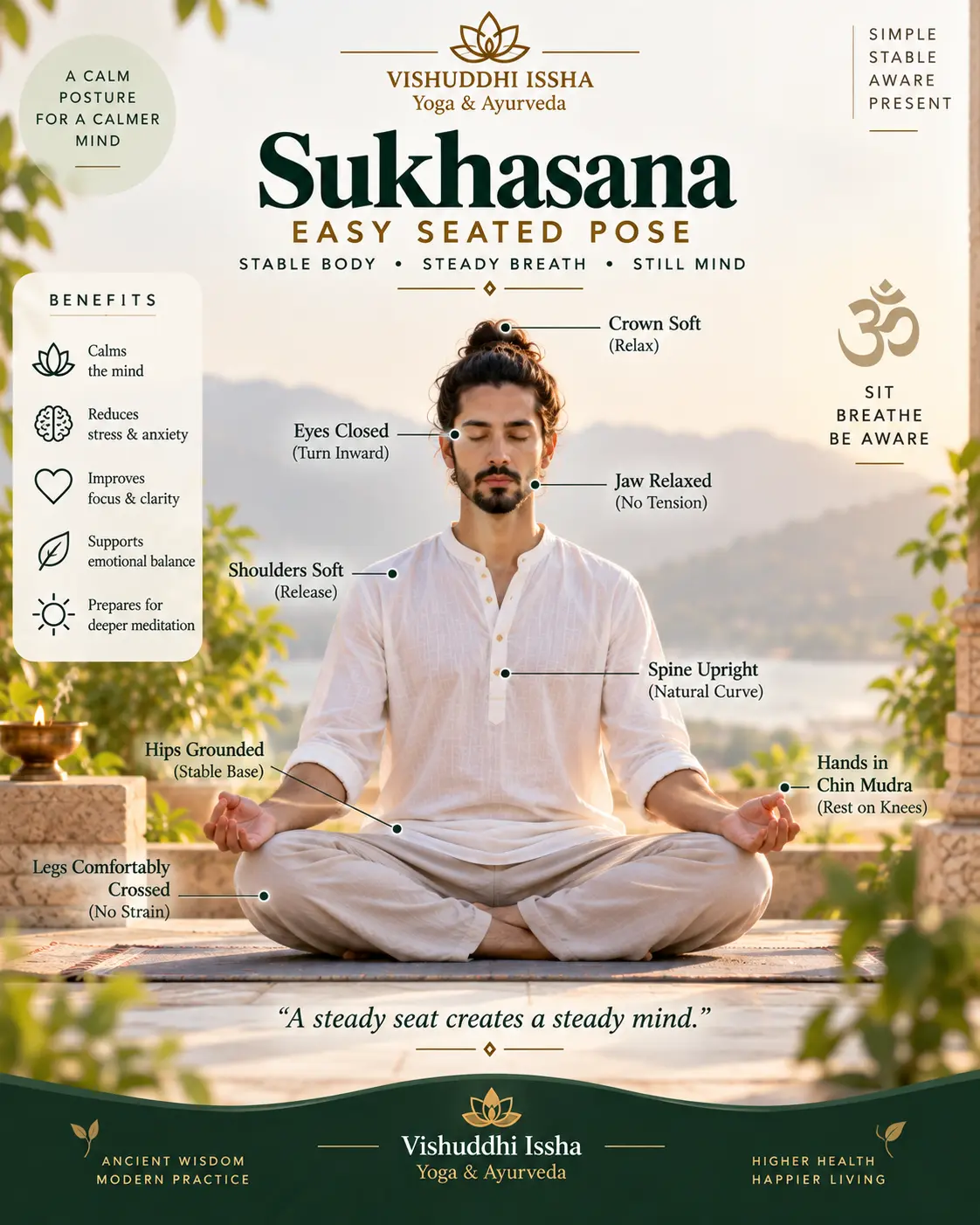
Sit in Sukhasana (easy cross-legged pose) or upright in a chair, spine straight. Close the eyes. Take a few natural breaths without controlling them, simply noticing.
1.5 minutes
Pawanmuktasana warm-up
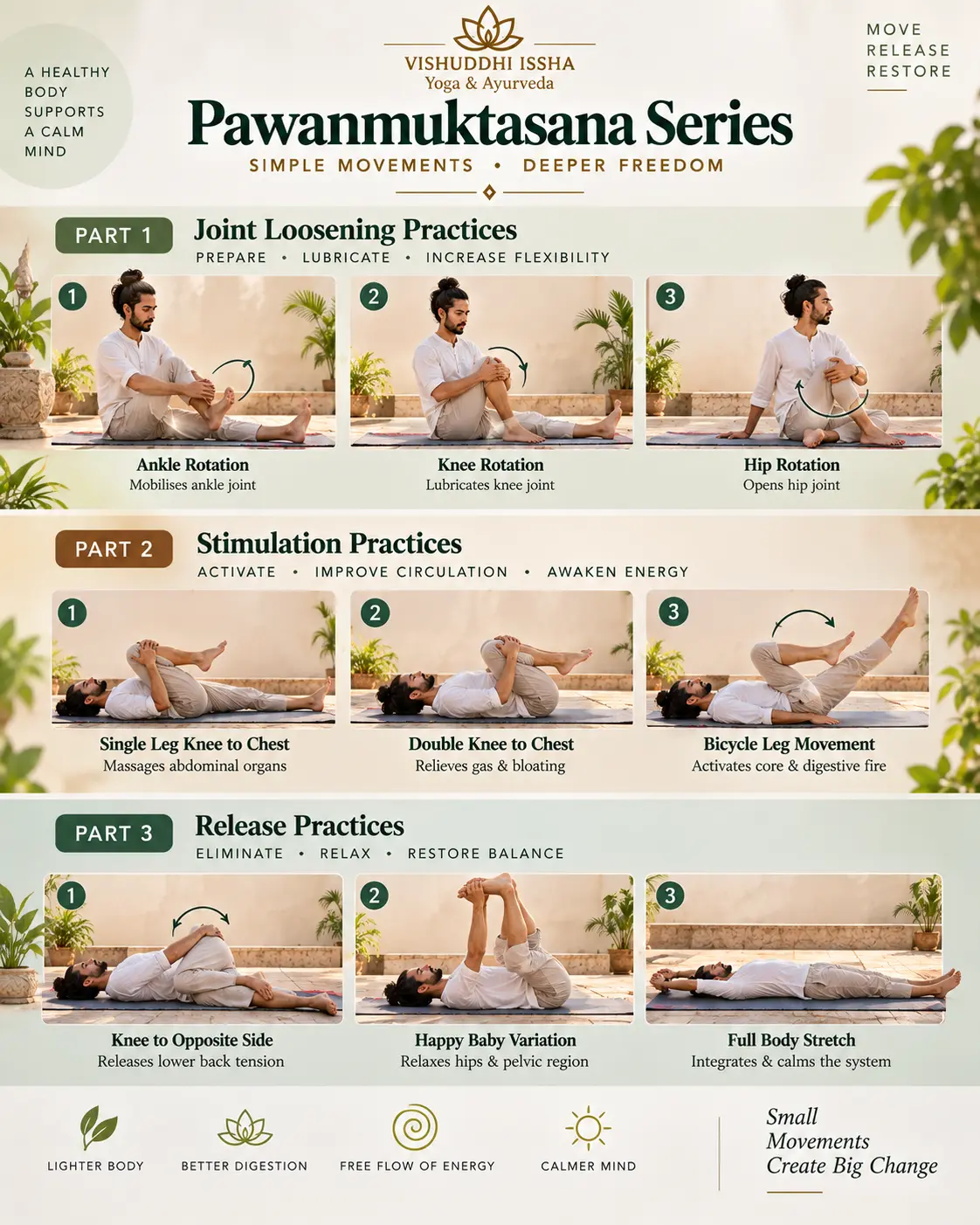
Slow neck rotations, shoulder rolls, then seated spinal movement — inhale, lift the chest; exhale, round the spine. This prepares the body for stillness, without the intensity of a full asana practice.
2.5 minutes
Nadi Shodhana — alternate nostril breathing
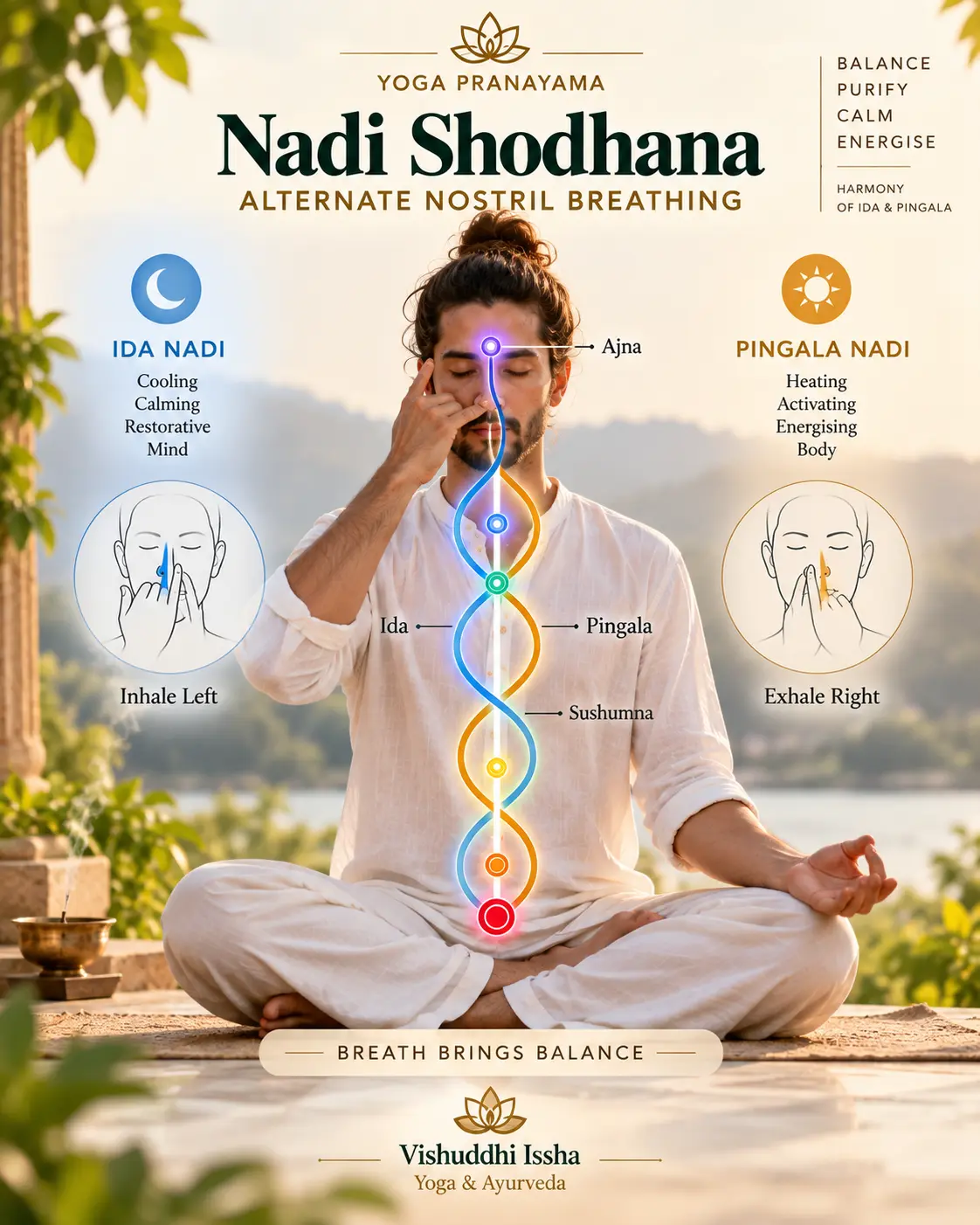
Using the right thumb to close the right nostril, inhale left; switch, exhale right; inhale right, switch, exhale left. Continue at a slow, even pace. This settles the breath before the more internal work that follows.
3 minutes
Chakra Anusandhana — “Discovery of the Chakras”
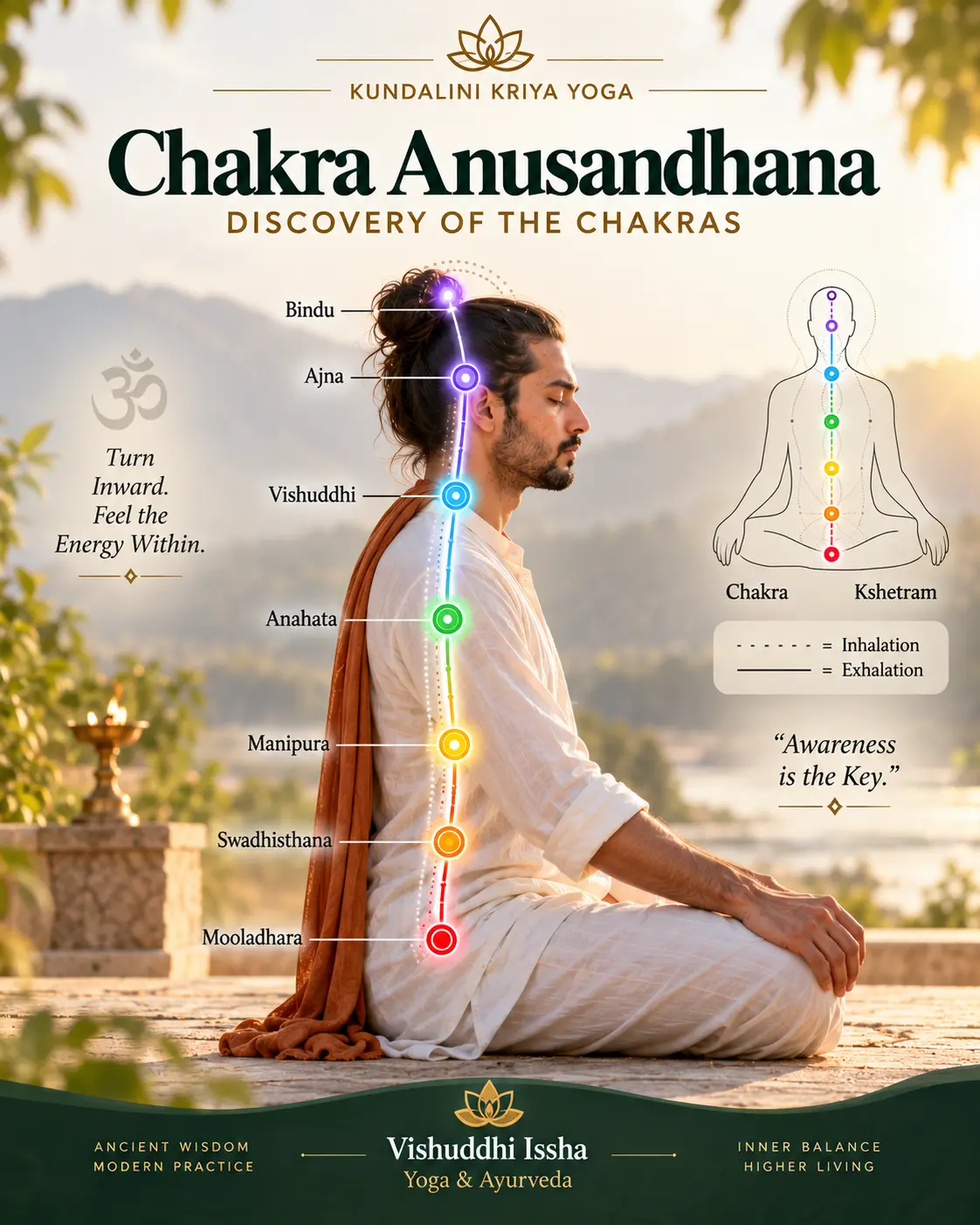
With eyes closed, mentally travel up the Arohan passage from the base of the spine to the crown, silently naming each centre as awareness touches it: Mooladhara, Swadhisthana, Manipura, Anahata, Vishuddhi, Ajna, Bindu. Then travel back down the Awarohan passage in reverse. This is pure mental location — no breath control, no physical effort — and it’s specifically what sensitizes a beginner to these internal pathways before anything more active is introduced.
3 minutes
Nada Sanchalana — “Conducting the Sound”
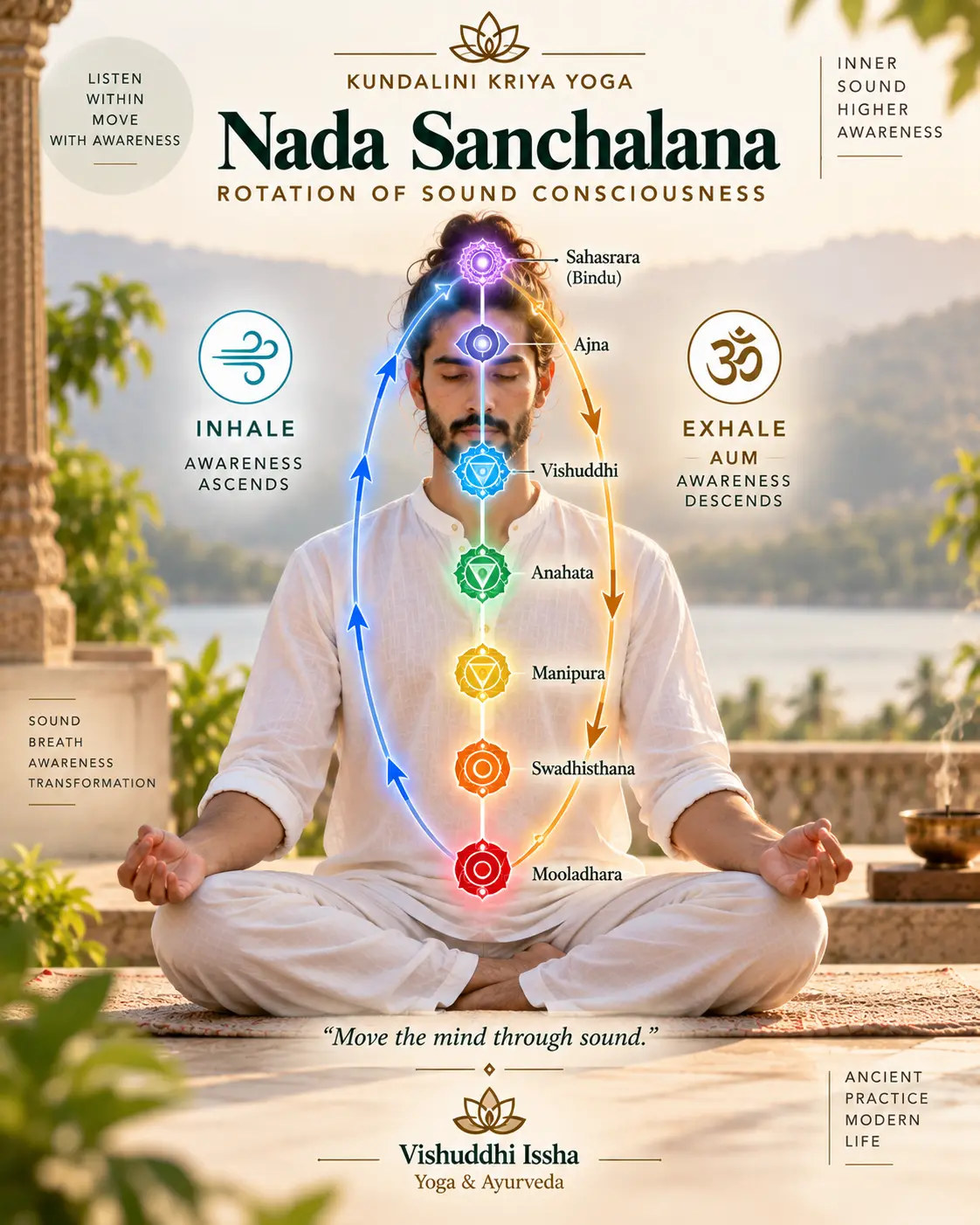
Take a deep inhalation, then chant OM aloud on the exhalation while mentally tracing the vibration up the Arohan passage. Repeat for the full three minutes. The vocal vibration is felt physically along the spine, and this is one of the more immediately calming techniques in the sequence for a racing or anxious mind.
2 minutes
Pawan & Shabda Sanchalana — breath and mantra in motion
Combine Ujjayi breath (a soft, audible breath through a slightly constricted throat) with the mantra So-Ham: silently “So” on the inhale while tracing up the Arohan, “Ham” on the exhale while tracing down the Awarohan. This is the natural progression from step 4 — the same mental map, now moving with the breath rather than sitting still with it.
2 minutes
Closing relaxation
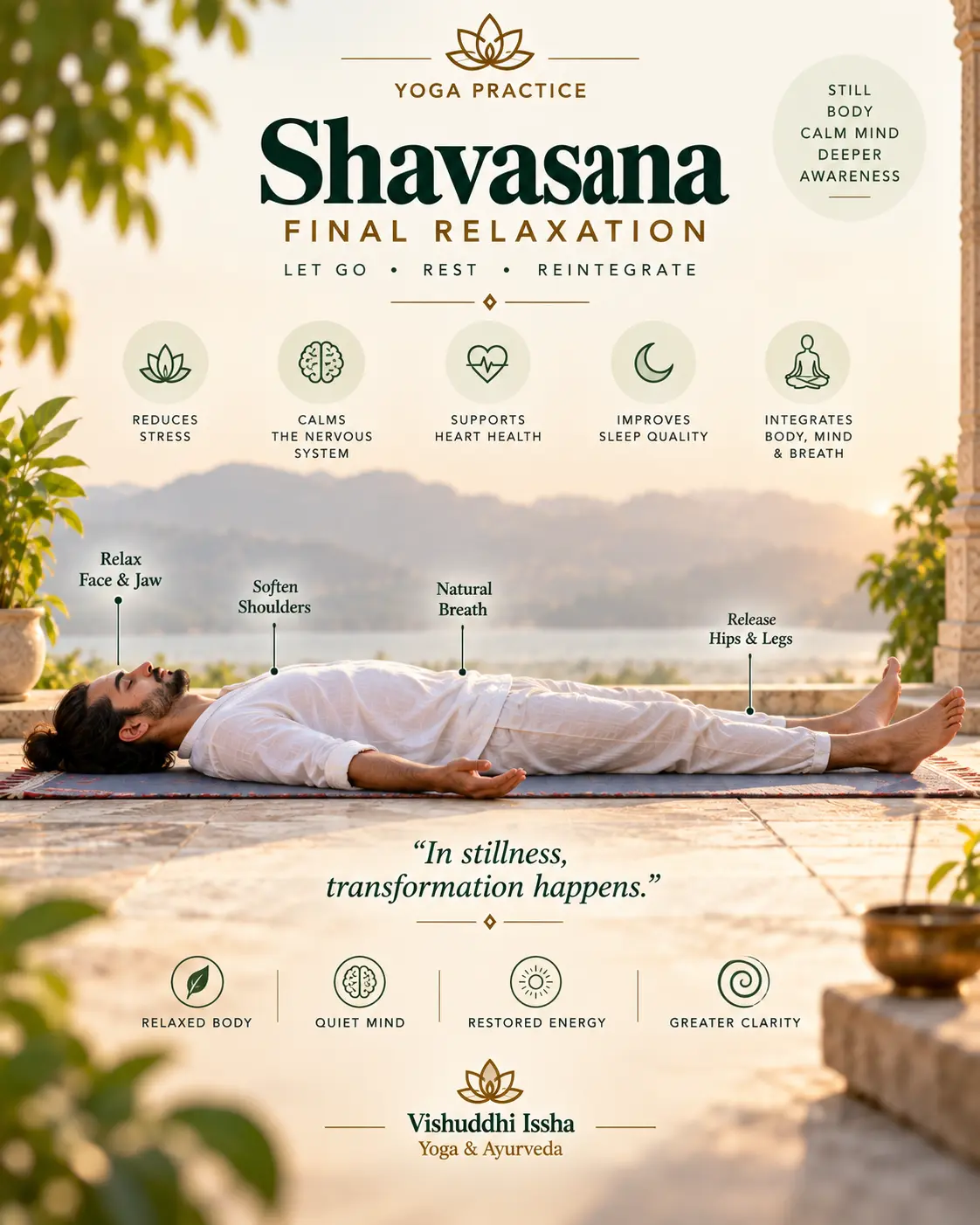
Lie in Shavasana, or remain seated if lying down isn’t practical. Let the breath return to normal. Briefly scan awareness through the body without trying to relax anything, just noticing. This is what allows the nervous system to integrate the practice rather than snapping straight back into activity.
08 · Chakra map
What Each Center in Chakra Anusandhana Corresponds To
Step four touches all seven centres, and the tradition assigns each one a distinct role — worth understanding, since it’s what separates mentally naming seven points from actually working with them. Presented here as the tradition frames it, not as established medical fact.
-
01
Mooladhara
At the base of the spine, traditionally linked to the sacrococcygeal plexus and considered the seat of the practice’s foundational grounding — the starting and ending point of both the Arohan and Awarohan passages.
-
02
Swadhisthana
Associated with the pelvic region, linked to the sacral plexus, and traditionally described in terms of transforming raw vitality into more refined energy.
-
03
Manipura
At the navel, linked to the solar plexus, traditionally associated with generating inner heat and countering lethargy — often the point practitioners report feeling most distinctly, even as beginners.
-
04
Anahata
At the heart centre, linked to the cardiac plexus and traditionally associated with an opening, softening quality.
-
05
Vishuddhi
At the throat, linked to the cervical and pharyngeal plexuses — directly relevant to Nada Sanchalana, since the OM vibration in that technique is felt most strongly here.
-
06
Ajna
Between the eyebrows, linked to the region near the medulla, traditionally described as the seat of clarity and one-pointed attention.
-
07
Bindu
At the crown, completes the ascending passage and is traditionally treated as the turning point where awareness reverses direction and begins the descent back down the Awarohan.
None of this requires belief to practice the technique correctly — mentally naming each point in sequence is the instruction, regardless of what a beginner does or doesn’t feel at each one in the early weeks.
09 · Reality check
Is 15 Minutes Actually Enough?
For a beginner, yes — with a caveat. Consistent daily practice at this level genuinely builds real capacity in the pathways this tradition works with. It is not a substitute for the fuller, staged system this comes from, which the tradition itself treats as requiring years of foundation and direct teacher guidance to progress through safely. Fifteen minutes is a real starting point, not a shortcut to what comes later.
10 · Daily practice
What Happens When You Practice Every Day?
Most people notice steadier breathing under stress and better sleep onset within a few weeks, tied to the Nadi Shodhana and closing relaxation specifically. The subtler effects of Chakra Anusandhana and Nada Sanchalana — a quieter, less scattered mind — tend to build more gradually over consistent daily repetition, often becoming noticeable only in retrospect, after several weeks of not missing a day.
11 · Pitfalls
Common Beginner Mistakes
Skipping the warm-up
A stiff spine makes 15 minutes of seated stillness uncomfortable fast, which becomes the reason people quit.
Forcing the OM in Nada Sanchalana
It should feel resonant, not strained or performative. Volume matters less than the felt vibration.
Practicing on a full stomach
This is a common substitution people make when mornings are rushed — moving the practice to right after breakfast instead of before it — and it noticeably changes how comfortable the seated stillness feels, particularly during the longer Chakra Anusandhana and Nada Sanchalana steps.
Trying to add the next technique too soon
The tradition this comes from is explicit that later stages build on real mastery of earlier ones — rushing past this five-technique foundation defeats the point of a staged system.
12 · Guidance
Can Beginners Do This Without a Teacher?
For exactly the five techniques above — yes. None carry meaningful physical risk for a healthy adult practicing gently. Where this changes is anything beyond this routine: the fuller system it’s drawn from explicitly requires a stable asana foundation and direct teacher guidance before introducing locks, breath retention, or the more intensive techniques that follow. What a genuine energetic shift actually looks like — and how it differs from ordinary nervous-system release — is covered there, and the relationship between the vagus nerve, trauma release, and Kundalini practice is explored there too, worth reading regardless of whether you ever experience it.
13 · Next step
When You’re Ready for More
This routine is deliberately a floor, not a ceiling. The next techniques in this system — including proper bandha work — are exactly the point where self-practice stops being appropriate. If this resonates, the next real step is training with an actual teacher in this lineage.
14 · FAQ
Frequently Asked Questions
Do I need any equipment to start?
No. A cushion to sit on is helpful; nothing else is required.
What’s the best time of day to practice?
Early morning, before eating, is traditionally preferred.
Is this the same as the Kundalini Yoga taught in most Western studios?
No. Most studio classes teach the 3HO/Yogi Bhajan system. This routine comes from a separate lineage built around internal pathway work rather than dynamic movement.
Can I do this if I’ve never meditated before?
Yes. Chakra Anusandhana is specifically structured to give a beginner’s mind a concrete mental task, rather than requiring pre-existing concentration ability.
Why doesn’t this include bandhas or breath retention?
Because the tradition this comes from stages those techniques deliberately, after a real asana foundation and under direct teacher guidance. This routine stays entirely within techniques appropriate for unsupervised beginner practice.
What’s the difference between Arohan and Awarohan?
Arohan is the ascending passage, traced from the base of the spine up to the crown on the inhale or upward-moving portion of a technique. Awarohan is the reverse, descending passage, traced back down on the exhale. Most techniques in this sequence move through both in a single round.
Can I do Chakra Anusandhana lying down instead of sitting?
A seated position is preferred, since it keeps the spine upright along the same axis the Arohan and Awarohan passages are traced along. Lying down works if sitting isn’t physically possible, but it’s a modification, not the standard form.
Do I need to feel something specific at each chakra for the practice to be working?
No. Mentally naming and briefly resting awareness at each point is the actual instruction. Distinct physical sensation at each centre, if it happens at all, tends to develop with months of consistent practice, not in the first weeks.
Fifteen minutes, practiced daily, is where this tradition actually begins. If you want the complete picture of where it leads, the full guide to Kundalini Kriya Yoga is the place to go next.